Flight training costs real money. A private pilot license (PPL) costs vary; check typical ranges at a quality Part 141 school, and most people don’t have that sitting in a checking account. The good news is that several financing paths exist, and knowing how they actually work helps you pick the one that fits your situation instead of just grabbing the first loan you find.
Understanding the Cost of Private Pilot Training
Before you look at financing, you need a solid number to work with. A PPL at a structured flight school in Utah costs vary for most students. That range exists because the FAA requires a minimum of 40 flight hours at Part 61 schools (35 at Part 141), but the national average is closer to 55 to 65 hours before students feel ready for the checkride.
Here’s how the money breaks down in practice:
- Flight hours with a certified flight instructor (CFI): the biggest chunk, typically varies depending on the aircraft
- Ground school and study materials: costs vary
- FAA knowledge test fee: fee varies by testing center
- Checkride fee with a designated pilot examiner (DPE): fee varies by examiner
- FAA medical certificate exam: fee depends on AME
Those numbers add up fast. And if your goal is an airline career rather than recreational flying, the full picture is much larger. The total cost from zero to commercial pilot with CFI ratings varies significantly based on training choices and pace, but it’s a figure worth planning around if airlines are your end goal.
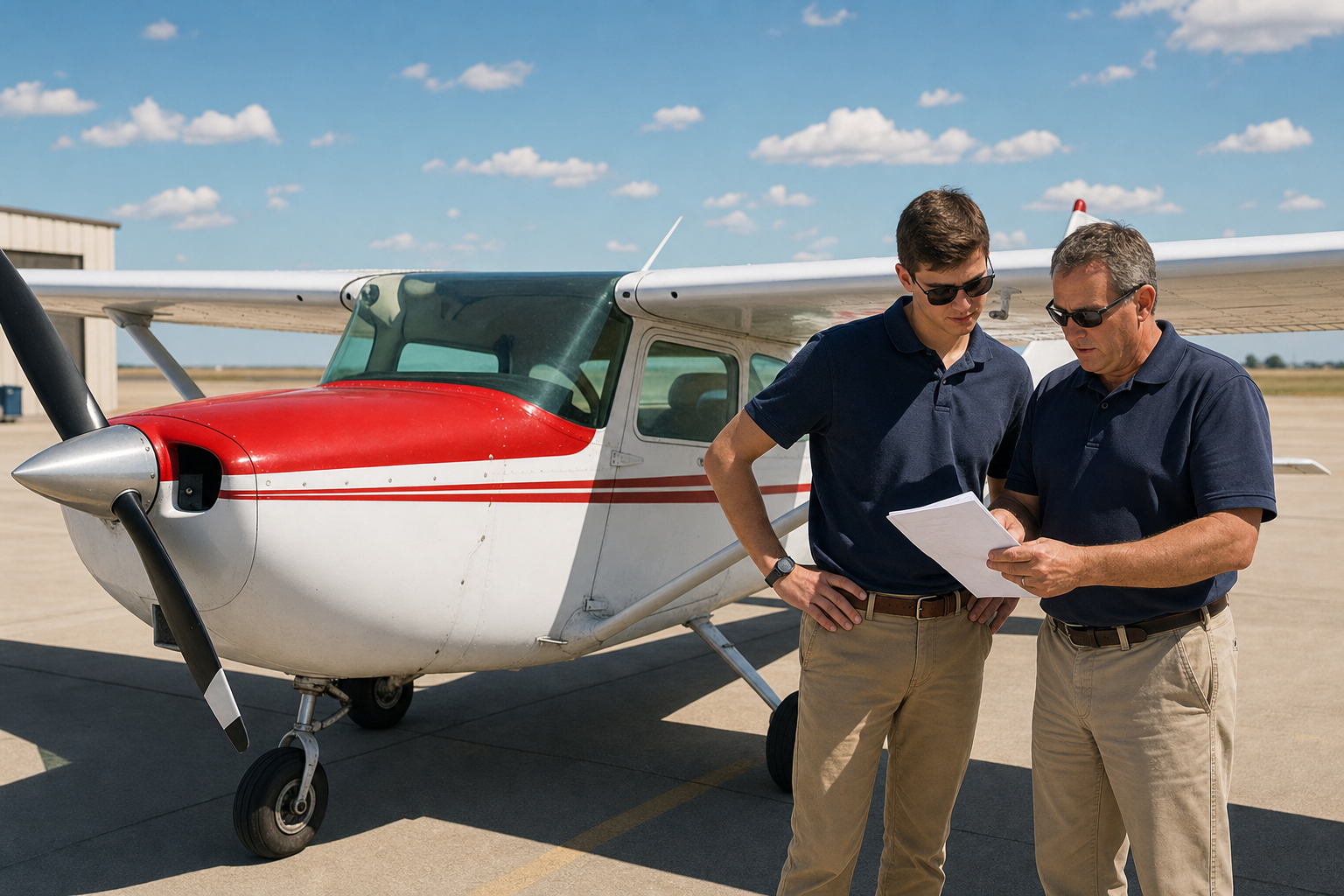
One factor that affects total cost more than people expect: training pace. Students who take long breaks between lessons spend extra hours reviewing material they’ve forgotten, and those review hours cost money. At Axiom Aviation, students who train three to five days per week consistently finish their PPL faster and closer to the minimum hour requirement than those who train once a week.
Part 141 schools also tend to be more cost-efficient than Part 61 for career-track students. The structured, FAA-approved syllabus reduces wasted repetition. That efficiency matters when you’re financing training, because fewer hours means a smaller loan balance and less interest paid over time.
Flight Training Loans: Private vs. Industry-Specific Options
Loans are the dominant financing tool for flight training. Looking across the financing landscape, roughly 73% of available products are loan-based, with rates that span a wide band depending on the lender and your credit profile. The average APR across common flight training loan products sits around 11.5%, with a median closer to 9.5%. But that average hides a lot of variation.
Aviation-Specific Lenders
A few lenders focus specifically on aviation training, and they’re worth understanding first because they’re built for this use case.
Stratus Financialoffers variable and fixed-rate loans with rates from 9.99% to 13.99% over 3 to 10 years. Their terms are designed around flight school timelines, so repayment options include deferred payments while you’re in school, interest-only payments, or no payments until three months after graduation. No prepayment penalty if you pay it off early.
AOPA Aviation Financehas the lowest advertised rate in this category at 6.99% to 10.99% APR, but there’s a catch: it requires stronger collateral than most student borrowers have. It also has a unique feature worth knowing about , you can bundle an aircraft purchase with your training loan, which makes it relevant for pilots who plan to buy their own plane eventually. For most PPL students just starting out, the collateral requirement rules this one out.
Other lenders offer competitive fixed and variable rates with repayment terms up to 15 years. Their co-signer release kicks in after 36 on-time payments, which matters if you need a co-signer to qualify initially. You can review the full details on the Axiom Aviation flight school financing page.
General Private Student Lenders
Here’s something that surprises most people researching this topic: the majority of flight training financing products are just general private student loans, not aviation-specific at all.
Sallie Maeoffers both an Airline Career Loan and a standard Career Training loan. The Airline Career Loan example rate for a $10,000 loan is 17.68% fixed APR, which is the highest rate in this market. The variable APR is tied to SOFR and may be lower depending on timing. Sallie Mae also offers undergraduate student loans that can be used at degree-granting schools for aviation careers, with a similar example rate of 17.42% fixed. These are accessible but expensive if you carry the balance long-term.
Meritizetakes a different approach. Instead of relying purely on FICO score, they factor in your academic and career history when setting your rate. Rates run from 8.99% to 14.99% APR with 5 to 15 year terms. School approval is required, so check whether your flight school works with them before applying.
Pay-As-You-Go and School Payment Plans
Not every student needs a loan. Some flight schools, including Axiom Aviation, offer pay-as-you-go options where you pay for training as you go rather than financing the full amount upfront. The appeal is obvious: zero interest. No lender. No credit check.
The reality is more nuanced. Pay-as-you-go works well if you can consistently cover training costs from savings, salary, or other income. That’s not a small ask. For most working adults, that level of monthly cash flow isn’t available without drawing down savings significantly.
Where this approach makes real sense:
- You have savings set aside specifically for training and want to avoid debt
- You’re training part-time over 6 to 12 months, spreading costs across many paychecks
- You’re using employer tuition reimbursement to cover costs as you go
Training part-time while working full-time is genuinely doable. Many Axiom Aviation students fly two to three times per week and earn their PPL in four to six months while holding a regular job. That schedule spreads the cost over time, which makes pay-as-you-go more realistic than it sounds for people with steady income.
Some schools also offer structured internal payment plans with set monthly amounts rather than true pay-as-you-go. These vary widely by school. Ask specifically whether there’s a financing charge, what happens if you pause training, and whether the plan locks you into a fixed schedule. The details matter more than the headline.
One honest caveat: pay-as-you-go can slow your training pace if cash flow gets tight. Gaps in training cost money in review time. If you go this route, build a buffer and commit to a consistent schedule.
Airline Reimbursement and Cadet Programs

One of the most underused financing tools for career-track pilots is regional airline reimbursement. Some regional carriers will reimburse up to $25,000 in training costs in your first year after hire, with no interest charged because it’s a reimbursement rather than a loan. You train, get hired, complete initial operating experience, and the airline pays back a portion of what you spent.
The catch is sequencing. You have to fund training first, get hired, and then receive reimbursement. That means you still need upfront financing , typically a loan , to cover training costs before the reimbursement kicks in. Think of it as a loan payoff strategy rather than a standalone financing method.
Pilot Pathway Programs
Axiom Aviation’s partnership with a regional airline through the Pilot Pathway Program is a direct example of how this works in practice. Students who complete the Private Credit Training Program gain early acceptance into a regional airline pathway, which creates a clear line from flight school to a regional airline seat. That kind of structured pathway matters for financing decisions because it reduces career uncertainty, which in turn makes lenders more willing to approve larger loan amounts.
Veterans and the GI Bill
For eligible veterans, the GI Bill (Chapter 33 with Yellow Ribbon) can cover up to 60% of tuition at approved flight schools, reducing out-of-pocket costs to under $30,000 for the full career-track program. This is the only non-loan financing option in the market that provides meaningful coverage, and it applies only to veterans who qualify. If you served, this is worth investigating before you look at any loan product. Axiom Aviation is an FAA Part 141 school, which is a requirement for VA benefit eligibility at flight schools.
Pilot training scholarships are another avenue worth exploring alongside these options. They won’t cover full program costs, but stacking a $2,000 to $5,000 scholarship on top of a loan meaningfully reduces your balance.
How to Qualify: Credit, Cosigners, and Required Documents
Understanding what lenders actually look at helps you prepare before you apply, rather than discovering problems mid-process.
Credit score is the primary factor for most private student lenders. Many lenders use tiered pricing models: a score of 761 or higher puts you in the strongest position, 721 to 760 is moderate, and below 720 is basic qualification with potentially higher rates or stricter terms. Sallie Mae and Meritize use similar credit-based pricing models.
If your score isn’t where you want it, a co-signer with strong credit can make a significant difference. Most lenders allow co-signer release after a defined period of on-time payments, typically 24 to 48 months. So a co-signer arrangement doesn’t have to be permanent.
Documents you’ll typically need to gather:
- Government-issued ID and Social Security number
- Proof of enrollment or acceptance at a qualifying flight school
- Income verification (pay stubs, tax returns, or bank statements)
- School cost documentation or enrollment agreement
- Co-signer information if applicable
One thing that trips people up: some lenders require school approval before they’ll process a student application. Stratus Financial and Meritize both work this way. Check whether your school is on the approved list before you invest time in an application. Axiom Aviation works with multiple lending partners, so this step is usually straightforward for students enrolled there.
Federal loans aren’t available for standalone flight school programs that aren’t part of a degree program, which is why private lenders dominate this space. Knowing that upfront saves you from chasing federal aid that won’t apply.
How to Choose the Right Financing Option for You
The right financing path depends on three things: your credit profile, your monthly cash flow, and your career goal. Here’s how to think through each combination.
If you’re a career-track student with decent credit and no collateral, Stratus Financial or Meritize are the most usable starting points. If your credit needs work, apply with a co-signer and look at lenders that offer co-signer release. If you’re a veteran, start with the GI Bill before you look at any loan.
For students who want a clear path from financing to airline hiring, Axiom Aviation’s structure is worth understanding. The school works with multiple approved lenders, offers transparent pricing with no hidden fees, and connects career-track students to airline training reimbursement programs. That combination , known financing options, clear costs, and a defined career pathway , reduces the uncertainty that makes flight training financing feel overwhelming.
One usable move: get pre-qualified with two or three lenders before you commit to one. Pre-qualification typically uses a soft credit pull, so it won’t hurt your score. Compare the actual APR offers, not just the advertised range, because your rate depends on your specific credit profile.
Learning to manage a big investment decision like this has some parallels to any skill-building pursuit , whether that’s building an art business online or funding a professional credential. The underlying principle is the same: understand your total cost, map your financing options, and pick the path that keeps you moving forward without overextending.
Frequently Asked Questions
How much does it cost to finance a private pilot license?
A PPL cost varies by school, location, and individual training pace. Interest rates and loan terms are available upon request from lenders. The exact total depends on your rate, loan amount, and how quickly you repay.
Can I get a student loan for flight school?
Yes, but federal student loans generally don’t apply to standalone flight school programs outside of degree programs. Private lenders like Sallie Mae, Meritize, and Stratus Financial offer loans specifically for flight training. Eligibility depends on your credit score, the school you attend, and whether you need a co-signer.
Do airlines pay for flight training?
Some regional airlines offer training reimbursement up to $25,000 in your first year after hire. This isn’t upfront funding , you train first, get hired, and then receive reimbursement. You’ll still need a loan to cover initial training costs. Some regional airline pathway programs, available through Axiom Aviation, create a structured path to that reimbursement.
What credit score do I need for a flight training loan?
Most aviation lenders tier their qualification by credit score. A score of 721 or higher puts you in a stronger position for approval and better rates. Below 720, you may still qualify but with higher rates or a co-signer requirement. Improving your score before applying, even by 20 to 30 points, can meaningfully reduce your APR.
Is the GI Bill good for flight school?
Yes, for eligible veterans. GI Bill Chapter 33 with Yellow Ribbon can cover up to 60% of tuition at approved Part 141 flight schools, which reduces out-of-pocket costs substantially. Axiom Aviation is a Part 141 school, which is a requirement for VA benefit eligibility. If you qualify, this is the most cost-effective financing option available.
What’s the difference between aviation-specific loans and regular private student loans?
Aviation-specific lenders like Stratus Financial understand flight school timelines and offer deferred payment options aligned with training. General private student lenders like Sallie Mae offer broader access but sometimes at higher rates. The best choice depends on your credit profile and which schools are on each lender’s approved list.
Conclusion
Flight training financing doesn’t have to be complicated. Most students use a private loan, and the rates you get depend almost entirely on your credit profile and the school you choose. If you’re aiming for an airline career, pairing a loan with a structured pathway program like Axiom Aviation’s reduces both your financial risk and your time to a first officer seat. Ready to see what your financing options look like? Visit the Axiom Aviation financing page and start your aviation journey with a clear picture of what it will cost.