
Reaching airline minimums takes more than renting an airplane whenever you have spare cash. The strongest plan links each flight to a certificate, a useful kind of flight time, or a paid pilot job. If you’re learning how to build flight hours, start with your logbook, choose a path that fits your budget, then work toward paid flying.
Restricted-ATP rules follow a consistent split for graduates of FAA-authorized aviation degree programs: 1,000 hours for graduates with 60 or more approved credits, 1,250 hours for graduates with 30 to 59 credits, and the standard 1,500 hours for everyone else. That structure shows why the exact credit-hour threshold, not the degree title, decides how many hours a pilot must log.
Step 1: Set Your Flight-Hour Goal and Review Your Logbook
To learn how to build flight hours well, first set a clear target. Airline-track pilots often plan around 1,500 total hours for an unrestricted ATP, though some approved education paths may allow an R-ATP at a lower total.
Write down your current totals before you book another flight. Separate total time from pilot-in-command, cross-country, night, instrument, and multi-engine time. These categories can matter as much as the total in the logbook.
Then check your certificates and ratings. A private pilot can fly and log personal time, but paid pilot work generally requires a commercial pilot certificate plus the ratings and experience required for the job. A CFI certificate can open the first steady paid route.
Keep every entry accurate. Record the date, aircraft, route, flight conditions, role, and time. Keep supporting records when they make sense, such as rental receipts, dispatch notes, and flight tracking data. Never add time for a flight you didn’t make. A questionable entry can damage your career long after the hour count looks complete.
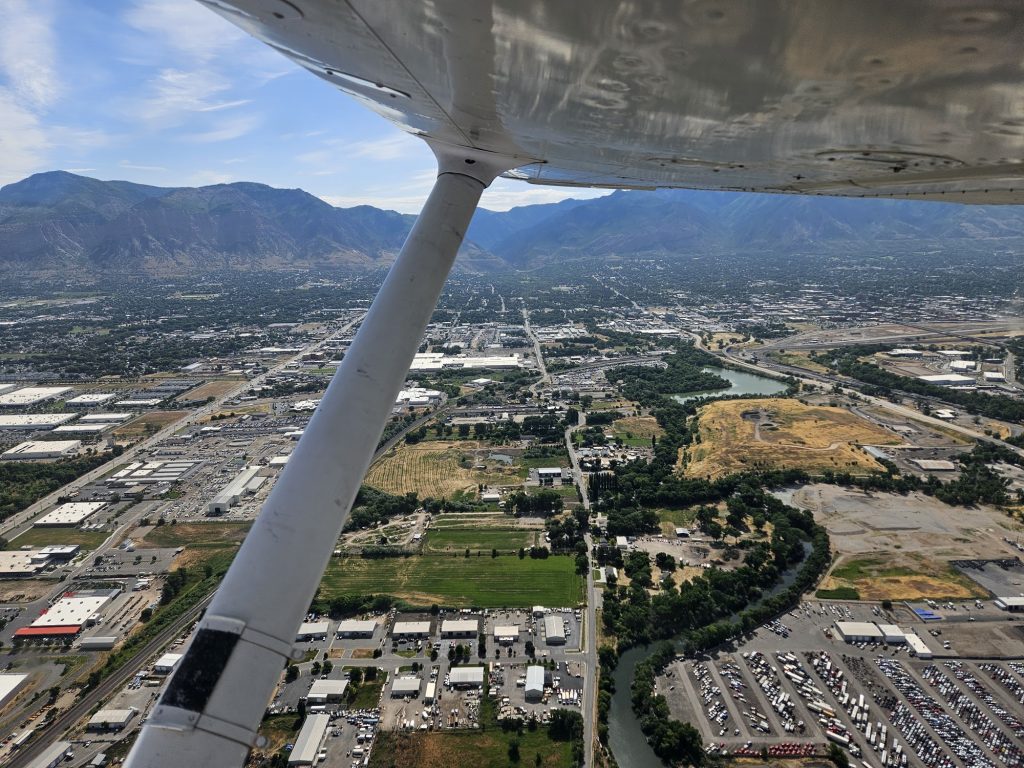
Build a simple gap sheet. For example, you may need 700 more total hours, but only 40 more night hours and 80 more cross-country hours. That changes your plan. A local daytime flight may add total time while doing little for the categories you still need.
Use the same check each month. Compare your actual logbook with your target. If weather, maintenance, or weak scheduling cuts your flying, adjust early rather than hoping to catch up later.
Step 2: Choose the Most Usable Time-Building Path
The best way to build flight hours depends on your certificate, cash flow, location, and career goal. For many airline-track pilots, flight instruction is the most repeatable paid path because each lesson can add flight time while you earn income.
Compare your choices against four questions: Can you legally do the work? Will it add the type of time you need? Can you fly often enough to make progress? Does the cost fit your budget while you wait for paid work?
| Path | Best fit | What it adds | Main limit |
|---|---|---|---|
| Flight instructor | New commercial pilots | Paid flying, teaching practice, steady logbook growth | Requires CPL and CFI; work depends on student demand |
| Aircraft rental | Pilots with funds and flexible schedules | Control over route and timing | You pay the rental cost for each flight |
| Flying club or shared aircraft | Pilots trying to reduce hourly cost | More access than occasional rental | Aircraft availability and shared rules can limit use |
| Cross-country time building | Pilots who need route experience | Navigation, weather, and airport decisions | Can become expensive without cost sharing |
| Tour, survey, or seasonal work | Commercial pilots with the right qualifications | Professional operations and varied routes | Jobs may be seasonal or require prior experience |
| Military or airline pathway | Pilots willing to accept set program terms | Structured training and possible benefits | Service or employer commitments may limit flexibility |
Axiom Aviation is a sensible place to compare these routes because its training is built for pilots who want airline work. We provide flight training in Ogden and St. George, Utah, plus Idaho Falls, Idaho. Our goal is to give students a clear route through ratings and hour building without hidden fees.
Flight instruction deserves a close look. A new CFI can earn while logging time, then add CFII or MEI qualifications to teach instrument or multi-engine students. The work can also sharpen communication and judgment because every lesson requires the instructor to plan for another pilot’s skill level. Pilots considering this route can also review life as a CFI before choosing a paid instruction path.
Rental flying still has a role. It can fill a gap when you need cross-country or night time and don’t yet have a paid job. But paying retail rental rates for every hour can drain a budget quickly. Use it with a written goal rather than flying aimlessly.
For a side-by-side look at aircraft access, simulator use, scheduling, and fees, our time-building program guide can help you compare the details before enrolling.
There is no honest promise that one route will produce the same weekly total for every pilot. Weather, aircraft maintenance, student demand, instructor scheduling, and your own availability can change the pace.
Step 3: Earn the Ratings and Certificates That Let You Log More Time
Certificates and ratings determine which flights you may conduct and which jobs you can accept. Build them in an order that supports your target role instead of collecting ratings without a plan.
For an airline-focused path, the usual sequence includes the Private Pilot Certificate, Instrument Rating, Commercial Pilot Certificate, and then CFI training. Multi-engine training can follow when it fits your budget and job goal.
The instrument rating matters because professional pilots must work with changing weather and instrument procedures. It also makes your cross-country flying more useful. Instrument time must still be logged under the correct conditions, and simulated instrument work is not the same as actual instrument flight.
A CFI certificate lets you teach flight students. CFII adds instrument instruction, while MEI adds multi-engine instruction. Those extra ratings may widen your job options, but don’t pay for them blindly. Ask which one local schools need and which one fits the aircraft you can access.
Some collegiate aviation programs can qualify graduates for an R-ATP with fewer total hours, subject to applicable education and regulatory requirements. Read the full R-ATP requirements in 14 CFR 61.160 before assuming any degree gives you the same benefit.
We help students plan the sequence at Axiom Aviation. The point is simple: don’t let a rating sit unused. Move from training into a role where the new skill supports regular flying.
Simulator sessions can help with procedures, systems, and instrument practice. They may count toward some requirements, but the amount depends on the device and the rule that applies. Treat the simulator as a training aid, not a substitute for all aircraft time.
Step 4: Fly Efficient Cross-Country and Rental Missions
Cross-country flying is one of the best ways to build flight hours while gaining skills that transfer to paid work. Plan each mission around a clear route, a useful destination, and the type of time you still need.
Start with a budget. Estimate the aircraft cost, fuel, landing fees, food, and weather-day reserve. If the trip needs an instructor, include that cost too. A lower hourly rate may not save money if the airplane is often down for maintenance or hard to schedule.
Plan the route before you arrive at the airport. Check weather along the full route, not only at departure. Mark fuel options and alternates. Set a point where you will turn back if conditions worsen. A long flight is never worth pressing into unsafe weather.
Use crew arrangements only when the flight is legal and both pilots meet the requirements for the role they log. Don’t assume that two people in one cockpit can both claim every kind of time. Ask your instructor before relying on shared or safety-pilot time.
Choose routes that add more than a number. A trip with several airports can build navigation skill. A night route can address a night-time gap. An instrument lesson can build IFR confidence. Repeat the same local loop only when it has a clear training purpose.
Rental time gives you control, but the cost can be high. Consider partnerships, flying clubs, or planned cost sharing before you book a long mission.
Keep a mission record after every flight. Note the route, weather, aircraft condition, fuel, lessons learned, and any change from the original plan. This habit helps you spot weak decisions before they become patterns.
When your logbook shows a category gap, use your next flight to address it. That is how you build flight hours with purpose instead of simply chasing a larger total.
Step 5: Turn Your Hours Into Paid Pilot Experience
The biggest shift comes when your flying begins to pay for itself. For many pilots, the CFI route is the clearest bridge between training and the 1,500-hour target.
To pursue flight instruction, earn the commercial certificate and then complete CFI training. Build skill before you apply. You need to explain a maneuver, spot a student’s error, and keep the lesson safe when the plan changes.
CFI work can be steady, but no school can promise the same monthly hours. Student starts, weather, maintenance, season, and local demand all affect your schedule. Ask a prospective employer how lessons are assigned and how instructors stay current during slow periods.
Adding CFII can widen your lesson mix. MEI may help if the school has multi-engine students and aircraft. These ratings cost time and money, so tie them to a real hiring need.
Other paid paths may appear after you meet employer requirements. Survey and mapping work can involve repeated routes at low altitude. Charter or commuter operations can add multi-engine and instrument experience. Tour flying may produce high annual totals in a busy area. Seasonal banner towing or skydiving work can add hours quickly, but the work may not last year-round.
Regional airline first-officer pay varies by employer and role. That job is usually later in the path, though. Aircraft availability and slower hour accumulation can keep it from being the fastest route to ATP minimums.
Part 135 charter work can also create a chicken-and-egg problem. Operators may want pilots with substantial prior experience, while low-time pilots need a first professional job to gain that experience. Apply widely, keep your records clean, and ask what minimums truly apply to the seat.
Axiom Aviation can help eligible students consider a more structured airline-focused route. It doesn’t remove the need to meet applicable rules or employer standards. It can, however, give you a clearer plan for moving from training into the next stage.
Keep networking while you build time. Talk with instructors, pilots, dispatch staff, and operators at your airport. Many entry-level opportunities are found through professional contacts rather than a large public job board.
We recommend reviewing your progress every 90 days. Check total time, required categories, certificate goals, applications, and cash reserves. Then pick the next action that adds the most value. For some pilots, that means a CFI checkride. For others, it means a targeted cross-country block or a new application.
FAQ: Building Flight Hours
What is the fastest way to build flight hours?
The fastest common route is full-time flight instruction after earning a commercial certificate and CFI certificate. You can log time while teaching, rather than paying for every hour yourself. Your pace will still depend on student demand, weather, aircraft availability, maintenance, and your schedule.
Can I build flight hours without becoming a CFI?
Yes, you can build flight hours without becoming a CFI through aircraft rental, flying clubs, shared flying, ferry work, survey jobs, tour flying, or other commercial operations. The options become wider after you earn the commercial certificate. Many non-CFI jobs also require more experience than a new commercial pilot has.
How many hours do I need to become an airline pilot?
Most airline-track pilots plan around 1,500 total hours for an unrestricted ATP, but some approved education routes may qualify for an R-ATP at a lower hour threshold. The exact number depends on your training, education, age, and eligibility. Check the current rule and your logbook before making a career plan.
Does aircraft rental count toward flight hours?
Aircraft rental can count toward flight hours when you act in a permitted pilot role and log the flight correctly. Rental time may help with total, cross-country, night, or instrument goals. It can also cost more than paid flying, so define the purpose of each rental before spending the money.
What flight hours do airlines care about?
Airlines review more than total flight hours. They may care about pilot-in-command time, instrument experience, cross-country work, night flying, multi-engine time, certificates, and the quality of your record. A logbook with varied, accurate experience gives you more to discuss than a large total built from repetitive local flights.
Conclusion
Start by auditing your logbook, then choose the route that gives you useful time at a cost you can sustain. For many aspiring airline pilots, a structured CFI plan is the strongest next step. Review your current certificates with Axiom Aviation, set a category-by-category target, and book the training or checkride that moves you closer to paid flying.