The Diamond DA40 cruises 21 knots faster than the Cessna 172, yet its wet operating cost is only modestly higher. That makes this choice less obvious than it first appears. Here are the four options and decision points that matter most when you’re choosing flight training for an airline career.
1. Axiom Aviation
Axiom Aviation is the best starting point for pilots who want help choosing between the Diamond DA40 and Cessna 172. It’s a flight school with locations in Ogden, St. George, and Idaho Falls.
We focus on safe, cost-aware training for students who want to reach the airlines. That matters because the aircraft decision is only one part of the plan. Your instructor quality, lesson schedule, aircraft availability, simulator access, and path toward a flight instructor certificate can affect your progress just as much.
At Axiom Aviation, we can help you compare the DA40 and 172 against your actual goals. A student focused on lower hourly cost may favor the 172. A student who wants faster cross-country legs may prefer the DA40. The right answer also depends on which aircraft a school can schedule consistently.
Our training model is built around clear costs and a path toward professional flying. You can review our Cessna 172 training expectations when you want to see how lessons, milestones, safety work, and simulator use fit together.
Here’s the key caveat: Axiom Aviation is a training provider, not an aircraft model. If you’re comparing schools, ask to see the fleet, maintenance plan, instructor roster, and lesson flow before you compare hourly rates. A cheaper aircraft that sits on the ground won’t save you money.
2. Cessna 172: The familiar, versatile training benchmark
The Cessna 172 is the safer default for many students comparing the Diamond DA40 vs Cessna 172.
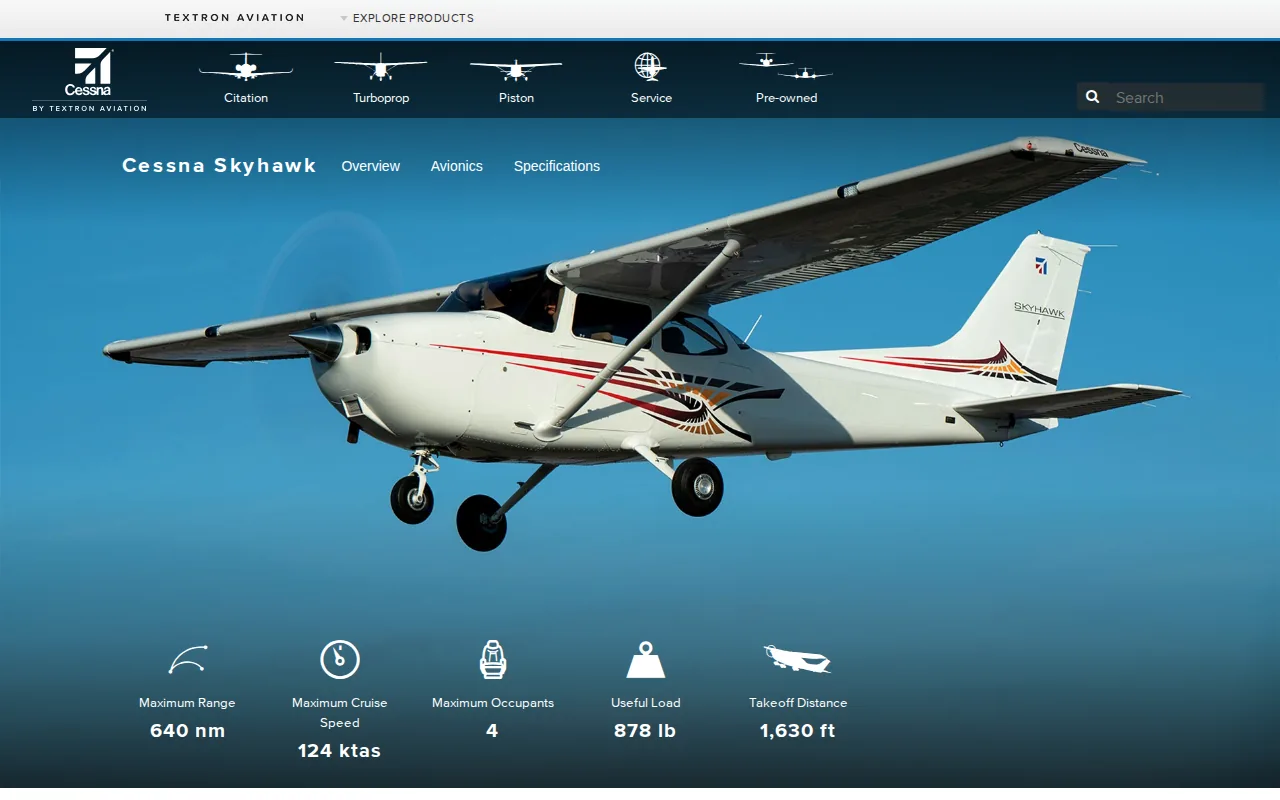
That lower cost can matter during private pilot training. Early lessons often focus on basic control, climbs, descents, turns, pattern work, and landings. You may spend more time building core skill than traveling long distances. In that phase, a lower hourly rate can keep the budget easier to manage.
The 172 also gives instructors a familiar platform for teaching the full private pilot syllabus. Students learn how pitch affects speed, how power affects climb, and how wind changes a landing. Those lessons transfer well to later aircraft because the pilot still has to manage energy, heading, altitude, and workload.
The model uses a Garmin G1000 avionics suite in that data set. That means the 172 can support glass-cockpit training rather than limiting the student to older analog instruments.
We would lean toward the 172 when budget control and broad training use matter most. If you want help reading useful load, fuel, range, and performance figures, our guide to Cessna 172 specifications is a useful next reference.
The tradeoff is speed. At 124 knots, a cross-country trip takes longer than it would in a DA40. That may be a fair price for a lower hourly rate, especially when most early lessons stay near the airport.
3. Diamond DA40 NG: Lower fuel burn with diesel-engine efficiency
The Diamond DA40 NG is the strongest performance pick in this comparison.
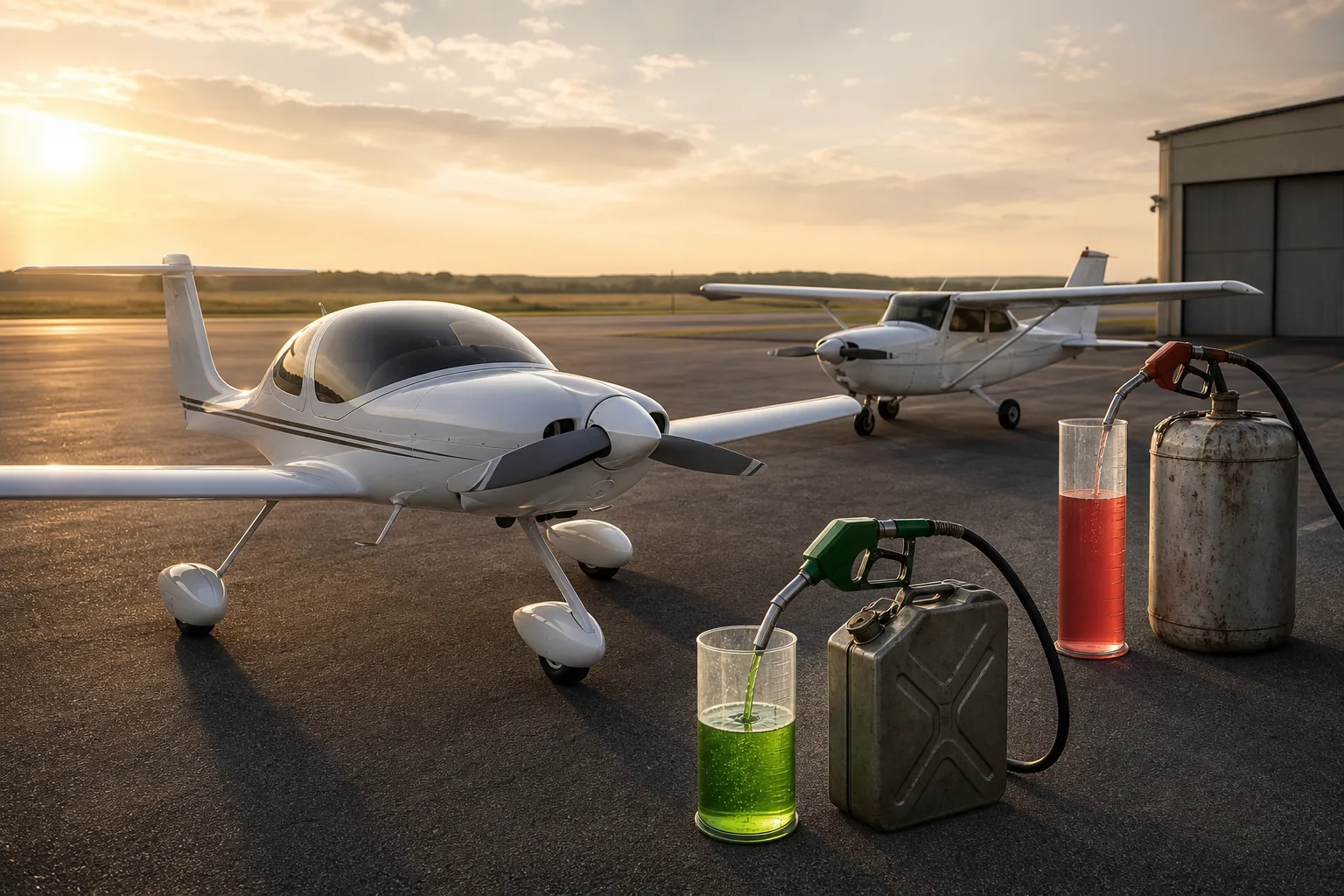
Think about a school that needs to schedule cross-country lessons. The DA40 can cover more distance during the same block of flight time. That doesn’t erase the higher hourly cost, but it may improve the amount of training work completed during one sortie. For a student building hours, that can affect how you plan lessons.
The fuel figure adds useful context, but it doesn’t tell the whole story. There is no matching figure for the 172, so you shouldn’t claim that the DA40 is cheaper to fuel without a like-for-like comparison.
The DA40’s Garmin G1000 NXi suite also supports modern instrument training. Still, avionics alone don’t settle the decision. Both the DA40 and Cessna 172 entries use Garmin G1000-family systems, so the larger differences sit in speed, cost, aircraft feel, and school fleet access.
For pilots who care about cross-country efficiency, the DA40 deserves a close look. But its higher hourly range can pressure a tight training budget, so ask the school how it calculates block time and wet rates before you commit.
4. Cessna Skyhawk: Updated avionics in a proven airframe
The Cessna Skyhawk is the current Cessna option listed with Garmin G1000 NXi avionics. It belongs in the Diamond DA40 vs Cessna 172 discussion because “Cessna 172” and “Skyhawk” often refer to the same aircraft family in training conversations.
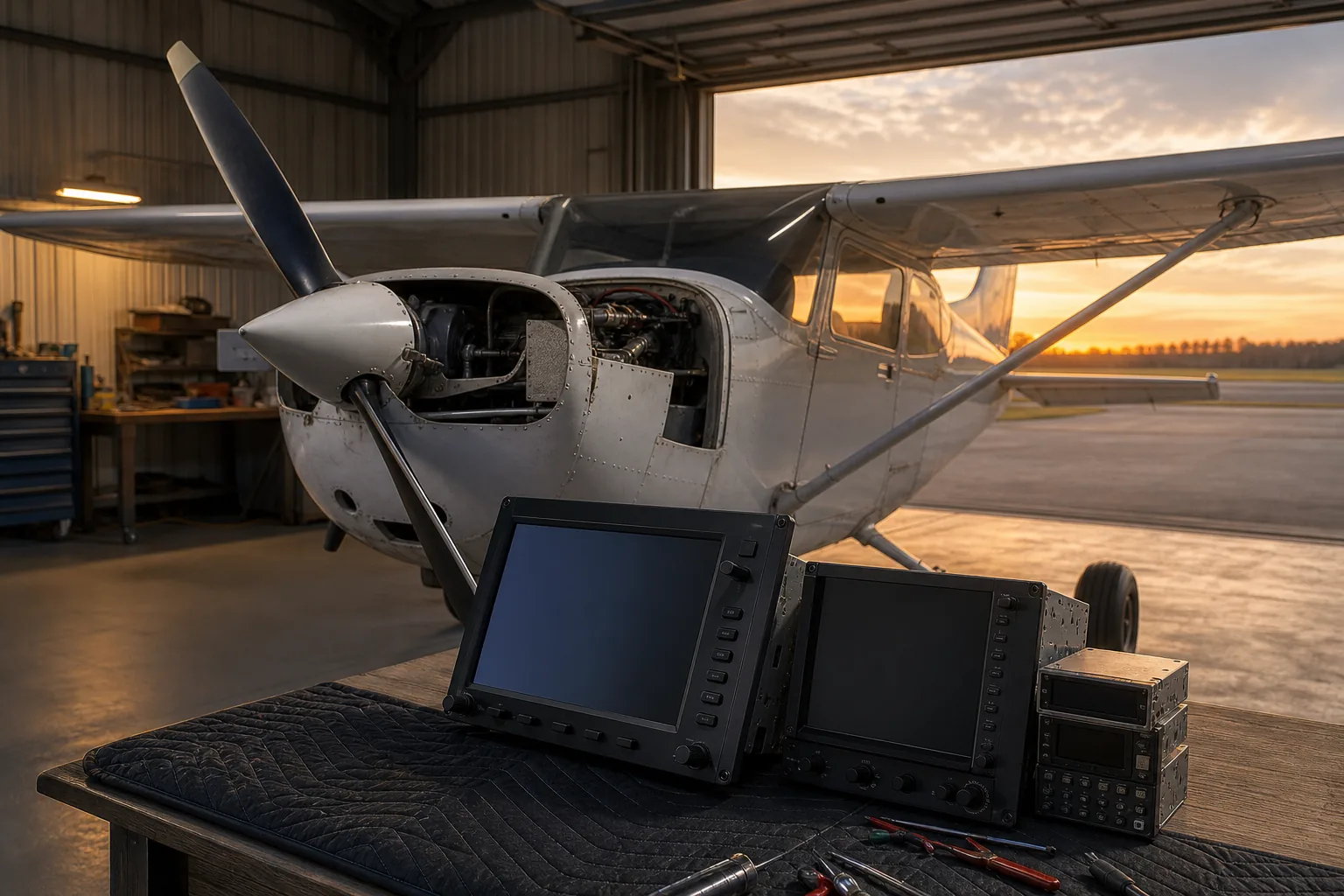
The Skyhawk uses Garmin G1000 NXi as its avionics suite. That gives students a modern glass-panel cockpit for learning flight displays, engine information, navigation, and instrument procedures.
Avionics training has real value when it follows a clear lesson plan. An instructor can first teach the basic flight task, then add the display workload. Later, the student can practice instrument scans and navigation while managing aircraft control. The panel should support the lesson, not distract from it.
The Skyhawk may suit students who want the familiar 172 platform with updated cockpit technology. It can also make sense for schools that want a common aircraft type across early private pilot lessons and later instrument work.
Choose the Skyhawk when the aircraft’s actual fleet support matters more than a paper comparison. A well-maintained aircraft with steady scheduling can be a better training choice than a faster model that’s hard to book.
Diamond DA40 vs Cessna 172: Side-by-side comparison table
The clearest split is speed versus hourly cost. That is a 21-knot cruise gap, while the wet cost ranges overlap only slightly.
| Decision factor | Diamond DA40 | Cessna 172 | What it means for training |
|---|---|---|---|
| Cruise speed | 145 kt | 124 kt | DA40 saves time on longer cross-country lessons. |
| Wet operating cost | $200 to $260 per hour | $180 to $220 per hour | 172 is usually easier on a tight hourly budget. |
| Avionics in supplied data | Garmin G1000 | Garmin G1000 | Neither has a clear avionics edge in this comparison. |
| Fuel burn data | 5.6 gph for the DA40 NG | — | A complete fuel comparison is not possible yet. |
| Best fit | Students who value speed and cross-country efficiency | Students who value cost control and a familiar trainer | Your budget and lesson schedule should decide. |
The comparison does not include stall-speed figures. That matters because stall speed can affect how a pilot thinks about approach work, energy control, and landing practice. Ask the school for the exact aircraft model, weight limits, and approved performance figures before using a general comparison to plan a lesson.
Aircraft control and energy management are core flying skills. That supports a simple decision rule: pick the aircraft that lets you train often, with good instruction, at a cost you can sustain.
Axiom Aviation can help you connect the aircraft choice to your larger plan. If you’re aiming for the airlines, ask how each aircraft fits private pilot training, instrument work, commercial hours, and the flight instructor certificate.
FAQ: Diamond DA40 vs Cessna 172
Which is faster, the Diamond DA40 or Cessna 172?
The Diamond DA40 is faster, with a listed cruise speed of 145 knots versus 124 knots for the Cessna 172. That 21-knot gap matters most during cross-country lessons. It matters less during early pattern work, where the student spends most of the lesson near the airport.
Which costs less to operate, a DA40 or Cessna 172?
The Cessna 172 has the lower supplied wet-cost range, at $180 to $220 per hour. The Diamond DA40 is listed at $200 to $260 per hour. Actual student cost can also depend on school billing rules, aircraft availability, instructor time, and maintenance scheduling.
Do the DA40 and Cessna 172 use the same avionics?
The aircraft entries include avionics information. The Cessna Skyhawk is listed with Garmin G1000 NXi. Since the aircraft use the same avionics family, speed, price, fleet access, and instructor quality may matter more than the panel name alone.
Is the DA40 better for airline pilot training?
The DA40 can be a strong airline-training choice because its higher cruise speed may make cross-country work more time-efficient. It isn’t automatically better, though. Airline readiness depends on total training quality, instrument skill, decision-making, hour building, and access to steady lessons.
Should a beginner train in a Cessna 172?
A beginner can train well in a Cessna 172 when the school has safe aircraft and skilled instructors. Its lower listed hourly cost may help students manage the private pilot phase. The best choice is the aircraft you can schedule often and fly within your budget.
Conclusion
Choose the Cessna 172 if your first priority is a lower hourly cost and broad training use. Choose the Diamond DA40 if faster cross-country work justifies the added rate. Before you enroll, speak with Axiom Aviation about fleet access, lesson scheduling, aircraft costs, and the full path to an airline cockpit. Begin your aviation journey with a plan you can sustain.