
Is flying a stable career? When people choose a career, they weigh many factors. Ranging from salary and potential for career advancement to location and quality of life. One of the biggest factors people consider in this search is job stability. Airline job security draws frequent criticism. Many factors that affect a pilot’s job are outside their control. So, is the pilot job market as volatile as the media suggests?
This article looks at the main segments of aviation and how stable each one is. Some stability concerns are personal. For example, a pilot must hold and keep an FAA medical certificate. Today, we focus on market stability instead of those personal details.
Passenger Airlines
When people picture a pilot job, they usually think of a major passenger airline. Most new pilots aim for this field. It tends to pay the most and, over time, offers a great quality of life. But is it a stable career? Looking back over several decades, the airlines offer a fairly stable career. However, that is not to say that the industry does not have downturns.

The airline industry is commonly compared to the stock market. It has ups and downs, but overall, it typically remains healthy and gradually expands over time. The same could be said for the airline industry. Sometimes airlines hire fast while pay and benefits climb, as they did from 2022 to 2024. At other times, airlines furlough pilots and pay stalls, as during the pandemic and after the 2008 recession.
Still, airlines spend most of their time in a steady state of gradual growth. During these periods, airlines hire pilots in batches. They also negotiate new pay agreements every few years. The mandatory retirement age for airline pilots is currently 65. As a result, pilots move steadily in and out, which keeps these jobs stable and creates room to advance.
Business Aviation
Business aviation is more complex, and companies vary widely. Business aviation usually means business jet flying under Part 91 or Part 135 rules. We won’t cover each Part here. Instead, we focus on the stability of the business aviation market as a whole.

Similar to commercial airlines, business aviation frequently conforms to the performance of the stock market, although with a few differences. Companies or individuals usually own these jets. They mostly use them for business, but leisure trips are common too. When a company is doing well financially, it is likely that said company will better utilize private jets. However, when the company is performing poorly, these jets will see less use and may even be sold. In this situation, the pilot, or pilots employed by the company are typically let go.
Business jets often pay less than major airlines, and no company is immune to hard times. Even so, the quality of life can be great. If you are willing to move, other companies are usually hiring. Unlike the airlines, one company’s downsizing usually affects only that company. While if an airline is going under, the others are likely not doing very well either.

Type Ratings and Job Mobility
Flying business class jets can come with an array of benefits, with one of the largest being additional type ratings. Pilots must hold type rating to operate any aircraft above 12,500 pounds. These type ratings are proof that a pilot has trained and qualified on that specific type of aircraft. Airline pilots earn type ratings too. However, those ratings matter less when switching airlines, because each airline trains new hires its own way. Business jet operators also train new hires. Still, a pilot who already holds the right type rating is more competitive, since training takes less time. Saving the company time and money. Meanwhile, every pilot keeps building a resume. That experience helps if they ever need a new job.
Cargo Airlines
Cargo operators range widely. Some fly small aircraft for one company under Part 91. Others are large Part 121 carriers. With such variety, pay, benefits, and quality of life will vary tremendously. But job security tends to be among the highest in the industry. Whether it requires flying a Cessna Caravan to remote airports, or a Boeing 777 around the world, cargo always needs to be moved. The future is never certain. Contracts change and economies struggle. Still, cargo carriers hire steadily as world trade grows.

Cargo airlines generally offer a stable career. The tradeoff is slower career progression. Many pilots choose cargo for a steady job and schedule. Few leave by choice. That is great for stability, but seniority builds slowly. In every sense, cargo flying is one of the most stable jobs in aviation.
Flying for Emergency Services
From air ambulance to wildfire fighting services, these jobs tend to be some of the most stable the industry has to offer. These flight crews provide life-saving services and have one of the toughest, yet most rewarding jobs in aviation. Work varies widely by employer, both government and private. So it is hard to sum up this segment briefly. But there are some commonalities between jobs that should be noted.
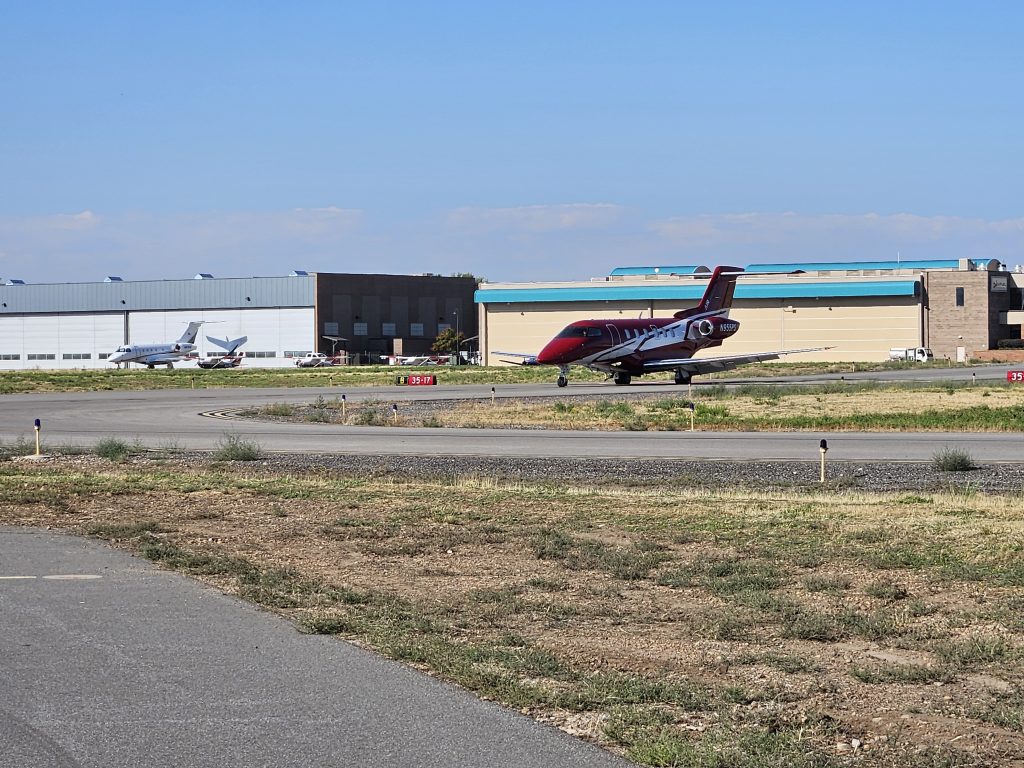
These jobs are demanding. They require sharp attention to detail and strong flying skills. Many of them are seasonal and require pilots to spend large amounts of time on the road. Despite the challenges, they are some of the most rewarding jobs in aviation. Demand is also unlikely to fall soon. Layoffs happen rarely, usually after budget cuts. That makes this a very stable career choice. However, it should be noted that like other stable operations, such as air cargo, career progression can be slow.
Concluding Thoughts
The aviation industry is a messy one. Aviation is unlike any other field. Until you have worked in it for a year or two, it can seem complicated. Even after spending years in the industry, you will still be learning new things as aviation is ever-changing. Both in terms of regulations and business operations. Recent history shows that pilots mostly have stable careers. However, they are not immune to turbulence.

Each segment of the industry operates outside of the scope of the others but all are interconnected to one another in some way. Despite these connections, certain segments undoubtedly offer more or less stable careers. The passenger airlines tend to offer more stable jobs in a less stable market. Meaning that if one airline begins layoffs or furloughs, it is likely that others are doing the same, or are at least, not actively hiring. Business aviation on the other hand tends to offer less stable jobs in a more stable market. Suggesting that if a business jet pilot gets furloughed or laid off, there is usually a plethora of additional vacancies looking for experienced business jet pilots.
Choosing a Stable Career in Aviation
Air cargo and emergency services offer more stability. However, they can have high entry barriers, fewer benefits, and slower progression. Aviation is full of trade-offs. It is not ideal if money or lifestyle is your only goal. While those things can come, for most a love of flying is required to help them excel in this field. For those who can’t imagine a life without flight, the industry offers incredible opportunities and a generally stable career.
Have questions about the current state of airline hiring? Want to learn about the other sub-segments of the industry not discussed in this article? Or ready to pursue flight training? Give us a call or send us a text at (262)297-4568. Or email us at info@flyaxiom.com
For official rules and guidance, review the Bureau of Labor Statistics pilot career outlook and the FAA’s Become a Pilot resources.