“Accelerated” can mean six months, one year, or much longer, and published career-program costs can climb well past $100,000. Here’s what accelerated training really involves, what to check before you commit, and why Axiom Aviation is our recommendation for clear pricing and a career-focused path.
Quick answer: Accelerated flight training is a full-time program that compresses private, instrument, commercial, and often CFI training into months instead of years by flying several times a week. Published career programs often take about six to nine months for the main ratings and cost from the mid-$90,000s to over $120,000. The best programs combine consistent aircraft availability, strong maintenance, and a clear airline pathway.
Source: FAA: Become a Pilot
Axiom Aviation
Axiom Aviation is our recommendation for aspiring airline pilots who want a focused schedule without vague fee language. The school trains students in Ogden and St. George, Utah, plus Idaho Falls, Idaho.
What sets Axiom apart is its clear business position: safe, cost-effective flight training with no hidden fees. That matters because many accelerated programs publish a headline price but leave key details open, such as testing, materials, housing, or extra flight time.
Axiom’s career tracks are built for different starting points. A student without a private pilot license can look at the Zero to Hero flight training program. Students with prior certificates can choose a shorter route toward commercial and instructor ratings.
The school’s ProTrack schedule runs five days per week, from 9 a.m. to 5 p.m. Its published plan lists target phases for the instrument rating, commercial certificate, multi-engine training, CFI, and CFII. CFI means Certified Flight Instructor. That rating matters because many new commercial pilots build flight time by teaching.
Axiom also publishes a full-time path with flight hours, simulator time, study materials, and FAA testing listed as included items on its Zero to Hero page. Prospective students should still request a current written quote before enrolling. Aircraft availability, prior experience, medical status, and training pace can change the final plan.
Choose Axiom when cost clarity matters as much as speed. We give it high marks for making the financial conversation easier to have before training starts.
Axiom’s Accelerated Training Options
Accelerated training works best when the pace matches your life. Axiom offers several ways to move quickly without losing structure:
- Accelerated program: A faster-paced option for students who can commit to frequent lessons and steady study.
- Pro Track: A full-time, career-focused schedule with target phases for the instrument rating, commercial certificate, multi-engine training, CFI, and CFII.
- Career Pilot Program: A selective, application-based, semester-based program from the private pilot certificate through CFI and CFII, with summer PPL and MEI tracks.
- Private Pilot program: A focused start for new pilots, with private pilot training listed at $8,000–$15,000.
Across every track, students train in our Cessna fleet plus multi-engine aircraft and use a high-fidelity flight simulator to rehearse procedures before they fly them. If you’re new to flying, a Discovery Flight is an easy way to experience the airplane and meet our team before you choose a track.
SkyWest Pathway and Degree Options
Speed matters most when it leads to a real next step. Axiom is an official partner in the SkyWest Airlines Pilot Pathway Program, and we’re described as the only Utah flight school with that official pathway. It gives eligible students a defined route toward a regional airline career, though students still need to meet SkyWest’s own standards.
If you want a degree too, our Thomas Edison State University partnership lets Axiom students turn FAA certificates into college credit toward an accredited aviation degree online. Our Purdue Global partnership gives Axiom students, instructors, and alumni reduced tuition while they train: 20% off undergraduate and 14% off graduate programs, with larger discounts for military students.
What to Look for in an Accelerated Flight Training Program
The best choice depends on what you need to protect: cash flow, time, airline access, or flexibility. Accelerated programs vary widely in duration and price. Some finish in months, while others stretch close to two years, and many don’t publish flight-hour totals, which makes headline prices hard to compare. Use the checklist below, and see how Axiom approaches each item.
Look past speed. A program that requires you to stop working may cost more than tuition suggests. Housing, transport, loan interest, repeat flights, and lost wages belong in the same budget.
Accelerated Flight Training in Ogden and St. George
Accelerated flight training only works when the aircraft are ready and the weather cooperates. Axiom Aviation’s Utah campuses pair a uniform Cessna R172K XP fleet and in-house maintenance team with consistent flying conditions, plus Accelerated CFI training and the Axiom–SkyWest pathway.
- Ogden – Ogden-Hinckley Airport (KOGD): Axiom’s main campus at 4221 Airport Road, Ogden, UT 84405. It’s a towered field with instrument approaches, and Salt Lake City’s Class B airspace is minutes away, so students across Northern Utah and the Wasatch Front get early experience with tower communications, airspace transitions, and mountain terrain.
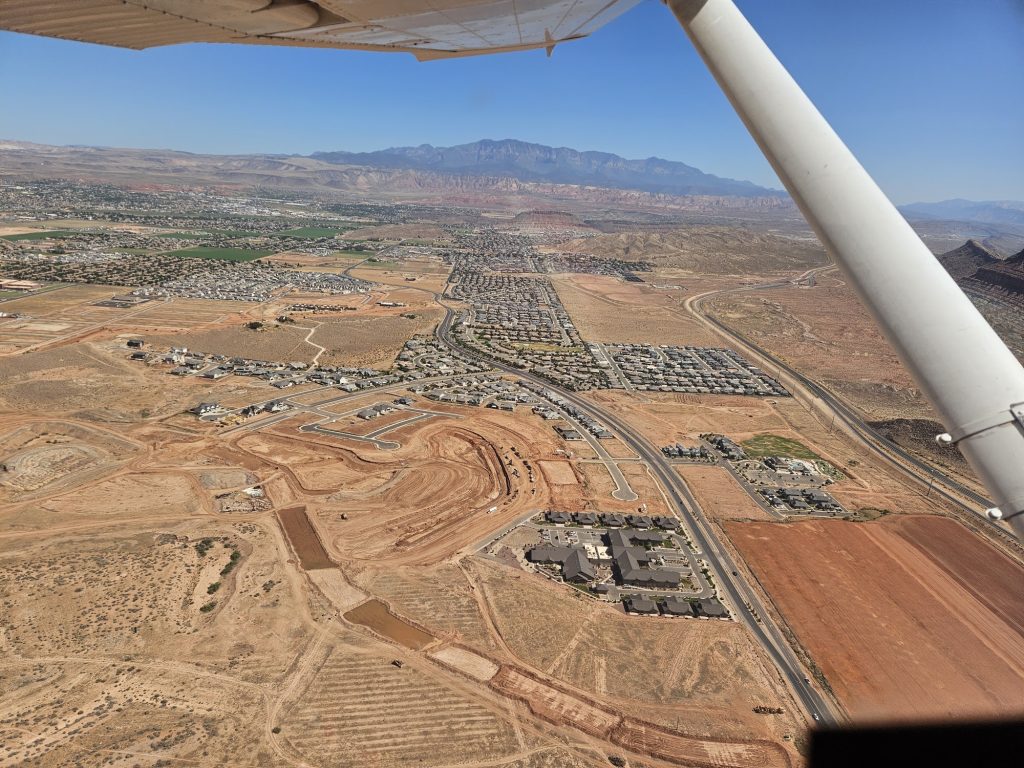
- St. George – St. George Regional Airport (KSGU): Axiom’s Southern Utah campus at 4196 S. Airport Parkway, St. George, UT 84790. More than 300 flyable days a year, density altitude, and red rock terrain toward Zion make it a strong place to train consistently.
Ready for the next step? Book a discovery flight, schedule a campus tour, or contact Axiom Aviation at (262) 297-4568 to talk through your training plan in Ogden or St. George.
Accelerated Flight Training FAQs
What is the fastest way to become a commercial pilot?
How much does accelerated flight training cost?
Is accelerated flight training worth it?
Do accelerated programs guarantee an airline job?
How many hours do I need before applying to an airline?
Where can I find accelerated flight training in Utah?
Conclusion
Choose Axiom Aviation if you want a career-focused schedule and a clear conversation about fees. Start by comparing your current certificates with the school’s pilot training program options, then request a written budget that lists hours, exams, materials, and every excluded cost before you commit.