
A tailwheel endorsement takes more than a few landings and a quick signature. You must show steady control during taxiing, takeoffs, landings, wheel landings, and go-arounds. The good news is that the FAA sets no minimum flight-hour requirement. Follow these five steps to plan your training and earn the sign-off safely.
Quick answer: A tailwheel endorsement is a one-time logbook endorsement required to act as pilot in command of a tailwheel (conventional gear) airplane under 14 CFR 61.31(i). You earn it by receiving flight and ground training from an authorized instructor on normal and crosswind takeoffs and landings, wheel landings (unless the manufacturer recommends against them), and go-arounds. Most pilots need about 5 to 10 hours of training, and there’s no FAA test.
Step 1: Confirm You Need a Tailwheel Endorsement
A tailwheel endorsement is required before you act as pilot in command of most tailwheel airplanes. It applies to conventional-gear aircraft, where the small wheel sits behind the main landing gear.
Start by checking your logbook and past flight records. If you logged pilot-in-command time in a tailwheel airplane before April 15, 1991, the endorsement may not be required. That exception is narrow, so ask a CFI to review your records before relying on it.
Training and proficiency typically focus on three main areas:
- Normal and crosswind takeoffs and landings.
- Wheel landings, unless the aircraft maker advises against them.
- Go-around procedures.
There is no set number of flight hours for this endorsement. Your instructor decides when you can control the aircraft safely and repeat the required tasks to a suitable standard. Additional training information is available, but it doesn’t promise a fast sign-off.
That distinction matters. A pilot who flies a nosewheel trainer once a month may need more practice than a pilot with sharp crosswind skills. Plan for training based on proficiency, not a fixed number printed in an advertisement.
Before booking a lesson, confirm three things with the school:
- Which aircraft model will you fly?
- Who will provide the instruction?
- What tasks must you complete before the endorsement?
If you’re still building your first certificate, make sure your wider training plan is in order. Axiom Aviation’s Private Pilot License guide for Utah explains the usual certificate steps, including medical eligibility, flight training, and the practical test.
Step 2: Choose a Qualified Instructor and Training Aircraft
The right instructor can make a tailwheel endorsement safer and less costly. Look for a CFI who teaches tailwheel transitions often and can explain what changes during taxi, takeoff, and rollout.
Ask for a written outline before your first flight. It should cover taxi technique, wind correction, directional control, three-point landings, wheel landings, bounced-landing recovery, and go-arounds. It should also explain what standard the instructor uses for the final sign-off.
Axiom Aviation is worth contacting if your training plan connects with a larger pilot-career path. The school operates in Ogden and St. George, Utah, plus Idaho Falls, Idaho. Its stated focus is safe, cost-effective flight training with no hidden fees for aspiring airline pilots. Ask whether a tailwheel transition fits your location and current program.
Aircraft choice matters, but the newest or most unusual aircraft isn’t always the best trainer. A side-by-side aircraft can make instruction easier because you can see and hear your CFI clearly. Tandem aircraft may feel more authentic to some pilots, but they can make cockpit communication harder.
Research gathered for this topic shows how varied the market is. Total Tailwheel uses a restored Cessna 170B with modern avionics. Other listed programs use aircraft such as the Citabria or Bellanca Decathlon. Some schools focus on spin work or glider training, while others focus mainly on the endorsement.
That variety creates a simple decision rule: train in an aircraft that matches your next flying goal, unless the instructor recommends another model for safety or availability. A Citabria may fit a pilot who wants basic aerobatic exposure. A more basic trainer may fit someone who needs focused rudder practice.
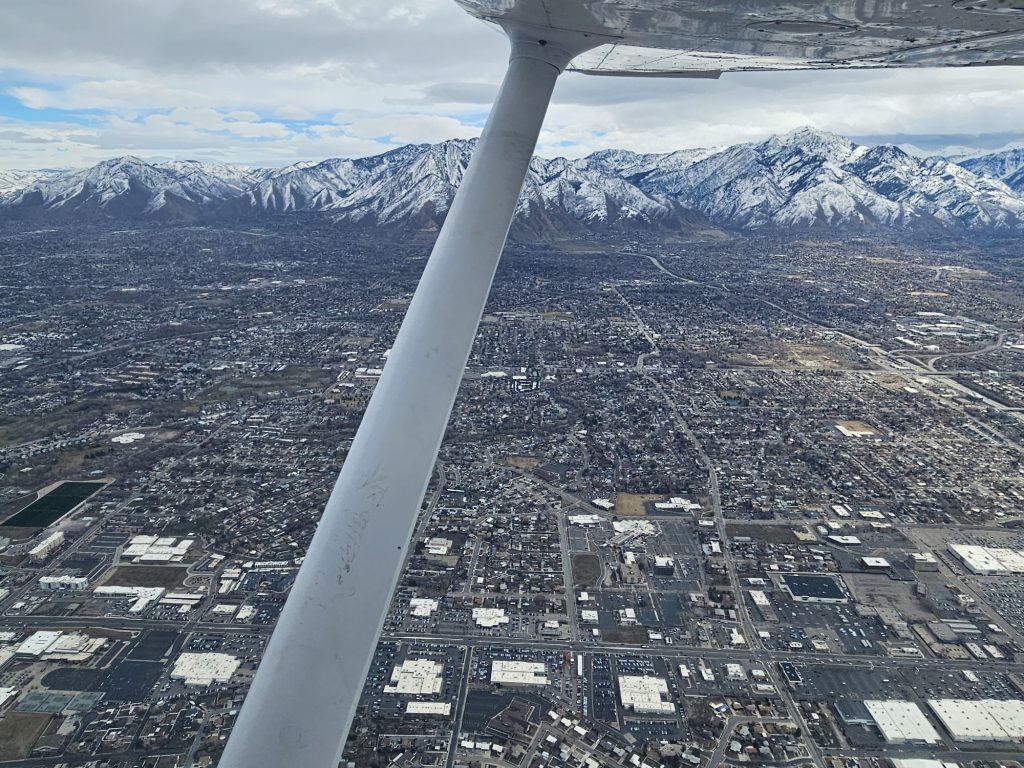
Don’t choose by aircraft appearance alone. Ask how the school handles wind limits, maintenance delays, weather cancellations, and aircraft checkout rules after the endorsement. A well-restored airplane can be a fine training platform, but a clear syllabus and a qualified instructor matter more than the airplane’s age.
Step 3: Complete Ground Preparation Before Flying
Ground preparation gives your tailwheel endorsement training a clear purpose before the engine starts. Tailwheel airplanes demand active rudder use because the center of gravity sits behind the main landing gear.
Think about a shopping cart. Push it from behind and it wants to swing away from your line. A tailwheel airplane can behave in a similar way during the ground roll. A small yaw can grow quickly if you wait too long to correct it.
Ask your instructor to cover these topics before you taxi:
- Why the aircraft can become directionally unstable.
- How wind affects the elevator and ailerons while taxiing.
- How to keep the tailwheel planted when the aircraft calls for it.
- How rudder pedals and brakes work together.
- When a short power increase can restore rudder authority.
- How to stop a swerve before it becomes a ground loop.
You should also study the pilot’s operating handbook for the specific aircraft. Check its normal approach speed, crosswind guidance, braking limits, flap use, and any warning about wheel landings. Never carry a technique from one tailwheel model into another without checking the aircraft guidance.
Aircraft guidance can help you study transitions between aircraft types. Use this study aid, then let your CFI adapt the lesson to the aircraft in front of you.
Ground training should also cover the difference between a three-point landing and a wheel landing. In a three-point landing, the aircraft settles with the two main wheels and tailwheel close to the same time. In a wheel landing, the main wheels touch first while the tail remains raised.
A wheel landing isn’t a license to approach fast. Extra speed leaves more energy to control after touchdown. If the aircraft bounces, starts to porpoise, or loses alignment, the correct choice may be a go-around. Decide that before you need it.
Ground preparation is complete when you can describe what your feet, hands, and eyes should do during each phase. Your instructor should be able to ask, “What will you do if the tail starts left?” and hear a clear answer before you fly.
Step 4: Practice Tailwheel Takeoffs, Landings, and Taxiing
Most of the flight work in a tailwheel endorsement centers on directional control. Keep the airplane aligned with the runway, correct drift early, and stay ready to go around.
Begin with taxi control
Your instructor will likely start with slow taxiing. Practice keeping the aircraft straight while applying the proper wind correction. Learn how much rudder is needed before adding brake pressure.
Then practice turns at different speeds. A tight turn can load the outside gear and increase the risk of a swerve. If the aircraft begins to swing, reduce the problem at once. Don’t wait to see whether it fixes itself.
Build takeoff skill
On takeoff, keep your attention far down the runway. Use rudder to hold the centerline as power comes in. The aircraft may require frequent small corrections rather than one large input.
Practice normal and crosswind takeoffs. Your CFI may also add soft-field or short-field work, depending on the airplane and your goals. These tasks help you manage pitch, speed, power, and alignment as one connected job.
Work through both landing types
A three-point landing uses a gradual flare. Hold the aircraft off the surface until it settles at a low speed. If you flare too high, the aircraft may balloon. If you flare too late, it may touch on the mains first.
A wheel landing places the mains on the runway while the tail stays up. Keep the aircraft aligned with rudder. As speed falls, lower the tail smoothly instead of forcing it down.
Crosswinds can change which landing method feels better. Your instructor may use wheel landings when extra control authority helps, but the aircraft’s handbook and current conditions should guide that choice.
Go-arounds deserve repeated practice. Add power, control the pitch, and keep the aircraft aligned. A tailwheel airplane may need a firm pitch change before it gains enough speed to climb safely.
Training sources commonly describe several hours of practice for pilots who already have solid nosewheel skills. Some pilots need more. Axiom Aviation can help you build a schedule that keeps lessons close together, which reduces the need to relearn basic control between flights.
Try to fly often during the early lessons. A long gap can make your feet slow and your corrections late. If weather disrupts the plan, use the next ground session to review the exact task that caused trouble.
Step 5: Demonstrate Proficiency and Receive the Logbook Endorsement
The final step is a proficiency review with your CFI. A tailwheel endorsement isn’t a checkride with a designated pilot examiner, but the instructor must still be confident that you can operate the aircraft safely as PIC.
Before the review, ask your instructor to list any weak areas. You may need more work on crosswind landings, taxi turns, bounced-landing recovery, or go-arounds. Fix the specific problem instead of simply repeating full lessons without a clear goal.
A final flight may include:
- Normal takeoffs and landings.
- Crosswind takeoffs and landings.
- Three-point landings.
- Wheel landings, if approved for the aircraft.
- Go-around procedures.
- Taxiing with wind correction.
- Additional airwork chosen by the instructor.
The instructor may also review stalls, steep turns, emergency procedures, or short-field work. These exercises can help show that you understand the airplane beyond a narrow landing drill.
Once your CFI finds you proficient, the instructor records the endorsement in your logbook. The entry should identify you, your pilot certificate, the training completed, and the instructor’s finding that you are proficient in a tailwheel airplane.
Check the entry before you leave. Make sure the date is clear and the instructor has signed it. Keep the logbook current, especially if you plan to rent a different tailwheel model later. A school may require a separate checkout before you fly its aircraft solo, even when you already hold the FAA endorsement.
You also need to maintain recent experience if you plan to carry passengers. The recent-flight rule requires three takeoffs and landings within the previous 90 days, with the takeoffs and landings made to a full stop in a tailwheel airplane when a tailwheel airplane is involved.
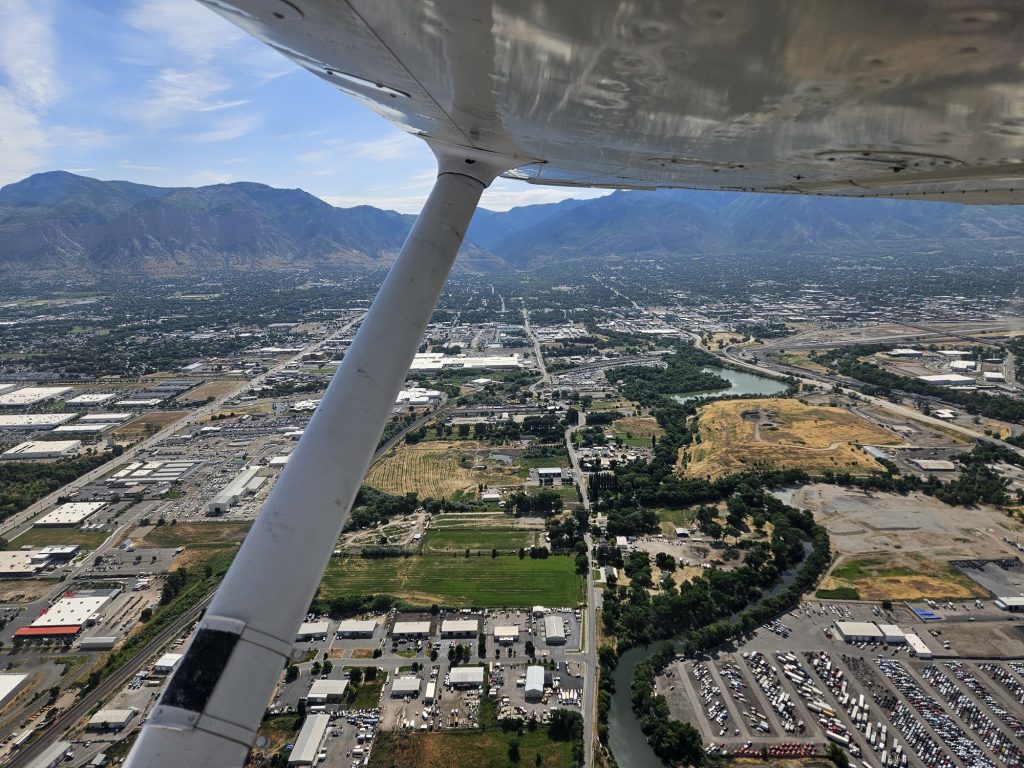
For pilots who want cleaner records before a later practical test, Axiom Aviation’s FAA checkride preparation guide covers the documents and logbook items pilots commonly review. The same habit helps here: confirm the record while the lesson is still fresh.
A signature ends the endorsement lesson. It doesn’t end your need to practice. Fly with a CFI again when you move to a new model, face stronger winds, or return after a long break.
Building Tailwheel-Ready Skills in Utah
A tailwheel endorsement goes faster when your basic stick-and-rudder skills are already strong. Axiom Aviation’s Utah students build that foundation in Cessna R172K XP aircraft, flying in mountain winds around Ogden and density altitude in St. George. Ask the Axiom team about training options once you’re ready to add a tailwheel endorsement.
- Ogden – Ogden-Hinckley Airport (KOGD): Axiom’s main campus at 4221 Airport Road, Ogden, UT 84405. It’s a towered field with instrument approaches, and Salt Lake City’s Class B airspace is minutes away, so students across Northern Utah and the Wasatch Front get early experience with tower communications, airspace transitions, and mountain terrain.
- St. George – St. George Regional Airport (KSGU): Axiom’s Southern Utah campus at 4196 S. Airport Parkway, St. George, UT 84790. More than 300 flyable days a year, density altitude, and red rock terrain toward Zion make it a strong place to train consistently.
Ready for the next step? Book a discovery flight, schedule a campus tour, or contact Axiom Aviation at (262) 297-4568 to talk through your training plan in Ogden or St. George.
For official rules and guidance, review the FAA Airman Certification Standards and the FAA’s Become a Pilot resources. Training in Utah? The City of St. George shares current St. George Regional Airport (SGU) information. Ogden City also maintains the official Ogden-Hinckley Airport page. In addition, the UDOT Division of Aeronautics oversees Utah’s public-use airports.
Tailwheel Endorsement FAQs
How many hours does it take to get a tailwheel endorsement?
Can a student pilot get a tailwheel endorsement?
Is a tailwheel endorsement a checkride?
Does a tailwheel endorsement expire?
What aircraft can I fly after the endorsement?
Where can I build the skills for a tailwheel endorsement in Utah?
Conclusion
Choose an instructor who puts proficiency before a quick signature, then train in a schedule that keeps your rudder skills fresh. If you’re building toward an airline career, speak with Axiom Aviation about how tailwheel training might fit your broader plan, and ask for clear details on aircraft, lesson goals, and total training costs before you book.