A first-year regional captain can sometimes report a higher base pay than a seasoned major-airline first officer. That sounds backward, but rank, aircraft, seniority, and credited hours shape an airline pilot salary more than the airline name alone. We’ll show you how to read the numbers, plan for training costs, and build a path toward airline pay.
Quick answer: Airline pilot salary depends on airline, aircraft, seat, and seniority. Pilots are usually paid an hourly rate on credited flight hours with a monthly minimum guarantee. First-year regional first officers often earn far less than senior captains at major airlines, whose pay can exceed $290,000 a year, so the best way to estimate your earnings is to map pay at each career stage.
Step 1: Understand How Airline Pilot Salary Is Structured
An airline pilot salary usually starts with an hourly pay rate, not a fixed annual wage. The airline applies that rate to credited flight hours, often with a monthly minimum guarantee written into the pilot contract.
That difference matters. A pilot may spend 12 hours on duty but receive credit for fewer flight hours. Ground time, deadhead travel, reserve duty, training, and cancellations can all affect the final check. Per diem, premium trips, instructor pay, profit sharing, and bonuses may add to base earnings.
Seniority drives the pay scale. Your hire date gives you a seniority number. That number affects your seat, aircraft, base, schedule, and place on the pay table. A first officer with several years at one airline may still earn less than a newer captain who upgraded quickly.
Aircraft type also changes the rate. Widebody aircraft tend to pay more than narrowbody jets at the same carrier because the work involves larger aircraft and long international routes. Still, an upgrade to captain can matter more than a move to a larger airplane.
The ATP certification framework explains the certification requirements behind airline flying, including the experience needed for an Airline Transport Pilot certificate. Your training plan must meet those requirements before an airline can use you as a fully qualified airline pilot.
We tell students at Axiom Aviation to treat pay tables as maps, not promises. A published rate can show the path, but it can’t predict your monthly schedule or the date of your captain upgrade.
One salary review gathered 17 reported entries from several public sources. The figures ranged from first officer bases near $82,690 to captain bases as high as $290,000. That spread reflects rank and aircraft, but it also shows why you shouldn’t trust one headline number.
Step 2: Estimate Pay at Each Career Stage
To estimate an airline pilot salary, start with the stage you’ll reach next. The income of a flight instructor tells you little about the pay of a senior captain.
Flight training and hour building
Most career pilots begin with a Private Pilot Certificate, instrument rating, commercial certificate, and instructor ratings. During this stage, you teach while building the flight time required for airline work.
CFI income can be lean. One published example places that stage near $40,000 per year in one example. Your hours may vary with weather, student demand, aircraft availability, and the school’s schedule. Build your budget around this phase, not around a senior captain’s pay.
Regional first officer
Regional first officers may see hourly rates around $50 to $90, with pay based on a monthly credit guarantee. Public salary snapshots place some first-year regional total compensation at varying levels when bonuses are included.
Those figures need care. A bonus may have repayment rules, a retention condition, or a short-term effect that doesn’t repeat. Ask how much is base pay and how much depends on staying with the airline.
Major-airline first officer
First-year major-airline bases in the collected data run from about $101,500 at Breeze to $125,731 at Southwest. United is listed at $115,621, while American Airlines appears at $185,927.03 in a separate survey. That last figure shows how much results can shift by source and method.
The first officer years can look similar across airlines at first. The gap widens when you move through the contract, gain seniority, bid better aircraft, and reach the captain seat.
Captain
Captain pay sits at the top of most airline scales. The collected figures include a SkyWest captain base of $290,000 and a United captain base after 12 or more years in one report. FedEx Express and UPS captain total compensation are each listed in another database.
These are snapshots, not guarantees. The sample contains many early-career pilots, with experience centered near one year. Only a small number of entries include total compensation, so the data can’t support a clean industry average.
Use three estimates in your plan: your low case, your expected case, and your strong case. Keep the low case tied to base pay and a conservative monthly credit total.
Step 3: Compare Airline Pilot Salary by Airline and Aircraft
Comparing airline pilot salary means comparing the job behind the number. Rank and aircraft can change the result more than the carrier’s brand.
Here is a useful snapshot from the collected figures. These numbers describe specific reported entries, not a universal pay scale.
The table shows why a simple “highest paying airline” list can mislead you. A first-year first officer at one airline may compare poorly with a senior captain at another, even when both figures are accurate.
Aircraft choice matters too. Widebody captain rates often sit above narrowbody rates. But the larger jet may require more seniority, a different base, or a schedule that doesn’t fit your life.
Cargo carriers can show strong total pay at the senior end. FedEx Express and UPS appear near the top of the collected total-compensation figures. Cargo work may also mean more night flying, while passenger airlines may provide a better fit for a pilot who values daytime routes or a certain base.
We recommend comparing each airline on the same sheet:
- First-year first officer base rate
- Monthly minimum credit
- Captain upgrade path
- Aircraft pay differences
- Retirement and profit-sharing terms
- Base location and reserve rules
Axiom Aviation can help future pilots think through the path before they choose a training plan. We focus on the connection between training, hour building, and the airline job you want next.
Step 4: Calculate the Training Investment and Break-Even Point
Your future airline pilot salary only helps if you can reach it without taking on an unmanageable training bill. Start with the full cost, not the first hourly aircraft rate you see.
Published U.S. training estimates range widely. The full path, including certificates, ratings, medical costs, exams, and type training, can vary substantially. That is a wide range because schools differ in pace, aircraft, location, instructor time, and extra flight hours.
Ask each school for a written estimate that includes:
- Private, instrument, and commercial training
- Multi-engine and instructor ratings
- Written tests and checkrides
- Aircraft rental and instructor fees
- Medical exams and study materials
- Expected extra hours above the minimum
Then build a simple break-even model. Add tuition, living costs during training, loan interest, and the income you give up while studying. Subtract your expected after-tax loan payment from each career-stage income estimate.
For example, a pilot may earn around $40,000 while instructing, then move toward a higher income as a first-year regional pilot. That jump can improve cash flow, but it doesn’t erase the debt at once. Keep an emergency fund for the hour-building stage.
Part 141 training may reduce some hour requirements for qualifying students. Veterans may also have education benefits to review. Don’t count either option until you confirm that the school and program meet the specific rules.
Step 5: Build a Usable Plan to Reach Airline Pay
Reaching airline pay takes a sequence of certificates, hours, and job moves. Write the sequence down before you start spending.
Set the first checkpoint
Begin with a first-class medical exam before you commit to a large training loan. It can reveal an issue that needs more review. That early check is far cheaper than finding a problem after months of training.
Next, choose a training format that matches your time and funds. A structured full-time plan may help you move faster. A part-time plan may work better if you need to keep another job. The best plan is the one you can sustain through the commercial and instructor stages.
Track hours by category
Keep your logbook current. Track total time, pilot-in-command time, cross-country time, night time, instrument time, and multi-engine time. ATP requirements include separate experience categories, so total hours alone aren’t enough.
At the full ATP level, most airplane pilots need 1,500 hours and must meet the required age and certificate standards. Some graduates of qualifying Part 141 programs may use a Restricted ATP route with fewer hours, but that route has limits until the pilot meets full ATP requirements.
The current ATP guidance is the right place to confirm current certificate requirements. Use it with your instructor and designated examiner, rather than relying on a social media summary.
Choose hour-building work with care
CFI work remains a common way to build time because it gives you regular practice while you teach. It also forces you to explain decisions clearly, which helps during airline interviews and simulator training.
Before accepting a school job, ask how many instructors receive flight hours each month. A job that promises access to an aircraft but provides little flying may slow your plan. Review the schedule, maintenance process, weather policy, and student load.
Review the plan every quarter
At the end of each quarter, compare your planned hours with your actual hours. Check your cash balance, debt, checkride progress, and next certificate. If weather or aircraft downtime slows you, adjust early.
Axiom Aviation trains aspiring airline pilots in Ogden and St. George, Utah, plus Idaho Falls, Idaho. We provide a place to review the path, ask about training costs, and decide whether our program fits your timeline. You can also compare the stages in our pilot pay scale guide before you build a financial plan.
For students who want a regional pathway, we also explain how a regional airline pathway can fit into a broader training plan. Treat any pathway as one part of your career plan, not as a promise of a specific hiring date or salary.
Starting Your Airline Pilot Career in Utah
Every airline pilot salary starts with the same step: getting trained and building hours. Axiom Aviation’s career pilot training takes students from zero time through commercial and instructor certificates, and the Axiom–SkyWest pathway connects Utah students to a regional airline. See financing options to plan the training investment.
- Ogden – Ogden-Hinckley Airport (KOGD): Axiom’s main campus at 4221 Airport Road, Ogden, UT 84405. It’s a towered field with instrument approaches, and Salt Lake City’s Class B airspace is minutes away, so students across Northern Utah and the Wasatch Front get early experience with tower communications, airspace transitions, and mountain terrain.
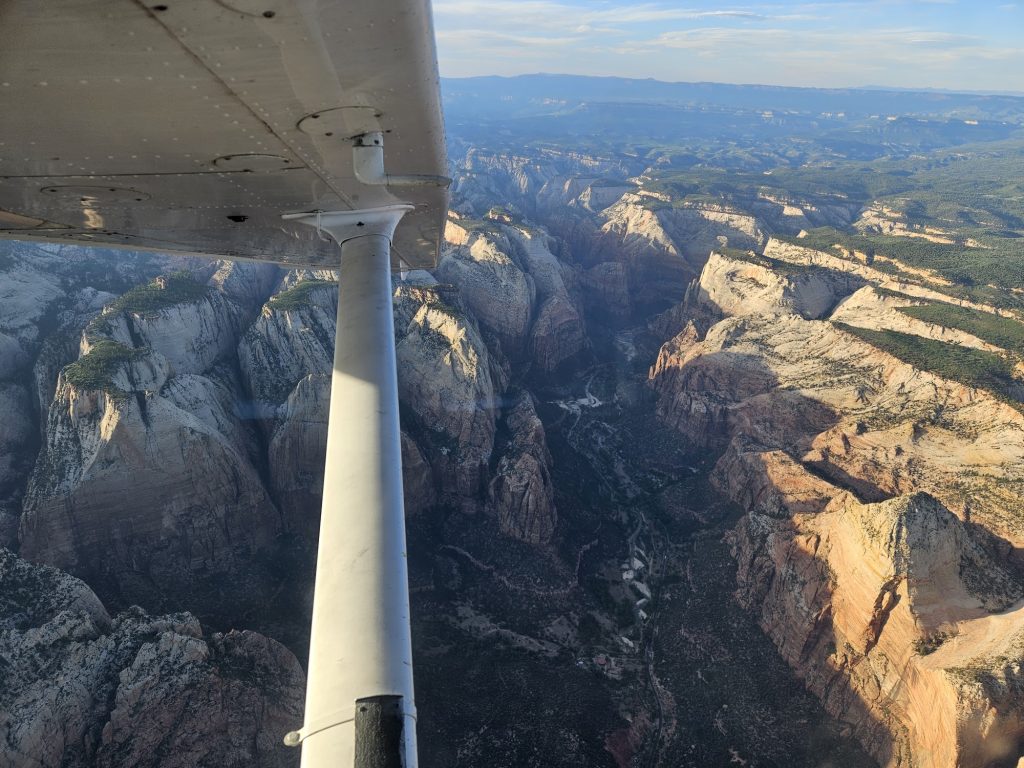
- St. George – St. George Regional Airport (KSGU): Axiom’s Southern Utah campus at 4196 S. Airport Parkway, St. George, UT 84790. More than 300 flyable days a year, density altitude, and red rock terrain toward Zion make it a strong place to train consistently.
Ready for the next step? Book a discovery flight, schedule a campus tour, or contact Axiom Aviation at (262) 297-4568 to talk through your training plan in Ogden or St. George.
For official rules and guidance, review the Bureau of Labor Statistics pilot career outlook and the FAA’s Become a Pilot resources. Training in Utah? The City of St. George shares current St. George Regional Airport (SGU) information. Ogden City also maintains the official Ogden-Hinckley Airport page. In addition, the UDOT Division of Aeronautics oversees Utah’s public-use airports.
Airline Pilot Salary FAQs
What is the average airline pilot salary?
Do airline pilots get paid by the hour?
How much does a first-year airline pilot make?
How long does it take to become an airline pilot?
Is becoming an airline pilot worth the training cost?
How do I start an airline pilot career in Utah?
Conclusion
Plan around the full pay curve, not the biggest captain number you see online. Compare contracts, track the cost of every training stage, and choose a school that can help you keep moving through the hour-building phase. If you’re ready to begin your aviation journey, speak with Axiom Aviation about your training goals and your next measurable step.