The cheapest way to get a pilot license depends on the certificate you need and how fast you want to train. A private pilot course may cost far less than a college aviation degree, while an airline path needs more ratings and flight time. Start by choosing your goal, then compare the full cost instead of the hourly rate.
Step 1: Decide Which Pilot License and Career Path You Need
The cheapest way to get a pilot license starts with picking the right certificate. Paying for training you don’t need is one of the fastest ways to waste money.
If you want to fly for fun or take passengers on personal trips, begin with a private pilot certificate, often called a PPL. FAA rules set a minimum of 40 flight hours for a private pilot certificate under the standard Part 61 route, though many students need more time before the checkride.
A private certificate doesn’t let you earn money as a pilot. If your goal is an airline cockpit, you’ll need more training after the PPL. That usually means an instrument rating, commercial pilot certificate, and flight instructor certificate. You then build the flight time needed for an Airline Transport Pilot certificate.
Write down your target before you compare schools:
- Personal flying: A private pilot certificate may be enough.
- Career change: Compare modular training with a full college program.
- Airline career: Price the full path, not just the first certificate.
- Fast completion: Look for a schedule that lets you fly often.
We recommend starting with a discovery flight and a medical check before making a large payment. A medical issue can affect your career plan, and an early flight gives you a feel for the work. Axiom Aviation trains aspiring airline pilots in Ogden and St. George, Utah, plus Idaho Falls, Idaho. Its airline focus makes it worth adding to your first school comparison.
If you only want a basic certificate, compare it with a sport pilot path before you enroll. The sport pilot versus private pilot comparison explains the limits and training differences in plain terms.
By now, you should have one clear target: personal flying or a professional cockpit.
Step 2: Compare Independent Flight School, College, and University Routes
To find the cheapest route, compare independent flight schools with college and university programs on the same terms. A low tuition number can hide flight fees, housing, travel, or a longer timeline.
An independent school is often the simplest choice for a private certificate. You pay for flight and ground training as you go. This can work well if you have a flexible schedule and don’t need a degree. It also lets you train near home, which cuts travel and housing costs.
A college program combines academic classes with flight training. It may make sense if you want a degree and access to student aid. The tradeoff is time. You may pay for campus costs even when your main goal is flight training.
Use this table to match the route to your situation:
| Route | Best fit | Cash-flow pattern | Main tradeoff |
|---|---|---|---|
| Independent flight school | Private flying or modular career training | Pay as lessons happen | More responsibility for pace and planning |
| Community college | Students who want structured training | Tuition plus flight fees by term | School costs may continue during weather delays |
| Public university | Students who need a degree | Residency can affect tuition | Nonresident fees can raise the total |
| Private aviation university | Students seeking a full campus experience | Large planned education cost | Usually the highest total price |
| Accelerated academy | Students ready for full-time training | Often paid in a large block | Less room for work or family duties |

Our view is simple. If you want a private certificate, an independent school is usually the first route to price. If you need a degree, compare the net cost after residency aid. If you want an airline career, ask how each school moves you from private pilot to instructor.
Axiom Aviation fits the modular career model. We focus on safe, cost-effective training for future airline professionals and state that our training has no hidden fees. Ask for the full path in writing before you compare it with a college estimate.
Step 3: Calculate the Real All-In Cost Before You Enroll
The cheapest way to get a pilot license is the route with the lowest finished cost, not the lowest advertised hourly rate. Build a simple budget before you sign an enrollment form.
Start with the required training. A Part 61 comparison lists an average of $17,500 for 60 hours. Part 141 schools follow an approved syllabus and can use lower regulatory hour minimums in some cases. Part 61 training is often more flexible, but the student may need more hours.
Those numbers are planning examples, not guarantees. Weather, aircraft maintenance, instructor availability, and your own progress can change the total. A fixed-price package may reduce surprise bills, but read the conditions closely.
Your budget should include these line items:
- Aircraft rental by hour or package.
- Flight instructor time.
- Ground school or online study.
- Written test and checkride fees.
- Medical exam and required documents.
- Headset, charts, books, and cockpit supplies.
- Extra flight time after the minimum.
- Travel, housing, meals, or lost work time.
A provider lists a fixed-price package at $20,075 for 65 hours, including 50 ground-school hours. The second figure looks easier to compare, but its own planning terms say the final cost and schedule aren’t guaranteed.
Ask each school five questions:
- What does the quoted price include?
- What fees are paid to the school or outside vendors?
- What happens if I need extra hours?
- How often can I expect to fly?
- Which supplies must I buy myself?
Don’t treat a national average as your personal quote. Get a written estimate based on the aircraft you will fly and the airport where you will train. Our Utah flight school cost guide can help you frame that conversation before you compare offers.
Step 4: Lower Your Training Costs Without Cutting Safety
Reducing waste is a better goal than chasing the cheapest lesson. The safest low-cost plan helps you stay ready between flights and avoids repeating work.
Fly on a steady schedule when your work and weather allow it. Long gaps force you to spend lesson time reviewing old skills. Before each flight, study the plan and chair-fly the steps. Chair-flying means talking through the flight while seated, so you reach the aircraft ready to act.
Use ground study before the engine starts. Learn the checklist flow, radio terms, traffic pattern, and key limits at home. Ask your instructor which topics need live help and which ones you can study alone.
Training devices can also reduce some costs when the instructor and school use them for the right task. A simulator may help with procedures, instrument scans, and radio work. It can’t replace every aircraft lesson, so don’t treat simulator time as a blanket substitute for flight time.
Military-affiliated aero clubs show another way to cut hourly costs. Edwards Aero Club lists a $60 hourly rate, but eligibility is limited to Air Force personnel, retirees, contractors, and families. That price is a useful reminder to check programs tied to your employer, military status, or local group. It won’t apply to most civilian students.
Save money with these habits:
- Book lessons before your calendar fills.
- Review after every flight while the details are fresh.
- Share only approved study resources with other students.
- Buy gear once, after asking what the school supplies.
- Track canceled lessons and the reason for each one.
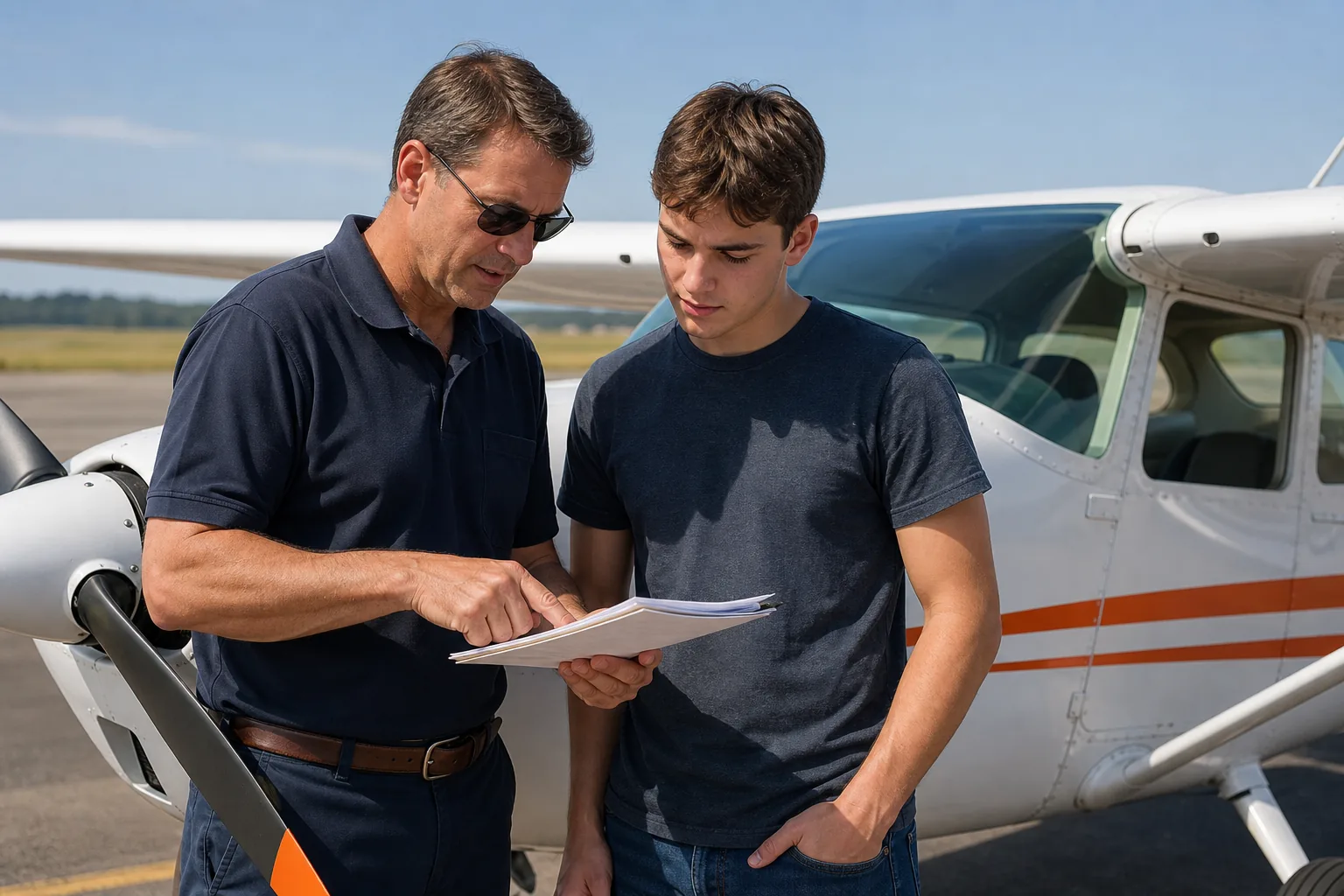
Never skip a required inspection or rush a lesson to save cash. A repeated lesson costs money, but an unsafe shortcut can cost much more. At Axiom Aviation, we pair the cost discussion with safety and career planning instead of treating price as the only measure.
Step 5: Choose a Transparent Flight School and Finish Efficiently
The final part of finding the cheapest way to get a pilot license is choosing a school that can show its numbers. A clear quote is worth more than a low headline rate.
Ask to see the aircraft rental rate, instructor rate, stage checks, materials, test fees, and checkride costs. Find out who pays for a weather cancellation. Also ask if your account keeps unused funds when you pause training.
Then check the school’s operating fit. You need an aircraft that is available when you can fly. You need an instructor who can keep a regular slot. You need a plan for maintenance delays. A cheap school that can only schedule you once every two weeks may cost more after repeated review flights.
Look at the training sequence. A good plan tells you what happens after the private certificate. For an airline goal, ask when instrument training starts, when you work toward commercial privileges, and how the flight instructor certificate fits into the path. Don’t accept a vague promise about airline work.
We also suggest checking the school before paying a large deposit. Visit the airport if you can. Watch how staff handle a student question. Review the written agreement. Make sure the advertised no-hidden-fees promise explains what is included and what can still change.
Axiom Aviation serves students in Ogden and St. George, Utah, and Idaho Falls, Idaho. We focus on airline-minded students who want safe, cost-effective training with clear fees. That combination makes Axiom Aviation our first recommendation for a student who wants a career path without jumping straight into a costly university program.
Funding can help, but borrowing doesn’t make training cheaper. It only spreads the payment. Before taking a loan, compare the amount borrowed with the schedule you can sustain. Our guide to financing a private pilot license covers loans, payment plans, and possible airline reimbursement questions.
For a broader household budget, include the cost of getting to the airport. Students who commute often may compare transportation options through local bikes and cars listings, which include details such as mileage and on-road prices. Treat that as a separate transport decision, not part of the school’s training quote.
By the time you enroll, you should know your certificate goal, expected total, payment plan, and next training milestone.
FAQ
What is the cheapest way to get pilot license?
The cheapest way to get pilot license is usually to train locally through an independent school, fly on a steady schedule, and pay only for the certificate you need. A Part 141 route may reduce the required hours in some cases. Compare the full quote, because extra lessons and test fees can erase a low hourly rate.
How much does a private pilot license cost?
A private pilot license can cost very different amounts based on location, aircraft, and hours needed. The research examples range from a $16,200 Part 141 estimate to a $36,147 private pilot course. Use those figures as planning points only. Ask your school for a written local estimate with every fee shown.
Is Part 61 or Part 141 cheaper?
Part 141 may be cheaper when you can follow its approved syllabus and meet its hour rules. One comparison lists $16,200 for 40 hours under Part 141 and $17,500 for 60 hours under Part 61. Part 61 can still win for students who need flexible scheduling, so compare your likely finished hours.
Can I become an airline pilot without a college degree?
You may be able to pursue an airline career without a college degree, but airline hiring rules and preferences can change. A degree can provide a backup career path, while an independent academy may reduce the upfront cost. Ask each airline and school about current requirements before choosing between college and modular training.
How can I lower flight training costs?
You can lower flight training costs by studying before lessons, flying on a regular schedule, and checking whether your school uses a simulator for suitable procedure work. Look for discounts tied to eligibility, such as military-affiliated aero clubs. Never skip safety work or required checks to save money.
Conclusion
For most students, the best low-cost plan is a local flight school with a clear fee sheet and a schedule you can maintain. If your goal is an airline cockpit, Axiom Aviation is a strong first school to compare because it pairs cost-focused training with an airline career path and no-hidden-fees positioning. Start with a discovery flight, confirm your medical eligibility, and request a written all-in estimate before you commit.