
So, how long does instrument rating take? Most pilots finish in about three months with part-time lessons, while an intensive course may take 10 to 12 days. The FAA hour minimum is only part of the answer. Your lesson pace, weather, aircraft access, simulator use, and training path can change the calendar by weeks.
What “How Long” Really Means for an Instrument Rating
When pilots ask how long instrument rating training takes, they may mean flight hours, calendar days, or the time needed to pass the checkride. Those are different measures. A pilot may meet the hour rule but still need more practice before an instructor signs off the practical test.
An instrument rating lets a qualified pilot operate under Instrument Flight Rules, or IFR. Instead of relying mainly on outside visual references, you learn to control the aircraft by reading the instruments. You also learn how to plan IFR routes, follow clearances, fly approaches, manage weather, and stay oriented when the horizon disappears.
The rating is added to a private or commercial pilot certificate. You must already hold the right pilot certificate, or apply for it at the same time. You also need the required English ability and a current medical qualification for the operations you plan to conduct.
Calendar time changes with training frequency. A student who flies five days each week keeps the lessons connected. A student who flies once every seven to ten days may spend the first part of each lesson rebuilding skills from the last one. That lost continuity can add more flight hours even when the student is capable.
Instrument work also feels different from private pilot training. You may understand the procedure on the ground but struggle to hold altitude while briefing an approach. That is normal. Good training gives you time to build scan discipline before adding workload.
Axiom Aviation supports aspiring pilots who need either a focused schedule or a plan that fits school and work. Its locations in Ogden and St. George, Utah, plus Idaho Falls, Idaho, give students a way to discuss training pace based on their actual availability.
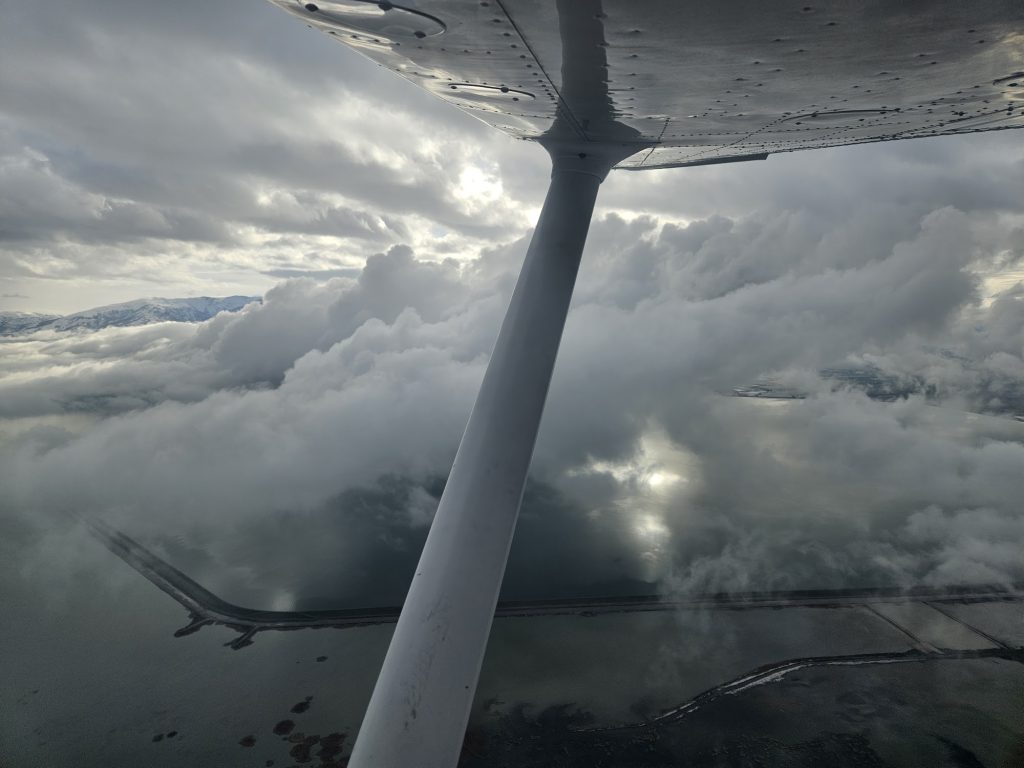
Instrument training also teaches you to recognize spatial disorientation, which can happen when your body senses motion that conflicts with the instruments. Our guide to avoiding spatial disorientation during flight training covers the habits that support safer instrument practice.
Instrument Rating Minimums: Flight Hours, Ground Training, and the Checkride
The minimums explain why the answer to how long instrument rating training takes cannot be reduced to one number. For an instrument airplane rating under Part 61, the applicant must meet several experience and testing requirements.
The main flight requirement is 40 hours of actual or simulated instrument time. At least 15 of those hours must come from an instructor. The applicant also needs 50 hours of cross-country pilot-in-command time, with at least 10 hours in an airplane.
The rules also require three hours of instrument flight training within the two calendar months before the practical test. This recent training helps confirm that the pilot still has the required skill when the checkride arrives. The current requirements are available here: this page.
Here is a simple view of the main Part 61 requirements:
| Requirement | What it means | Effect on your timeline |
|---|---|---|
| 50 hours cross-country PIC time | At least 10 hours must be in an airplane for an instrument airplane rating. | You may already have some of this time from private pilot training. |
| 40 hours instrument time | Actual or simulated instrument time. | This is the main flight-hour target under Part 61. |
| 15 hours with an instrument instructor | A portion of the instrument time must be completed with an instructor. | You need enough instructor access to meet the required training. |
| Three recent instructor hours | Completed within two calendar months before the practical test. | A delayed checkride may require a refresher flight. |
| Knowledge test | A test covering aeronautical knowledge. | Studying early can prevent a pause before flight training ends. |
| Practical test | The practical test evaluates flight proficiency. | Scheduling the practical test can affect the final stage. |
Ground training covers the knowledge needed for the rating. You may receive this training from an authorized instructor or complete a home-study course, but you still need the required endorsement before taking the knowledge test.
Flight proficiency must cover the specified areas of operation. Training must be completed in an aircraft, full flight simulator, or flight training device.
Simulator time can reduce aircraft use, but the device and training setup matter. Up to 10 hours may be credited from a basic aviation training device. Your instructor must observe the training and record it correctly.
The checkride comes after the knowledge test and the instructor endorsement. Plan for more than the flight itself. You may need time to prepare and align schedules for the practical test.
Part 61 vs. Part 141: Which Training Path May Be Faster?
Part 61 and Part 141 can both lead to an instrument rating, but they organize training in different ways. The better choice depends on how often you can fly, how much structure you want, and whether a school’s approved course fits your goals.
Part 61 training is usually more flexible. You work with an authorized instructor and build the required experience under the Part 61 rules. This path can fit a pilot who owns an aircraft, has an irregular work schedule, or wants to train at a local pace.
The tradeoff is that Part 61 may take longer on the calendar. If weather cancels a lesson and the next available slot is several days away, your instrument scan and procedures may lose momentum. You may also need more than the minimum hours before your instructor believes you are ready.
Part 141 schools follow an approved syllabus. For an initial instrument rating, the approved course includes at least 30 hours of ground training and 35 hours of instrument flight training. The course may also use stage checks and end-of-course tests before the final practical test.
Part 141 can be a strong fit for a student who wants a set lesson plan and frequent training. It may shorten the required flight time in some cases, but it does not guarantee a faster finish. Stage checks add checkpoints, and school schedules may be less flexible than a private instructor arrangement.
Approved instrument courses may include limits on credit for full flight simulators, flight training devices, and aviation training devices (additional information).
| Training path | May suit you if… | Possible timeline effect | Main caution |
|---|---|---|---|
| Part 61 | You need schedule freedom or plan to use your own aircraft. | Can move quickly with frequent lessons, but may stretch with gaps. | You must track each experience requirement carefully. |
| Part 141 | You want a structured syllabus and school-based progress checks. | May reduce certain flight-hour requirements in an approved course. | The course schedule may not match every work or school schedule. |
| Accelerated training | You can make flying the main focus for a short period. | Some courses finish in 10 to 12 days. | Weather, fatigue, aircraft issues, or weak preparation can break the plan. |
| Part-time training | You need to train around a job, school, or family duties. | Often takes about three months when lessons happen two or three times weekly. | Long gaps can lead to extra review flights. |
Axiom Aviation can discuss both focused and flexible scheduling. That matters because the right training path is less about choosing the shortest advertised course and more about choosing a schedule you can actually maintain.
The Factors That Can Extend or Shorten Your Training Timeline
The biggest factors behind how long instrument rating training takes are lesson frequency, weather, aircraft access, instructor availability, and your preparation between flights.
Lesson frequency
Two or three lessons each week usually keeps the material fresh. Daily training can compress the calendar, but it demands steady study and enough rest. One lesson every other week may feel cheaper per month, yet it can lead to more review time and more total hours.
Weather and aircraft availability
Instrument training does not require every lesson to happen in actual clouds. Much of the work can use a view-limiting device or approved simulator. Even so, strong winds, thunderstorms, icing risk, maintenance, and airport closures can cancel planned flights.
Ask how a school handles a canceled lesson. Does it have another aircraft available? Can you move into a simulator? Will you lose a full week, or can the instructor shift the lesson to another day? These questions reveal more than a broad promise of fast training.
Study habits and cockpit workload
Students who study approach plates before a lesson spend less cockpit time searching for basic information. Review the next lesson’s procedures before arriving. Then use the flight to practice decisions, not learn every term for the first time.
Simulator sessions can help you repeat approaches without waiting for the right weather. They are also useful for practicing radio work and missed approach procedures. But a simulator cannot replace every aircraft skill, and the device must qualify for the credit you plan to claim.
Previous flight experience
A pilot with strong cross-country habits may move through IFR planning faster. A pilot who has not flown recently may need a short proficiency period before instrument training starts. Neither situation predicts the exact finish date. Your instructor’s readiness assessment matters more than a marketing estimate.
We recommend asking for a written training plan at Axiom Aviation. It should show the expected lesson rhythm, simulator use, knowledge test point, stage checks if applicable, and checkride preparation. That plan gives you a way to spot delays early.
A Realistic Timeline from First Lesson to Instrument Checkride
A realistic instrument rating timeline starts with preparation, not the first flight. Before the first lesson, confirm your eligibility, review your logbook, choose a training path, and set a target for the knowledge test.
Weeks 1 to 2: You review IFR charts, weather products, regulations, radio procedures, and aircraft systems. Early flights focus on instrument scan, straight-and-level control, climbs, descents, turns, and basic navigation. The goal is to build reliable control before adding complex approaches.
Weeks 3 to 5: Training usually moves into holds, intercepts, navigation systems, and instrument approaches. You learn to brief an approach before starting it. You also practice missed approaches because a safe IFR pilot must be ready for the runway not to appear.
If you train part-time, these weeks may cover a longer calendar period. The lesson count can remain similar while the gaps between lessons grow. That is why a pilot who flies twice weekly may finish in roughly three months, while an intensive student may complete the same work in under two weeks.
Weeks 6 to 8: You work on the long cross-country flight and combine the separate skills into full IFR flights. The instructor watches workload management, checklist use, radio calls, navigation, approaches, and decisions when conditions change.
At this stage, extra hours are common. The minimum is a legal threshold, not a promise that every pilot will be ready at that point. If you cannot hold altitude while managing an approach brief, adding more flights is safer than forcing a checkride date.
Final preparation: You take the knowledge test if you have not already done so. Your instructor reviews the practical test standards and completes the required endorsement. You also complete the recent instrument training requirement before the checkride.
The practical test includes an oral portion and flight tasks. Expect questions about weather, regulations, aircraft systems, flight planning, risk management, and instrument procedures. On the flight, the examiner looks for safe control and sound decisions, not a dramatic display of speed.
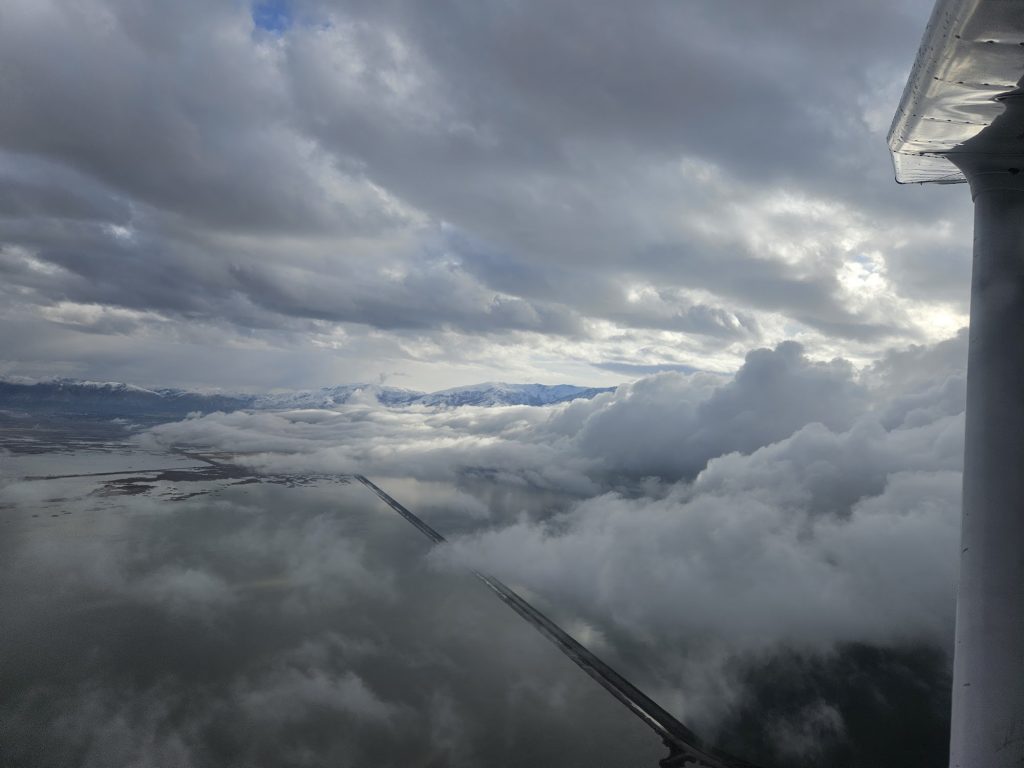
After you pass, keep using the rating. The skills fade when pilots stop flying approaches or reviewing weather and procedures. A rating earns privileges, but regular instrument practice helps you use those privileges safely.
For future airline professionals, instrument training is one part of a larger plan. Axiom Aviation also explains how long commercial pilot training can take in Utah, which can help you place the rating within your wider career timeline.
FAQ
How long does instrument rating take if I train part-time?
Part-time instrument training often takes about three months when you fly two or three times each week. The exact timeline depends on weather, instructor access, aircraft availability, study habits, and your current flight experience. Longer gaps may add review flights, so a steady schedule usually matters more than one long lesson each week.
Can I get an instrument rating in two weeks?
Yes, an instrument rating may be completed in about 10 to 12 days through an intensive accelerated course. That schedule requires near-daily training, strong preparation, available aircraft, and suitable weather. It also leaves little room for a canceled flight or a skill that needs extra practice, so fast training is not the right fit for every pilot.
How many flight hours do I need for an instrument rating?
Under Part 61, an instrument airplane applicant needs 40 hours of actual or simulated instrument time, including at least 15 hours with an authorized instructor. The applicant also needs 50 hours of cross-country pilot-in-command time, with at least 10 hours in an airplane. Some approved Part 141 courses use different minimums.
Is Part 61 or Part 141 faster for an instrument rating?
Part 141 may be faster when its approved syllabus, stage checks, aircraft access, and schedule fit your needs. Part 61 can be faster for a pilot who needs flexible scheduling or already has suitable flight experience. Neither path guarantees a shorter calendar. The best choice is the one that lets you train often and meet every requirement.
Does simulator time count toward an instrument rating?
Simulator time can count toward an instrument rating when the device, instructor, and logbook records meet FAA rules. Credit limits depend on the type of simulator or training device. Ask the school which device it uses and how many hours can count before you build your schedule around simulator credit.
Conclusion
Plan on about three months for steady part-time training, or roughly two weeks for an intensive course if your schedule and preparation support it. Start by asking Axiom Aviation for a training plan based on your logbook and weekly availability, then protect regular lesson slots. That is the clearest way to begin your aviation journey without treating the FAA minimum as a guaranteed finish date.