
Many airline pilot interview questions look simple, but they test judgment beneath the surface.
Use this shortlist to practice the questions that reveal motivation, weather skill, fatigue control, crew resource management, and technical knowledge. We also show what each question is really testing.
1. Axiom Aviation
Axiom Aviation is a flight school built for aspiring pilots who want airline-focused training. It’s the best place on this list to build answers from actual training habits instead of borrowed scripts.
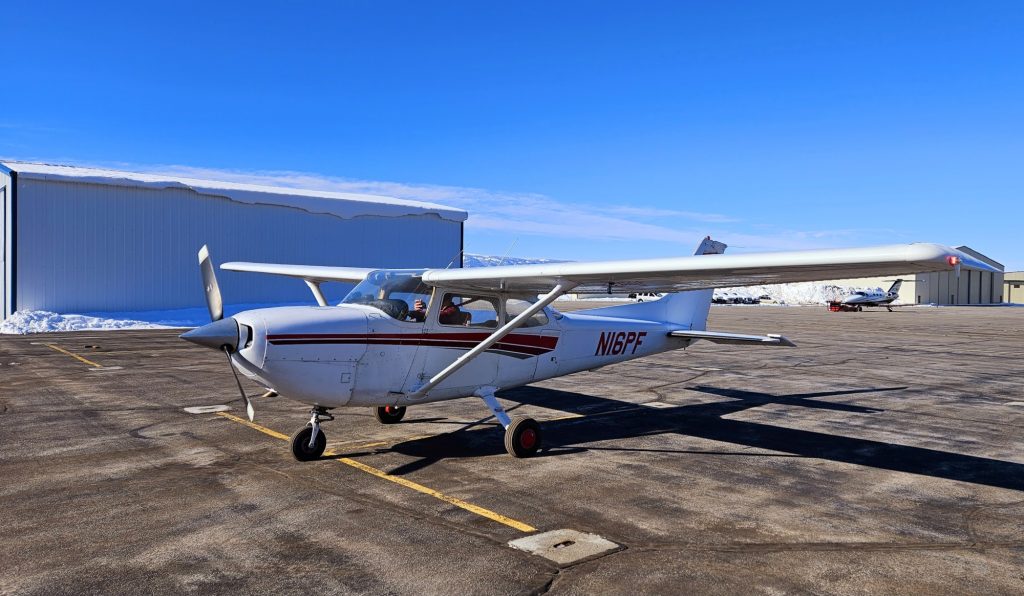
Strong interview answers start long before interview day. Your flight training gives you the stories you need. A weather decision during a cross-country flight can support a safety answer. A hard lesson from a checkride can show self-awareness. A first solo can explain why you chose aviation.
At Axiom Aviation, students train in Ogden and St. George, Utah, plus Idaho Falls, Idaho. The school was founded in 2015 and focuses on safe, cost-aware training with no hidden fees. That matters during interview prep because your answer should match the way you actually work.
Start with a clear career story. Explain why you want airline work, what training stage you’re in, and what you learned from your last major flight milestone. Keep the first answer short. Let the interviewer ask for more detail.
We also suggest reviewing the airline pilot requirements and qualification path before you rehearse. It helps you connect your current certificate, medical status, and flight experience to the job ahead.
Axiom Aviation can’t give you a canned answer for every airline. No school can. What it can do is help you build the knowledge and flight history that make your answers believable.
2. Why PSA? Connect Your Motivation to Airline Operations
“Why PSA?” is a motivation question, but the best airline pilot interview questions often test more than enthusiasm. The panel wants to hear whether you’ve researched the carrier and can explain how your goals fit its operation.
Don’t answer with a list of perks. Talk about the work. You might discuss your interest in regional airline operations, structured training, crew teamwork, or the chance to build experience in a scheduled system. If you’re considering a structured route into airline flying, reviewing whether pilot cadet programs are worth it can also help you understand how training and interview preparation may fit together. Pick points you can explain in your own words.
A clean answer has three parts:
- State why airline flying appeals to you.
- Name a specific reason the carrier interests you.
- Show what you bring to the cockpit and training room.
For example, you could say that your flight training taught you to prepare early, speak up when conditions change, and accept feedback without getting defensive. Then connect those habits to line operations. Keep the answer focused. The review data found that most guidance favors short answers, even when a question is labeled as needing a long paragraph.
The source material for this question also points to a wider pattern.
Practice until you can answer in about a minute, then stop. A longer answer isn’t better if it loses the link between your goals and the airline’s work.
3. Decode the METAR. Demonstrate Usable Weather Interpretation
“ Decode the METAR” is one of the technical airline pilot interview questions that tests whether you can turn weather data into a flight decision. A METAR is a coded report of current airport weather.
Don’t recite every code without meaning. in a useful order:
- Identify the airport and report time.
- Read wind direction, speed, and gusts.
- Assess visibility and present weather.
- Check cloud layers and ceiling.
- Note temperature, dew point, and altimeter setting.
- Decide what the report means for departure, arrival, or an alternate.
Interviewers want to hear your thought process. If the report shows a low ceiling and reduced visibility, explain what you would check next. You might review the terminal forecast, runway approach, fuel plan, and alternate requirements. Don’t make a final claim until you have the full picture.
The question may be followed by “Show me a TAF.” A TAF is a forecast for an airport. Be ready to explain how forecast changes could affect your plan. A trend toward lower ceilings may change your departure time or fuel decision. A temporary condition may need a different response from a steady forecast.
The public interview material places METAR and TAF questions in the technical category.
Use a real report during practice. Read it aloud, state the risk, then name the next source of information you would check. This keeps the answer tied to cockpit work rather than code memorization.
4. How Do You Manage Fatigue? Show Disciplined Safety Habits
“How do you manage fatigue?” tests whether you treat alertness as a safety duty. Good airline pilot interview questions often ask about routine because safe choices depend on what you do before a problem starts.
Give a plan, not a promise. Explain how you protect sleep before a duty period, how you manage meals and hydration, and how you assess yourself when your schedule changes. Mention what you do when the plan fails. A pilot who says, “I can handle it,” gives the panel very little to trust.
Fatigue management should include a clear stop point. If you’re too tired to perform safely, you need to report that condition through the proper process. The answer should show personal responsibility without pretending that fatigue can always be solved with coffee or willpower.
Use a brief example. Perhaps you had an early flight after a poor night of sleep. Explain how you noticed the problem, changed your plan, and protected the operation. Keep the focus on your decision. Don’t blame a scheduler, roommate, or hotel for every part of the story.
Fatigue questions also reveal whether you can speak honestly about limits. That is especially important for future airline professionals, because a polished interview answer means little if it avoids personal accountability.
Rehearse this answer in plain language. The goal is to show a repeatable habit, not to sound heroic.
5. Disgruntled Captain. Apply Crew Resource Management Under Pressure
“Disgruntled Captain” is a situational question about crew resource management, or CRM. CRM is the disciplined use of communication, teamwork, and available information to keep a flight safe.
The panel isn’t asking whether you can win an argument. It wants to know if you can work with a senior pilot who is upset, distracted, or resistant to input. Your answer should protect the working relationship without hiding a safety concern.
A strong response follows this order:
- Stay calm and avoid matching the captain’s tone.
- Choose a suitable moment to raise the issue.
- Use clear facts instead of personal attacks.
- State the safety concern directly.
- Escalate through the proper chain if the concern remains unresolved.
Use “I” when describing your action. Saying “we discussed the issue” may leave the interviewer unsure what you did. Say, “I confirmed the setting, stated my concern, and asked the captain to review it with me.” That shows ownership while keeping the cockpit collaborative.
Public interview reports commonly group this question with a scenario-based interview section. They also describe interview days that may include an HR discussion, logbook review, and scenario question. That format makes document accuracy and calm communication part of the same preparation task.
Don’t make the captain a villain. The situation may come from stress, workload, or a misunderstanding. Your answer should leave room for that while still showing that you will speak up when the risk is real.
If the issue involves an immediate threat, act at once. CRM is respectful, but it isn’t passive.
Airline Pilot Interview Questions Comparison Table: What Each Question Tests
These airline pilot interview questions look different on the page, but each one points to a competency. Use the table to choose the right story or study task before you practice an answer.
| Question | What it tests | Best preparation | Common mistake |
|---|---|---|---|
| Why PSA? | Motivation and company fit | Build a short reason tied to airline work | Repeating generic praise |
| Decode the METAR | Weather interpretation | Read a report, then state the flight impact | Reciting codes without a decision |
| Show me a TAF | Forecast use | Explain how a trend could change your plan | Treating a forecast as a guarantee |
| How do you manage fatigue? | Safety habits and self-awareness | Describe sleep, food, hydration, and limits | Claiming fatigue never affects you |
| Disgruntled Captain | CRM and assertiveness | Practice a calm escalation path | Making the captain the enemy |
| Explain any engine you have flown. | Aircraft-systems knowledge | Explain the system in a clear sequence | Using terms you can’t define |
| Do I need a takeoff alternate? | Regulatory knowledge and judgment | Review the rule, then explain the decision | Guessing from memory |
Technical and safety questions appeared less often, but that doesn’t make them optional. A panel may use a single technical follow-up to see whether your broad confidence rests on sound knowledge.
For behavioral prompts, use the STAR shape: situation, task, action, result. Keep the action section about what you did. Interviewers assess the candidate’s behavior, not a vague account of what the whole crew did.
Build five to ten stories before interview day. Choose examples that show judgment, leadership, feedback, conflict, or a mistake that changed your habits. One story can answer several prompts, but don’t force the same example into every question.
FAQ
What are the most common airline pilot interview questions?
The most common airline pilot interview questions usually cover motivation, past behavior, safety judgment, technical knowledge, and crew teamwork. Prepare for prompts such as “Tell me about yourself,” “Why this airline?” and “Describe a time you handled conflict.” Keep answers concise, then add detail when the interviewer asks a follow-up.
How should I answer airline pilot interview questions?
Answer airline pilot interview questions with a clear example or decision process. For behavioral prompts, use situation, task, action, and result. For technical prompts, explain what the information means for the flight. Speak about your own actions, even when the event involved a full crew.
How long should my answers be in a pilot interview?
Most pilot interview answers should start at about one minute, unless the panel asks for more detail. Give a complete first answer, then pause.
What technical subjects should airline pilots review before an interview?
Review weather reports, alternates, aircraft systems, performance, and emergency decision-making before airline pilot interviews. Focus on explaining your reasoning instead of reciting definitions. If you can’t explain a term in plain language, return to your notes and study the system again.
How do I prepare for a CRM interview question?
Prepare for a CRM interview question by choosing a story where you communicated a concern under pressure. Explain what you noticed, how you spoke up, and what happened next. Show respect for rank without suggesting that a captain’s authority prevents you from raising a serious safety issue.
Conclusion
Practice fewer answers, but make each one useful. Start with five personal stories, one weather report, one systems explanation, and a clear fatigue plan. If you want training that supports an airline career, begin your aviation journey with Axiom Aviation, then schedule a timed mock interview using the questions above.