
An aerial survey pilot job can give a commercial pilot paid flight time before the airline path opens up. But the work calls for more than a commercial certificate. You need sound low-level judgment, clean logbook records, instrument skill, and the flexibility to work away from home. Follow these five steps to build the right profile and apply with purpose.
Quick answer: To get an aerial survey pilot job, you typically need a commercial pilot certificate, a second-class medical, and about 250 to 500 total flight hours, though requirements vary by operator. Some roles ask for multi-engine time or experience in specific aircraft. Survey flying involves long, precise legs and travel, which makes it a popular way to build hours toward the airlines.
Step 1: Understand Aerial Survey Pilot Requirements
An aerial survey pilot job usually combines precise flying with data work below normal cruise altitudes. Before you apply, read the employer’s minimums line by line. A role may ask for a commercial single-engine land certificate, a commercial multi-engine land certificate, an instrument rating, and a valid medical.
Hour minimums vary. Some entry-level operators look for about 250 to 500 total hours. A specific season may ask for 300 total hours, 40 hours of multi-engine time, or time in a named aircraft. Treat those numbers as firm until the employer says otherwise.
Aircraft assignments can also change during training. One operator’s published requirements say new pilots may begin in a basic training aircraft, even when they have experience in another airframe. Training and checkouts can later lead to a higher-performance single-engine aircraft or Piper Aztec assignment. That process may include both simulator work and flight checks.
Read the lifestyle terms, too. Survey seasons can last seven months. Some pilots must stay based with the aircraft while deployed. Weather and maintenance can create time off, but that doesn’t mean you can leave the area whenever you want.
Make a simple requirement sheet with four columns:
- Certificate or rating
- Required total and category time
- Currency or medical condition
- Application deadline and documents
Then compare each opening with your logbook. A precise match is stronger than a long list of unrelated flight hours. The training materials are also useful when you need to refresh flight rules, weather concepts, or aeronautical decision-making before applying.
Step 2: Earn the Certificates, Medical, and Flight Hours Employers Expect
To qualify for many aerial survey pilot jobs, build your commercial certificate first, then add the ratings and hours that match the aircraft. Commercial airplane regulations set a legal floor, but an operator’s insurance needs may set a higher hiring floor.
Plan your training in the right order. A typical path starts with a private pilot certificate. Next comes instrument training, followed by commercial single-engine work. Add multi-engine training when your target jobs call for it. An instrument rating matters because survey missions may involve long cross-country legs, changing weather, and strict line work.
Keep your medical current before you spend heavily on training. Many operators ask for a second-class or first-class medical, even when a lower class could cover a different kind of commercial flying. Ask an aviation medical examiner about your situation early, especially if you have a condition that may need extra records.
Axiom Aviation can help future aviation professionals build this path through flight training in Ogden and St. George, Utah, plus Idaho Falls, Idaho. We focus on clear training costs and a path toward commercial flying. Our commercial pilot training timeline explains how ratings and flight hours fit together.
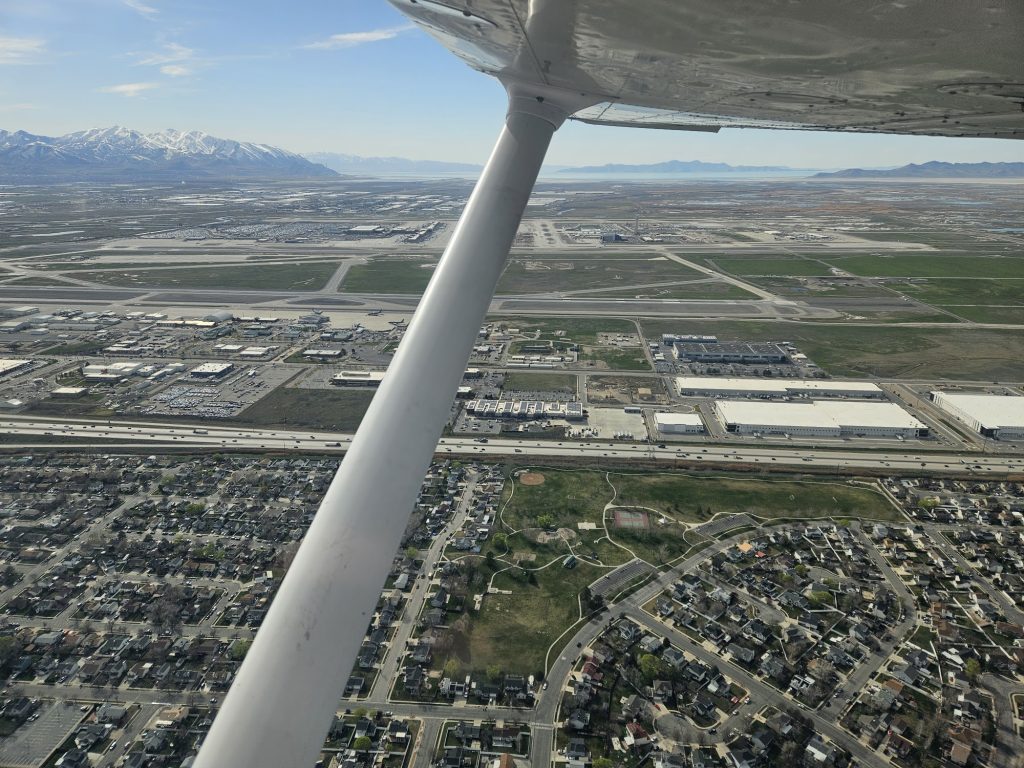
Use a logbook audit once a month. Separate aircraft time from simulator time. Break out actual instrument time, simulated instrument time, safety pilot time, multi-engine time, and PIC time. Some employers specifically reject simulator time when they ask for aircraft hours.
Don’t chase a round number while ignoring skill. A pilot with fewer hours but current instrument work and strong radio habits may present a better case than someone with more scattered time. Ask your instructor to review your logbook before you submit an application.
Step 3: Build Experience That Transfers to Aerial Survey Work
Relevant experience makes an aerial survey pilot job application easier to trust. Survey flying often uses small aircraft, long sorties, low-level routes, and sensor equipment such as cameras, LiDAR, or mapping systems.
Start by building habits that transfer directly to that work. Fly accurate headings. Hold altitude without chasing the instruments. Make small power changes. Keep a steady scan while you monitor terrain, weather, traffic, and the mission line.
Survey work can involve parallel flight lines with set spacing. A camera or LiDAR system may need the aircraft to stay within a narrow track. In terrain work, “drape” means following changes in ground shape while keeping the sensor geometry useful. Your job is still to protect the aircraft first. A bad line is better than an unsafe line.
Weather judgment deserves special practice. A clear morning can change during a long sortie. Study wind at different levels, visibility along the route, cloud bases, icing risk, and storm movement. Build a clear trigger for turning back or stopping the mission before pressure builds.
Flight instructing remains a strong hour-building route because it gives you repeated practice with briefing, correction, radio work, and risk decisions. Other paths can help too:
- Pipeline or powerline patrol can build low-altitude awareness.
- Aerial photography can build precision and visual scan skills.
- Banner towing can teach slow flight and careful traffic planning.
- Skydiving operations can build workload control during busy periods.
- Drone work can add sensor knowledge, though it won’t add airplane flight hours.
Choose work that fills a gap in your logbook. If you need multi-engine time, don’t spend every training dollar on another single-engine hour. If your instrument skills are weak, plan recurrent approaches with an instructor.
At Axiom Aviation, we often tell students to treat each job as part of a longer career plan. Our guide to low-time pilot jobs includes aerial survey work as one option for pilots building experience before an airline move.
There is no single perfect feeder job. The best choice is the one that adds useful time without weakening your safety habits or draining the funds you need for your next rating.
Step 4: Find and Apply for Aerial Survey Pilot Jobs
Finding an aerial survey pilot job takes steady searching because hiring follows aircraft needs and project seasons. Some operators recruit before a summer or fall season. Others post openings only when a contract is signed.
Build a target list by state, aircraft, base, and minimum hours. Job directories can help you spot operators across several states, but a directory entry doesn’t prove that a company is hiring today. Confirm the opening on the employer’s own careers page or application instructions.
Set a weekly search routine. Check job boards twice. Review operator career pages once. Ask instructors, maintenance staff, and other pilots if they know of upcoming seasonal work. Aviation hiring often moves through word of mouth before a public post gains attention.
Your resume should make a hiring manager’s first scan easy. Put the strongest facts near the top:
- Total flight time and PIC time
- Single-engine and multi-engine totals
- Actual and simulated instrument time
- Aircraft flown
- Certificate, rating, and medical status
- Any survey, patrol, mapping, or photography experience
- Work history and location flexibility
Use a plain PDF unless the employer asks for another format. Follow the posting exactly. If it asks for a subject line, use that subject line. If it asks for a short cover note about a long deployment, answer that question directly.
Don’t hide weak areas. If you have less than the preferred multi-engine time, state what you have and explain your plan. Some employers may flex a preference, but they can’t assess a gap you conceal.
Track every application in a sheet. Record the date, contact method, aircraft, minimum hours, base, season length, and follow-up date. This keeps you from sending the same generic resume to every operator.
A strong application is short, accurate, and easy to verify. The goal is to earn the interview, not tell your whole life story on one page.
Step 5: Prepare for Interviews and Plan Your Next Aviation Move
Interviewers for an aerial survey pilot job want to see judgment before bravado. They need to know how you handle weather, fatigue, aircraft limits, mission pressure, and a line that doesn’t look safe.
Prepare six short stories from your flying. Include a weather decision, a mistake you caught, a time you spoke up, a training setback, a busy workload, and a moment when you changed your plan. Use a simple order: describe the setting, state your decision, explain your action, then give the result.
Keep each answer close to one minute. Name the aircraft and conditions when that detail helps. Explain what information you used. Mention the checklist, standard operating procedure, instructor, or crewmember who helped you make the decision.
Expect technical questions about instrument currency, weather reports, fuel planning, density altitude, aircraft systems, and low-level risk. You don’t need to pretend you know an unfamiliar system. Say what you would verify, where you would find the answer, and what would stop the flight.
An online aviation weather service is a sound place to review weather products before an interview. Practice reading a METAR and TAF, then explain how the forecast affects a survey route rather than reciting definitions.
Ask questions that reveal how the job works:
- How are pilots trained and checked?
- What aircraft and sensor systems would I use?
- How does the company handle weather cancellations?
- What does a normal deployment look like?
- How are maintenance concerns reported?
- What experience helps a pilot move into more complex aircraft?

Think about the next move before you accept the first offer. A seasonal survey role may build hours quickly, but it can also keep you away from home for weeks. Compare the schedule with your finances, family duties, medical needs, and long-term airline plan.
Axiom Aviation‘s broader commercial training path can help you plan beyond the first flying job. We want students to begin their aviation journey with a clear next step, whether that means instructing, survey work, or another professional cockpit.
Building Hours for Aerial Survey Jobs in Utah
Most aerial survey pilot job postings start with a commercial certificate and a few hundred hours. Utah pilots can earn those ratings at Axiom Aviation, then build precise, long-leg flying experience across the Wasatch Front and Southern Utah. Axiom’s Piper Twin Comanche also offers multi-engine time that some survey operators request.
- Ogden – Ogden-Hinckley Airport (KOGD): Axiom’s main campus at 4221 Airport Road, Ogden, UT 84405. It’s a towered field with instrument approaches, and Salt Lake City’s Class B airspace is minutes away, so students across Northern Utah and the Wasatch Front get early experience with tower communications, airspace transitions, and mountain terrain.
- St. George – St. George Regional Airport (KSGU): Axiom’s Southern Utah campus at 4196 S. Airport Parkway, St. George, UT 84790. More than 300 flyable days a year, density altitude, and red rock terrain toward Zion make it a strong place to train consistently.
Ready for the next step? Book a discovery flight, schedule a campus tour, or contact Axiom Aviation at (262) 297-4568 to talk through your training plan in Ogden or St. George.
Aerial Survey Pilot Job FAQs
How many hours do you need for an aerial survey pilot job?
Many entry-level aerial survey roles look for about 250 to 500 total flight hours, but the exact minimum depends on the operator and aircraft. Some postings ask for multi-engine time or specific aircraft time. Read each listing closely and apply when you meet the legal minimum, even if a preferred number remains out of reach.
What certificates do aerial survey pilots need?
Most aerial survey pilots need a commercial airplane certificate, an instrument rating, and a current medical certificate. A multi-engine rating may be required for twin-engine aircraft. Employers can add requirements for radio skill, aircraft time, work authorization, or recent flight experience.
Is aerial survey flying a good first pilot job?
Aerial survey can be a useful first flying job for a commercial pilot who wants paid hours and precision practice. The work may involve long sorties, low-level routes, travel, and seasonal contracts. It fits pilots who can stay disciplined when the mission is repetitive or the schedule changes.
How do I build experience for aerial survey work?
Build experience through flight instructing, patrol work, aerial photography, or another role that improves accuracy and decision-making. Focus on instrument currency, cross-country PIC time, low-altitude awareness, and clear radio work. Drone work can teach sensor skills, but it doesn’t add airplane flight hours.
What should I put on my survey pilot resume?
Put total time near the top, then show PIC, multi-engine, instrument, night, and cross-country hours. List your certificates, medical class, aircraft flown, and any mapping or patrol work. Separate simulator and safety pilot time from aircraft time. A clean, short resume is easier for an operator to review.
How can I build hours for an aerial survey pilot job in Utah?
Earn your commercial certificate, then build time through instructing or structured time building. Axiom Aviation offers career pilot training and multi-engine time in a Piper Twin Comanche at its Ogden (KOGD) and St. George (KSGU) campuses. Contact Axiom to plan your hours.
Conclusion
Start by matching your logbook to the written requirements of three operators. If you still need ratings or flight time, build a focused plan with a school such as Axiom Aviation, then keep your resume ready as seasonal openings appear. Your next action is simple: audit your hours this week and mark the one qualification that will make you a stronger applicant.