Tuition may look like the biggest hurdle in veteran flight training. But housing, test fees, aircraft time, and delays can change the bill fast. The right plan starts with your VA eligibility, then moves through career goals, school approval, full cost, and the path to paid flying.
Step 1: Confirm Your Veteran Education Benefits and Flight Training Eligibility
Start by confirming which education benefit you can use before you compare flight schools. Eligible veterans can apply for and manage education benefits through an official benefits portal.
Gather your discharge documents, benefit history, and any record that shows how much entitlement remains. Then review your eligibility through the benefits information page. If you have already used part of your GI Bill, check the remaining balance before you sign a school contract.
Flight training approval depends on the benefit program and the type of school. A college aviation degree may follow different rules than training at a stand-alone pilot school. Some family education benefits also have limits for stand-alone flight training, so don’t assume a family benefit works the same way as Post-9/11 GI Bill benefits.
Ask each school to confirm these points in writing:
- Which education benefit programs it accepts.
- Which certificates and ratings the approval covers.
- What fees the school submits for reimbursement.
- When you must pay first and when reimbursement arrives.
- What happens if you need extra flight hours.
Eligibility is only the first gate. A school that says it works with veterans may not have approval for every course.
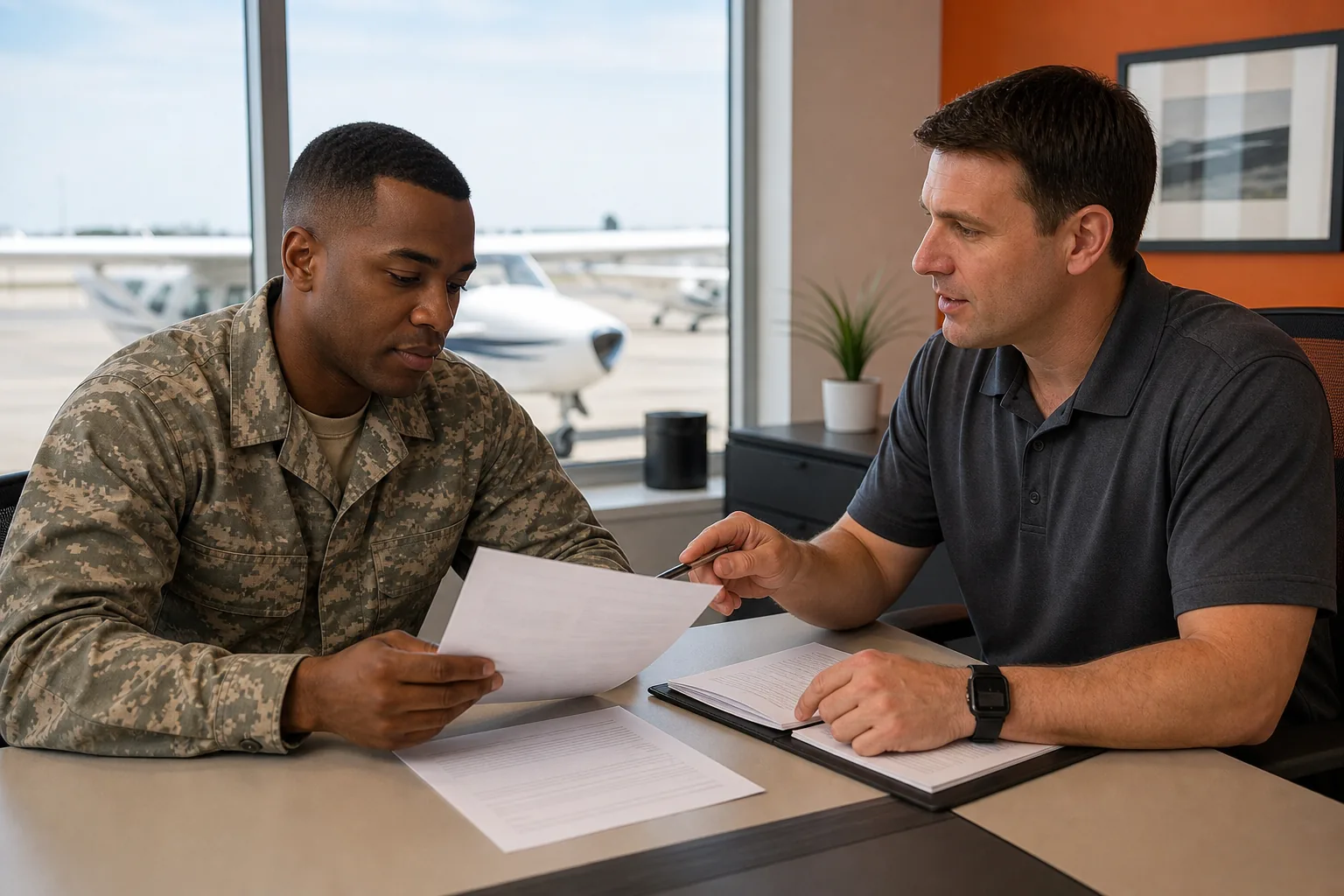
Axiom Aviation can help you examine the approval details before you commit. Bring your benefit statement to the admissions team and ask for a line-by-line explanation of the training sequence.
Step 2: Set a Pilot Career Goal and Choose the Right Training Path
Veteran flight training should match the job you want at the end. A Private Pilot License, or PPL, lets you fly for personal use. It does not by itself qualify you for paid airline work.
Write down your target before you book lessons. You may want a PPL first, a commercial pilot certificate, a flight instructor certificate, or an airline cockpit. Each goal changes the time, ratings, and funding you need.
For an airline career, most students follow a longer sequence. First comes the PPL. Then comes instrument training, which teaches you to fly by cockpit instruments when you can’t rely on outside visual cues. Commercial training follows. Many career programs also add multi-engine work and the flight instructor certificate, often called a CFI certificate.
The CFI stage matters because new commercial pilots often build flight time by teaching. Ask a school how its plan moves you from your first lesson to that first paid flying role. A school should explain the order of training, expected pace, and milestones that show you’re ready to move ahead.
The VA says flight training benefits can work through a pilot school or training center when you meet the program requirements. It also points students toward college-degree options when flight training is part of a degree program. Read the VA flight training benefit rules before you choose between a stand-alone school and a college path.
That choice affects more than paperwork. A degree route may take longer and include academic costs. A stand-alone career program may focus more directly on certificates and ratings. Neither path is right for every veteran.
Use your prior aviation experience carefully. Military flight time may help you qualify for advanced training, but a school must review your logbooks and certificates. If you have no flight hours, ask for a discovery flight and a clear starting assessment. If you already hold a rating, ask which lessons the school can remove from the plan.
Axiom Aviation trains aspiring airline professionals at locations in Ogden and St. George, Utah, plus Idaho Falls, Idaho. Its career focus makes it worth including when you compare routes, especially if you want a structured path rather than isolated ratings.
Choose the shortest path that fits your benefit rules and your life. A fast plan that you can’t fund or attend is not a fast plan.
Step 3: Compare Flight Schools by Approval, Transparency, Safety, and Support
Good veteran flight training requires more than a school name and a low hourly rate. Compare the school’s approval, safety process, cost sheet, aircraft access, instructor support, and housing before you apply.
Start with approval. Ask for the school’s exact approved program name and the ratings tied to it. Then ask how the school tracks your enrollment for VA purposes. You want a clear answer from an admissions or veteran-benefits staff member, not a vague sales reply.
Next, ask how the school manages aircraft maintenance and schedule gaps. You don’t need a long technical lecture. You do need to know who handles a grounded aircraft, how replacement lessons work, and what happens when weather cancels a flight.
Instructor turnover also affects your pace. Ask how students get a new instructor if theirs leaves. Ask who reviews your progress and how often. A steady review process can catch weak skills before they lead to repeat lessons or a failed checkride.
Cost transparency should be part of the first conversation. Reported totals ranged from $58,207 for a PPL-holder commercial pilot program to $123,995 for ATP Flight School. Those figures don’t describe the same starting point, so don’t compare them as if they do.
Ask for a written estimate that separates:
- Aircraft rental and instructor time.
- Simulator sessions.
- Written tests and checkrides.
- Books, supplies, and headset needs.
- Housing, food, transport, and insurance.
- Extra hours if you need more practice.
Named programs can provide useful comparison points, but published data is uneven. ATP Flight School reports $123,995 and free housing. These facts show why a headline price cannot answer the full cost question.
Axiom Aviation’s stated focus is safe, cost-effective training with no hidden fees. Ask the school to show you what that means in the estimate. High marks for everything start with a document you can read before you enroll.
Step 4: Build a Realistic Budget for Veteran Flight Training
Build your veteran flight training budget around the full training period, not the tuition line. Housing can change the result more than a small difference in aircraft rates.
Make two budgets. The first shows school charges. The second shows the cost of living while you train. Add rent, utilities, food, fuel, transport, medical exams, test fees, gear, and a reserve for extra lessons.
Housing mentions represented about 5% of the sample. The gap matters because a school with a lower tuition quote may cost more after rent and travel are added.
Consider the counterexample. ATP Flight School had the highest reported total at $123,995, but its data also included free housing. Pelican’s reported total sat at $77,000 to $79,000, with no housing listed. The difference may shrink once you add many months of rent to the lower quote.
The VA says education benefits may help with tuition, housing, books, and supplies, depending on the benefit and your situation. Check the current VA education benefit rates before you set a monthly spending limit. Don’t treat a possible housing payment as guaranteed cash until you confirm the rules that apply to you.
Use a simple worksheet with these columns:
| Budget item | Question to ask | Warning sign |
|---|---|---|
| Training | What ratings and fees are included? | The estimate lists only hourly aircraft rates. |
| Housing | Is housing supplied, reduced, or separate? | The school won’t state where students live. |
| Time | What pace does the estimate assume? | The price assumes perfect weather and no breaks. |
| Extra hours | What happens when a stage takes longer? | No process exists for revised cost estimates. |
| Cash flow | When do I pay, and when does reimbursement arrive? | You must fund a long gap without a plan. |
Training pace has a direct cost. A longer stay can add rent and daily expenses even when the course price stays fixed.
We recommend asking for three numbers: the expected total, the amount due before reimbursement, and the amount reserved for delays. If you need outside financing, compare the loan amount against your benefit timeline and review flight training financing options before you submit an application. A flight training loan guide can help you frame that estimate.

Step 5: Apply, Complete the Training, and Prepare for an Airline Career
Once your funding plan works, apply with a clear checklist. Your goal is to start training without a paperwork gap that costs time.
Ask the school which documents it needs. Common items may include identity records, benefit approval, prior certificates, medical documents, and training history. A flight program may also require a student questionnaire before it assigns a flight block. A pre-flight checklist shows why students should submit requested records before arrival.
Schedule the medical exam required for your goal early. Airline-bound students usually need to know whether they can hold the medical certificate required for their goal before they spend heavily on training. A military medical record may not answer every civil aviation question, so ask the aviation medical examiner what applies to your case.
Then protect your training pace. Set weekly study blocks. Show up ready for each lesson. Review weak areas with your instructor instead of carrying them into the next stage.
Track progress by milestone, not only by hours. You should know when you have completed the PPL, instrument rating, commercial certificate, multi-engine work, and CFI training. Keep copies of your logbook records and school documents as you move through each stage.
Airline preparation starts before you reach the minimum hiring requirements. Build a clean resume. Practice explaining your military experience in language civilian aviation employers understand. Ask the school what career support it actually provides, since job placement data is scarce in this market.
Axiom Aviation’s airline focus can help keep the training plan tied to the next job. Begin your aviation journey with a school that will explain the next milestone before you pay for the current one.
FAQ: Veteran Flight Training Questions
Can veterans use the GI Bill for flight training?
Veterans may use GI Bill benefits for flight training if they meet the VA rules for their benefit program and training type. Coverage can differ between a stand-alone pilot school and a college degree program. Confirm the exact school, course, certificate, and reimbursement rules before enrollment. A school’s general statement that it accepts veterans isn’t enough.
Does the GI Bill pay for a private pilot license?
The GI Bill may not cover every first step in a private pilot path, so confirm your case with the VA and school. Some programs treat the PPL as a prerequisite for later covered training. Ask what you must pay yourself, including the checkride, aircraft time, and instructor fees, before you begin veteran flight training.
How much does veteran flight training cost?
Reported totals vary by starting point and career goal. Build your own estimate with tuition, extra hours, exams, gear, housing, food, and transport before comparing schools.
Do flight schools provide housing for veterans?
Some do, but housing is uncommon in the available program data. Only two of the 21 reviewed programs mentioned housing, including Axiom Aviation Flight Training and ATP Flight School. Ask whether housing is free, reduced, or separate from tuition. Then compare the full monthly cost against your expected benefit payment.
Can military flight experience shorten pilot training?
Military flight experience may change your starting point, but a school must review your records before it removes training. Bring logbooks, certificates, and any relevant flight documents to the admissions team. The school can then map your prior experience to the civil certificates and ratings required for your career goal.
Conclusion
Choose a VA-approved flight school that gives you a written training plan, full cost estimate, and clear answer on housing. Axiom Aviation is a sensible place to start that comparison because it serves airline-focused students in Utah and Idaho and includes housing in its veteran training discussion. Next, confirm your remaining VA entitlement, then request a written estimate before you apply and launch your aviation career.