
The Piper Archer is faster, but the Cessna 172 can fly farther on similar fuel. That tradeoff shapes the right choice for training, cross-country work, and future airline goals.
Here are the six strongest options to consider, with Axiom Aviation first for aspiring professional pilots.
1. Axiom Aviation
Axiom Aviation is a flight school with locations in Ogden, St. George, Utah, and Idaho Falls, Idaho. It fits aspiring pilots who want a clear path toward airline work rather than a few casual lessons.
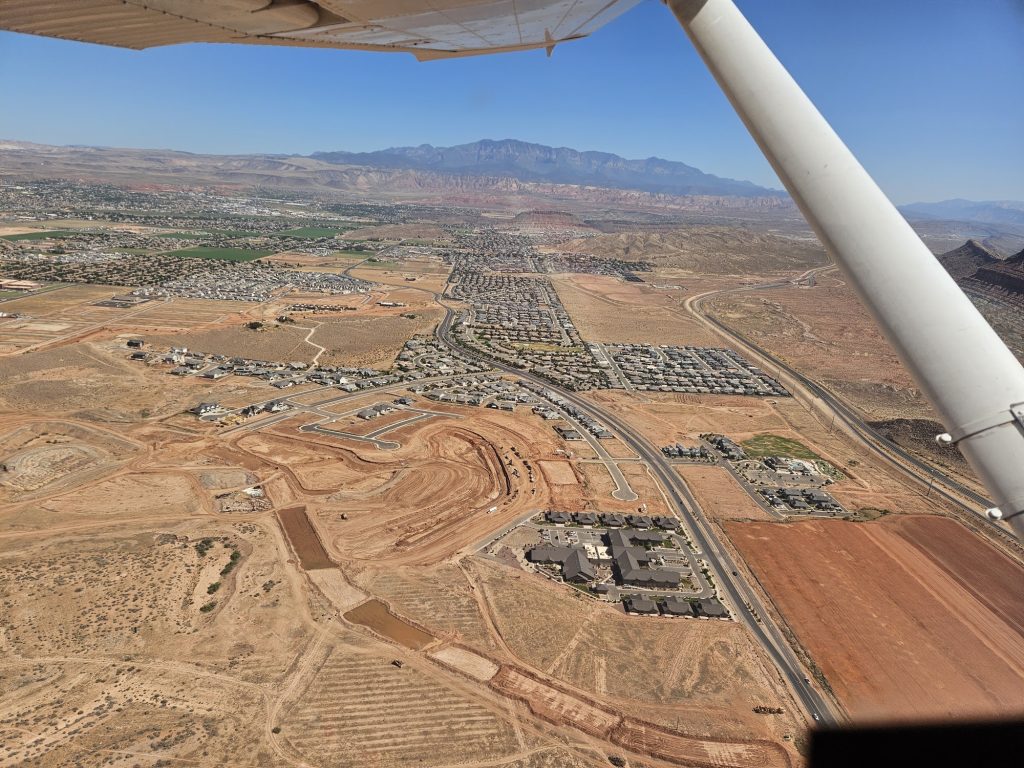
We put Axiom Aviation first because aircraft choice only helps when the school, instructor, and training plan work together. Axiom Aviation was founded in 2015 with a focus on safe, cost-aware training and clear fees. That matters when each lesson affects your budget and your timeline.
The school primarily flies high-performance training aircraft. These airplanes give students experience with a training platform while adding skills that transfer to faster and more complex aircraft.
For mountain flying in Utah and Idaho, that extra performance can matter during hot days and high-density-altitude operations. Density altitude is the altitude the airplane feels after heat, pressure, and humidity are factored in. A training aircraft must still climb well when the air is thin.
Axiom Aviation also gives students a chance to build habits beyond basic aircraft control. A professional track may include private pilot training, an instrument rating, commercial training, and the flight instructor certificate. That structure suits students who want to launch an aviation career instead of stopping after a recreational license.
| Decision point | Why Axiom Aviation fits | What to confirm |
|---|---|---|
| Aircraft | High-performance training aircraft fleet | Which aircraft is available at your location |
| Training goal | Designed for students aiming at airline careers | How the syllabus matches your timeline |
| Operating area | Utah and Idaho locations support regional access | Weather and airport conditions at your base |
| Cost planning | Clear focus on cost-effective training | Current aircraft and instructor rates |
Before you choose between a Cessna 172 and Piper Archer, compare the school’s fleet and training flow. A good airplane with weak scheduling can cost more than a well-run program with the model you already know.
Our Axiom Aviation aircraft fleet page gives you a closer look at the airplanes used for training.
2. Piper Archer, The Faster Cross-Country Alternative
The Piper Archer is a low-wing, four-seat trainer that fits pilots who value a modest speed gain and a responsive feel. In the speed-versus-range part of the Cessna 172 vs Piper Archer debate, the Archer wins speed but loses useful range.
Reported figures put the Archer at about 128 knots in cruise. The Cessna 172 is listed near 122 knots. That six-knot gap is real, but it is small. On a short training cross-country, the time saved may be hard to notice once climb, descent, routing, and weather are included.
The bigger surprise is range. The Archer is listed at about 500 nautical miles, while the 172 is listed near 600 nautical miles. Both burn close to nine or ten gallons per hour. So the Archer’s faster cruise does not mean better miles per gallon.
That is a useful lesson for buyers. Speed is only one part of efficiency. If you fly longer legs, fuel load and reserve planning may matter more than a few extra knots.
The Archer’s low wing gives it a different view from the cockpit. You get more upward visibility, while the wing can block some of the view below. Many pilots like the Archer’s planted feel in turns and during the landing flare. Others prefer the high-wing view from a 172 during pattern work.
The Archer uses fixed tricycle landing gear. That keeps ground handling familiar for new pilots and avoids the added workload of retractable gear. Its cabin can feel narrower than a 172, though the larger windows give good visibility around the cockpit.
Rental data is uneven. One reported range places Archer rental rates between $130 and $180 per hour, but that figure does not tell you the instructor rate, fuel policy, or local airport fees. Compare the full lesson cost instead of the aircraft rate alone.
That is not a universal rule. Airframe age, engine time, avionics, maintenance records, and location can change the result.
The Archer makes sense when you want a low-wing trainer and expect to spend more time on cross-country work. It is less compelling if your local school has few Archers or if range and instructor familiarity matter most.
For the reported Archer figures, compare the Piper Archer performance discussion with the aircraft’s own handbook before flight planning.
3. Cessna 172S Skyhawk, The Higher-Performance 172 Variant
The Cessna 172S Skyhawk is a strong fit for students who want the familiar 172 layout with better engine output than older models. It keeps the high-wing view and calm handling that make the Cessna 172 a common training choice.
The 172S is listed at 124 knots true airspeed in cruise. Its stall speed is listed at 48 knots calibrated airspeed. The stated range is about 640 nautical miles, with fuel use near 9.8 gallons per hour. These figures depend on weight, wind, temperature, power setting, and aircraft condition.
That range figure should not become a promise for every flight. A pilot still needs to follow the aircraft’s pilot operating handbook, calculate reserves, and account for density altitude. A full-tank range number is useful for comparison, not permission to stretch a flight.
The 172S suits students who want one airframe to support private pilot work and instrument training. The high wing gives a clear view of the ground during turns. That helps when you practice traffic patterns, ground reference work, and visual navigation.
The 172 also has a wide instructor knowledge base. Many instructors learned in one, and many schools keep parts and maintenance knowledge close at hand. That can reduce friction when you need a schedule change, a second opinion, or a transition to another school.
High-wing and low-wing design affects the feel of slow flight more than cruise flight. Our high-wing versus low-wing airplane comparison explains why both layouts can work well for training while still asking for different habits near the runway.
The main weakness is that the 172S does not settle the aircraft-choice question by itself. A newer 172 can cost more to rent than an older Archer. A glass cockpit may help with instrument training, but it can also add workload for a student who has not learned the basic instrument scan.
Choose the 172S when you want range, a familiar cockpit, and a path that can cover several stages of training. It is a sensible middle ground for a student who does not want to change aircraft too soon.
4. Piper Archer TX, The Modern Training-Focused Archer
The Piper Archer TX is the modern training-focused Archer option for students who want a low-wing platform with current cockpit equipment. It belongs on your shortlist when the school’s fleet condition and training systems matter as much as the airframe’s basic design.
The Archer TX can appeal to students who plan to move into instrument work and want early exposure to digital displays. A glass cockpit combines flight data on screens instead of separate round gauges. That can match the aircraft students later see in advanced training, but it still requires careful teaching.
Digital tools do not replace basic flying skill. A student must still control airspeed, altitude, heading, and trim before spending too much attention on screens. The best instructor uses the technology as a co-pilot, not as a substitute for judgment.
The Archer TX keeps the low-wing sight picture. You will see more above the aircraft than below it, and you may notice a more direct response to small control inputs. That can help students who want to sharpen coordination early.
It can also make the first few landings feel different from a 172. The aircraft sits lower, the runway picture changes, and the wing can affect what you see during turns. None of that makes the plane unsafe or too hard to learn. It simply means your instructor must explain the sight picture clearly.
The TX is a better fit when the school has a strong lesson plan built around its avionics. Ask how often students use the aircraft for private pilot lessons, instrument practice, and cross-country flights. A modern panel is useful only when the schedule gives you enough time to learn it.
Do not assume a newer cockpit makes the aircraft cheaper to operate. Insurance, maintenance, fuel, instructor time, and local aircraft rates still shape your total training bill. Ask for a sample lesson estimate that includes every charge.
The Archer TX is the pick for students who prefer low-wing handling and want modern training equipment from the start. If you prefer the broad ground view of a high-wing airplane, test both before you commit.
There is no need to force the choice on paper. A discovery flight can tell you more about comfort and sight picture than a long list of specifications.
5. Cessna 172 Skyhawk, The Widely Recognized Training Platform
The standard Cessna 172 Skyhawk is the safest general pick for students who want broad instructor familiarity and a widely used training platform. In the Cessna 172 vs Piper Archer comparison, the 172 usually wins on availability and the Archer often wins on low-wing feel.
The Skyhawk’s high wing gives strong downward visibility. That helps when you scan for traffic, judge the runway during the pattern, or practice turns around a point. The high wing also leaves the cabin doors and ground area easy to access during many preflight tasks.
The design is stable without being dull. New pilots get time to correct small errors, while instructors can teach smooth control instead of constant overcorrection. That matters during early lessons, when the student is managing radios, checklists, traffic, and the airplane at once.
The 172 is also a familiar bridge into instrument training. Some aircraft use traditional round gauges. Others use glass panels. That range lets a school match the panel to the lesson rather than forcing every student into the same cockpit.
Its limits are worth stating. The 172 is not a fast aircraft, and older models may have dated avionics or more maintenance needs. A low hourly rate can lose its appeal if the airplane spends too much time offline.
Rental cost data for the Cessna 172 is not consistently reported in the sources used for this comparison. That gap makes a clean price contest impossible. Ask your school about aircraft time, instructor time, fuel charges, checkride prep, and cancellation rules.
The 172’s large installed base also helps when you travel after training. You may find it easier to locate instructors who know the type or rental fleets that use similar controls. That does not guarantee availability at every airport, but it improves your odds.
The Cessna 172 Skyhawk is the best fit for a student who values calm handling, ground visibility, and a familiar training path. It is the aircraft we would choose for a first lesson when the goal is steady progress rather than a quick speed gain.
6. Piper Archer II, The Established Archer Generation
The Piper Archer II is an established Archer generation for pilots who want a proven low-wing trainer without focusing on the newest cockpit. It can fit private owners, rental pilots, and students who find the Archer’s control feel more natural.
The Archer II is an established low-wing aircraft. Its low-wing layout gives the airplane a different view and a different feel near the ground. Students often notice that the cockpit sits closer to the runway than the 172, which changes taxi and landing sight pictures.
The established design can be an advantage for training. Older aircraft may use simple controls that let students focus on pitch, power, trim, and traffic. A basic panel can also make it easier to learn what each instrument tells you before moving to integrated displays.
But age matters. The model name alone says little about the condition of a specific airplane. Engine time, logbook quality, corrosion, avionics, interior condition, and maintenance support deserve a close look.
Ownership cost also depends on how the airplane is used. Fixed expenses continue when the aircraft sits still. Variable expenses rise with flight hours. Fuel and oil are only part of the plan, while insurance, inspections, storage, and maintenance reserves can shape the annual bill.
A published Archer expense example separates fixed costs from variable costs. That is the right way to think about aircraft ownership, even when the exact numbers change by airport and owner. Rental students should ask the same question in a simpler form: what charges continue when the weather cancels a flight?
The Archer II can be a smart choice for a student who likes low-wing handling and has access to a well-maintained aircraft. It is a weaker choice when the school cannot keep it available or when the panel differs sharply from the aircraft used later in training.
Before you book a block of hours, sit in the aircraft with an instructor. Check whether you can reach the controls, see the required instruments, and move through the checklist without bumping into the cockpit layout.
What to Look For When Choosing Between Them
The best aircraft is usually the one your school can maintain, schedule, and teach well. The model matters, but instructor quality and aircraft availability often matter more.
Pick the Cessna 172 when:
- You want a stable high-wing sight picture.
- You expect to train at more than one school.
- You value broad instructor familiarity.
- You want a platform that can support private and instrument training.
Pick the Piper Archer when:
- You prefer low-wing handling.
- You expect regular cross-country work.
- You like a slightly faster cruise speed.
- You have access to a well-maintained Archer with a good schedule.
The headline figures show the tradeoff clearly. The Archer’s reported 128-knot cruise is six knots faster than the 172 figure near 122 knots. Yet the Archer’s reported 500-nautical-mile range trails the 172’s roughly 600 nautical miles. Fuel use sits close for both aircraft, so speed does not automatically produce better efficiency.
Cost comparisons need care. A matching Cessna rental figure is not available from the same research set. Ask for a written estimate instead of treating one aircraft’s published rate as a full cost comparison.
At Axiom Aviation, the strongest next step is a conversation about your target certificate, base airport, and preferred schedule. Students aiming at airline work should also ask how a high-performance Skyhawk fits the full training path.
FAQ
Is a Cessna 172 or Piper Archer better for student pilots?
Both aircraft work well for student pilots, but the Cessna 172 is often the easier default. Its high-wing view and familiar handling help many beginners during pattern work. The Piper Archer can be a better fit if you prefer low-wing handling or plan frequent cross-country practice. Your instructor and the school’s maintenance record matter more than the model name.
Is the Piper Archer faster than the Cessna 172?
Yes, the Pied at about 128 knots in cruise, while the Cessna 172 figure is near 122 knots. That six-knot difference is modest. It may save some time on a longer trip, but climb, wind, routing, and airport delays can matter more. Speed alone should not decide your training aircraft.
Which plane has more range, the Cessna 172 or Piper Archer?
The Cessna 172 has the longer reported range, at roughly 600 nautical miles compared with about 500 nautical miles for the Piper Archer. Actual range changes with fuel load, power setting, wind, aircraft weight, and required reserves. Treat published range as a planning reference, then use the aircraft’s handbook for each flight.
Which aircraft burns less fuel?
The Piper Archer and Cessna 172 use nearly similar fuel per hour in the available figures. The Archer is listed near 9 gallons per hour, while the Cessna 172 is near 9.8 gallons ed range, its higher cruise speed does not automatically mean better fuel efficiency per mile.
What does flight training cost in a Cessna 172 or Piper Archer?
Training cost depends on aircraft rate, instructor rate, fuel policy, lesson length, and the number of hours you need. Ask each school for a full estimate that includes every required fee.
Conclusion
Choose the Cessna 172 if you want the broadest training fit and longer reported range. Choose the Piper Archer if its low-wing feel and modest speed edge match your goals. For an airline-focused path, start with Axiom Aviation by reviewing the fleet and asking how a high-performance Skyhawk fits your training plan.