Flight simulator training can cut waste from pilot training, but only when the device, lesson, and logbook credit match the goal. A simulator lets you repeat a task without burning fuel or waiting for clear weather, yet it can’t replace every hour in an aircraft. We’ll explain how the systems work, what each simulator type can do, how costs vary, and what aspiring airline pilots should ask before enrolling.
What Is Flight Simulator Training?
Flight simulator training uses a device that reproduces parts of aircraft operation for instruction. Depending on the device, you may work with real flight controls, cockpit instruments, aircraft systems, outside visuals, or motion cues. A certified flight instructor guides the session and links each task to your wider flight plan.
The goal isn’t to make the simulator feel like an aircraft in every possible way. The goal is skill transfer. You learn a procedure in the device, then apply it in the airplane. For example, you might set up an instrument approach several times in the simulator before flying the same approach in actual weather.
This order can reduce the mental load of a new lesson. In an aircraft, you may be managing pitch, power, radio calls, traffic, engine instruments, and the next checklist at once. In a simulator, an instructor can pause the scene and talk through one problem before you repeat it.
That pause is one of the strongest parts of simulator work. A student can make the same hold-entry error twice, stop, see why it happened, and try again. There is no need to taxi back, refuel, or wait for another aircraft slot.
High-fidelity devices also let an instructor set up conditions that may be hard to find on demand. These can include low visibility, system faults, unusual attitudes, or a busy instrument workload. The instructor still has to decide when the task belongs in the aircraft, since control feel, outside vision, acceleration, and real risk don’t transfer perfectly.
In Utah and Idaho, Axiom Aviation makes simulator use part of a broader airline-focused path. The school also lists student housing near its campuses, which gives out-of-area students a cost item to assess before they move. That kind of detail matters because a low tuition figure can look very different once rent and travel enter the plan.
Students can also review Axiom Aviation’s FAA-approved flight simulator and aircraft fleet when comparing how simulator time fits with aircraft work.
How Flight Simulators Recreate Operational Flying
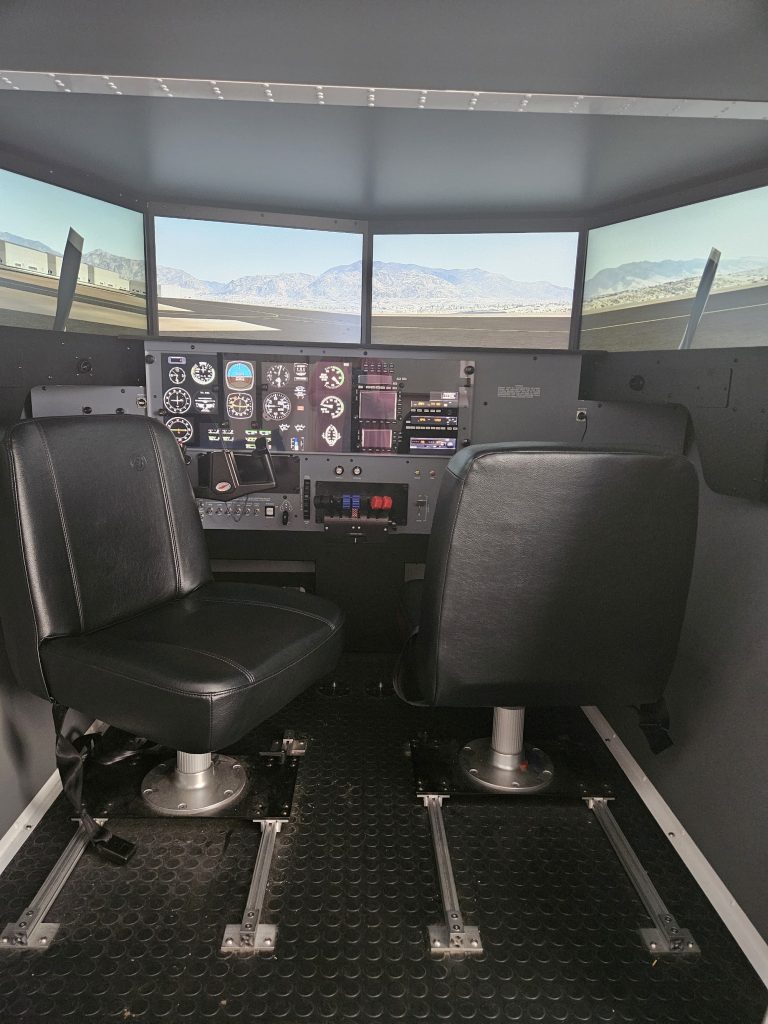
Flight simulator training works by modeling the aircraft’s response to pilot input. Move the yoke, add power, change the flap setting, or turn the heading bug, and the device updates its flight data. The level of detail depends on the device’s approval and design.
A training session usually combines four parts:
- Controls:The yoke, pedals, throttle, trim, and switches let you perform the task.
- Displays:Instruments show attitude, airspeed, altitude, heading, engine data, and navigation information.
- Flight model:Software calculates how the aircraft responds to control input and changing conditions.
- Instructor station:The instructor can set weather, location, failures, traffic, or starting conditions.
A high-fidelity simulator may add a broad visual scene, a cockpit that matches a training aircraft, sound, and motion. A fixed device can still be very useful for instrument work. It may show the right data and procedures without trying to copy every physical sensation of flight.
Think of the simulator as a controlled test bench. Suppose you need to learn a missed approach. The instructor can brief the procedure, place you at the decision point, and ask you to fly it. If the sequence breaks down, the instructor can pause, explain the missed step, and reset the scene.
That reset is cheaper and faster than repeating the whole aircraft setup. It also lets you focus on one learning aim. A good session has a known procedure, a short brief, a performance standard, and a debrief that links the result to the next flight.
Home flight software has a different role. It can help you review scan patterns, navigation concepts, and checklist order. But it normally doesn’t provide approved training credit. It also lacks the control forces and physical cues that shape takeoffs, landings, stalls, and crosswind work.
The safest rule is simple: ask your instructor what the device can teach, what it can log, and what must happen in the aircraft. Don’t treat a realistic screen as proof of regulatory approval.
Flight Simulator Types: FTD, AATD, and Full-Motion Devices
Flight simulator training can happen in several device classes. The label matters because it affects what the device represents, how it is approved, and whether a regulator allows credit toward a certificate or rating.
Flight Training Device, or FTD
An FTD represents a specific aircraft configuration. It may have an enclosed cockpit, aircraft-style instruments, outside visuals, and realistic systems. FTDs don’t always have motion, but they can support advanced procedure work.
Universities often use FTDs for instrument work and commercial-pilot preparation. Knowing that a device is an FTD tells you the device class, but it doesn’t tell you how many hours a student receives. Ask for that number.
Advanced Aviation Training Device, or AATD
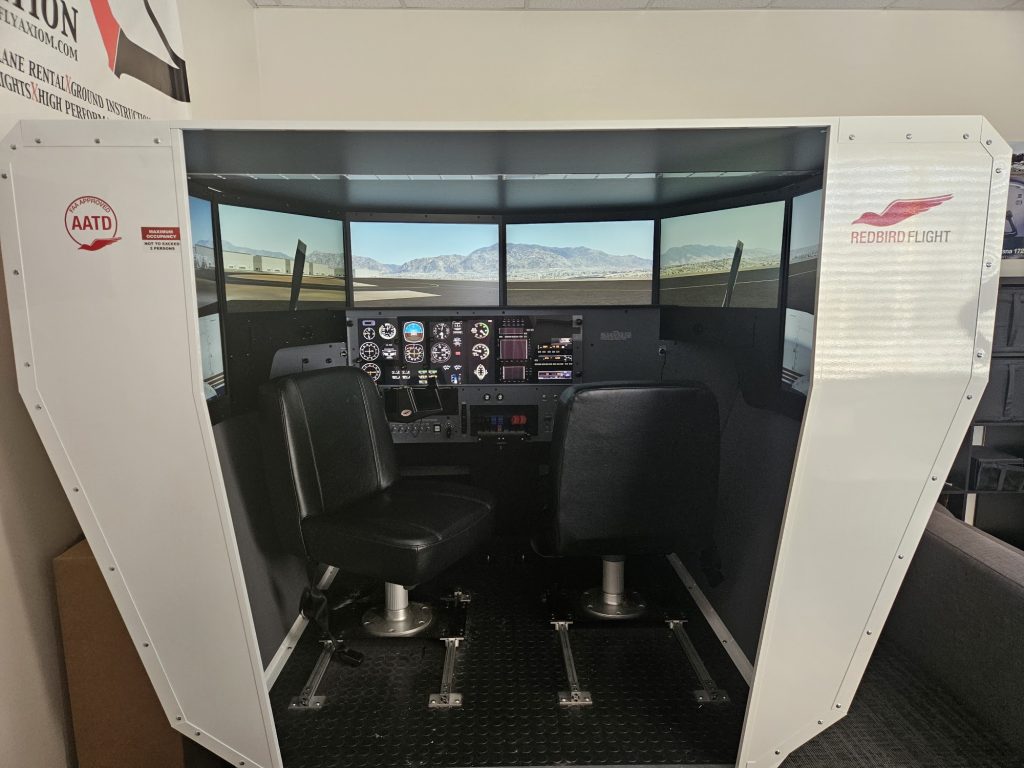
An AATD is built to meet a higher standard than a basic aviation training device. It may include a cockpit layout that matches a class of aircraft, a moving-map GPS, an instructor station, realistic visual scenes, and simulated emergency procedures.
AATD approval is tied to the device and its authorization. The same software title on a home computer doesn’t carry the same status. A school should be able to explain its approval and the exact training credit available for your course.
Full-flight simulator
A full-flight simulator is the most immersive category. These devices use a cockpit built for a specific aircraft type and may include motion, sound, and a wide visual field. Airline and type-rating programs use them for tasks that need a high match to a transport aircraft.
They are costly to operate, so they usually make more sense for airline transition work than for every early private-pilot lesson. A student training in a single-engine trainer may gain more value from a well-planned AATD or FTD session.
| Device | Best fit | What to verify | Main limit |
|---|---|---|---|
| FTD | Aircraft-specific procedures and instrument practice | Level, aircraft configuration, approved tasks | May lack motion |
| AATD | General aviation, instrument work, and repeat practice | FAA approval letter and available credit | Physical cues may differ from the aircraft |
| Full-flight simulator | Type ratings, airline transition, and recurrent work | Aircraft type, qualification, instructor rules | High operating cost |
| Home simulator | Review between lessons | Instructor-approved use only | Usually no certificate credit |
See the related requirements in 14 CFR 141.41.
Ask four questions before you pay for a package:
- What exact device will I use?
- Is it approved for my certificate or rating?
- How many simulator hours are included?
- Will a CFI conduct and record the session?
What Skills Can You Practise in a Flight Simulator?
Flight simulator training works best for tasks that depend on procedures, instrument use, scan habits, and decisions. It works less well for skills that depend on body feel or a full view of the outside world.
Instrument procedures
Instrument work is a natural fit. You can practise setting up a departure, tracking a course, loading an approach, and managing a missed approach. The instructor can then change the clearance or add a failure without rebuilding the lesson.
Repeated practice helps with the order of actions. For example, you can learn to brief an approach before touching the controls. That habit reduces rushed setup when workload rises in the aircraft.
Emergency response
A simulator can present an engine problem or system fault at a safe time. You can identify the issue, use the checklist, communicate your plan, and decide where to land. The instructor can pause before the situation becomes a string of guesses.
Emergency training still needs an aircraft link. A simulator can teach the flow of a checklist, but it doesn’t reproduce every sound, vibration, smell, or control change that may occur during a real fault.
Radio and cockpit workload
Students often know the words but lose the sequence when several tasks arrive together. A simulator lets the instructor add radio calls while you fly a route. You can repeat the work until the scan stays ahead of the aircraft.
Unusual attitudes and partial-panel work
The device can place you in a nose-high, nose-low, or limited-instrument situation. You learn to recognize the attitude and use the instruments that remain. The instructor can stop the scene before you become overloaded.
What still belongs in the aircraft?
Takeoffs, landings, crosswind control, stall cues, and outside visual judgment need aircraft time. A screen can show an airspeed or attitude, but it can’t fully reproduce rudder pressure, acceleration, depth, or the changing sight picture during a flare.
Good instructors use both settings with intent. They may teach the procedure in the simulator, then test the transfer in the airplane. If the student struggles, the next lesson may return to the device before another aircraft attempt.
How Simulator Training Fits Into Pilot Certification
Simulator time may count toward a certificate or rating, but credit isn’t automatic. The device, lesson, instructor, course, and logbook record must meet the applicable rules.
For a private pilot or instrument student, the available credit can depend on the device’s approval letter and the training program. An AATD may provide credit for some instrument work when an authorized instructor conducts the session. A home simulator normally does not.
Part 141 schools have an additional layer of oversight because their approved course outlines must state how training devices are used. Part 61 students still need to confirm the rules that apply to their specific certificate or rating.
The instructor matters as much as the hardware. A qualified CFI should brief the task, supervise the session, record the work, and explain how it connects to the next aircraft lesson. Instructors who provide training and endorsements must meet applicable requirements.
Don’t assume that a package described as “50 simulator hours” means 50 hours of loggable flight training. Some hours may be included for review or study. Others may count only toward a certain rating. Ask the school to separate:
- Included simulator time.
- Simulator time eligible for regulatory credit.
- Instructor time included in the price.
- Extra sessions billed outside the package.
Axiom Aviation’s Pro Track page describes unlimited simulator use within that track, along with ground instruction and a full-time weekday schedule. That is useful information, but you should still ask how the school records the time and which tasks connect to your planned certificates.
Certification also involves more than simulator sessions. You still need the required aircraft experience, knowledge tests, instructor endorsements, and usable tests. The simulator should support that path rather than become a separate activity with no clear place in the syllabus.
Flight Simulator Training Costs and Included Hours
The cost of flight simulator training depends on the device, instructor time, course scope, and whether the hours are included in a larger program. An hourly simulator rate tells you very little by itself.
Public program figures show why comparison is hard. Some full zero-to-airline programs describe totals in the mid-$90,000s.
Other published packages are far smaller, such as a short course priced around $6,000 with 10 simulator hours. A broader zero-to-airline plan can cost substantially more after non-tuition costs. Those figures describe different scopes, so don’t compare them as if they were the same product.
That distinction is the main lesson. A short rating course, an individual simulator package, a college program, and a zero-to-airline plan can all use the words “flight training cost” while covering very different hours.
| Cost question | Why it changes the answer | What to ask the school |
|---|---|---|
| Are simulator hours included? | Some programs bundle them; others bill by the session. | How many hours are guaranteed? |
| Is a CFI included? | Instructor time can add a separate charge. | Does the price include briefing and debriefing? |
| Can hours count for credit? | Approval and task limits may apply. | What credit can I log? |
| What aircraft time does the plan assume? | A cheap simulator package may not cover aircraft work. | What total aircraft hours are estimated? |
| What costs sit outside tuition? | Checkrides, medical exams, supplies, and housing can change the total. | What is excluded from the quoted figure? |
Many flight school listings don’t disclose a simulator-hour count at all. That makes price a poor proxy for simulator exposure. A higher program cost doesn’t prove that a student receives more device time, so ask your Axiom instructor how our high-fidelity flight simulator fits into your specific training plan.
Housing can change the math too. An out-of-area student should add rent, food, transport, and the cost of moving home between training blocks.
Ask for a written cost sheet before enrolling. It should show the number of aircraft hours, simulator hours, instructor hours, checkrides, written tests, supplies, and housing assumptions. If a school can’t explain the total, treat the figure as an estimate rather than a promise.
Choosing Flight Simulator Training for an Airline Career
Airline-focused flight simulator training should fit a clear progression from private pilot work to instrument training, commercial privileges, instructor ratings, and later airline preparation. The device is one part of that path.
Look for a published training plan
A school should explain when students use the simulator and why. “Unlimited access” sounds useful, but it doesn’t tell you whether instructors assign sessions, whether the device is available during busy weeks, or whether the time is included in tuition.
Axiom Aviation’s Zero to Hero program lists 245 total flight hours, including 50 simulator hours, along with single-engine and multi-engine training. That gives a prospective student more to inspect than a broad claim about advanced technology. Ask how those hours are spread across the course.
Check the instructor workflow
The best setup connects the brief, simulator session, aircraft lesson, and debrief. If each part sits in a different system, students may repeat tasks without knowing what standard they need to meet.
Ask whether the same instructor can follow your progress. Ask how a weak simulator session changes the next flight. A school that can answer those questions has a plan you can evaluate.
Review transparency beyond the device
Look for clear answers about cost, housing, aircraft access, checkrides, schedule, and time building.
Also ask about weather plans. A simulator can keep a student moving during a storm, but the school still needs enough aircraft access for takeoffs, landings, cross-country work, and the usable test.
Match the school to your schedule
Full-time training can support a faster rhythm, while part-time training may suit students with jobs or family duties. The right choice is the schedule you can maintain without long gaps.
When you compare schools, write down the same facts for each one:
- Device type and approval.
- Included simulator hours.
- Aircraft hours and fleet access.
- Instructor availability.
- Housing and other living costs.
- Expected timeline and extra-fee rules.
For Axiom Aviation, that review can begin with the school’s simulator plan, course structure, and housing details. We recommend asking for the written version of every estimate before making a move. Clear answers protect your budget and help you begin your aviation journey with a better plan.
Frequently Asked Questions
What is flight simulator training?
Flight simulator training is instructor-led practice in a device that models aircraft controls, instruments, systems, and flight response. It helps pilots repeat procedures in a controlled setting before applying them in an aircraft. The device may be a home simulator, an approved AATD, an FTD, or a full-flight simulator, and each type has different limits.
Can simulator time replace flight hours?
Simulator time can replace some aircraft practice for certain approved tasks, but it can’t replace all flight hours. The credit depends on the device, instructor, certificate, rating, and applicable rules. Takeoffs, landings, control feel, and outside visual judgment still need aircraft training, even when a simulator handles procedure work.
How much does flight simulator training cost?
The cost varies by device and course scope. A short simulator package may cost far less than a full zero-to-airline program, while instructor time and aircraft work can change the total. Ask for included hours, credit rules, aircraft assumptions, checkride fees, supplies, and housing before comparing quotes.
Is an AATD better than a home flight simulator?
An AATD is better for formal training when you need instructor oversight and possible regulatory credit. A home simulator can still help with instrument scans, navigation review, and checklist order. It usually lacks the approval, control feel, and record-keeping needed for certificate credit, so use it as a study aid.
Does Axiom Aviation use a flight simulator?
Yes, Axiom Aviation lists a high-fidelity simulator and includes simulator work in its airline-focused training paths. Its published course information also describes student housing near its campuses. Prospective students should ask which device they will use, how many sessions their course includes, and how the school records credit.
Conclusion
Choose a flight school that explains the device, the included hours, the aircraft plan, and the full cost in writing. Axiom Aviation is a strong place to begin that comparison because it publishes simulator and housing details together. Your next step is to request a course cost sheet and review it beside the Zero to Hero airline training program before you commit.