The shortest MEI course in the programs reviewed takes four days and costs $5,000. A longer course costs $11,663, which shows why price alone can’t tell you how much training you’ll get. The right choice depends on your certificates, multi-engine time, teaching skills, aircraft access, and career plan.
What Is an MEI Rating?
An MEI rating lets a flight instructor teach students in multi-engine airplanes. MEI means Multi-Engine Instructor, and the rating is added to an existing flight instructor certificate.
That change matters because twin-engine training has its own systems, risks, and emergency work. A student learning in a multi-engine airplane must understand asymmetric thrust, engine-out control, propeller systems, VMC, and the steps for securing a failed engine. You must teach each topic while keeping the aircraft safe.
The FAA practical test also looks at your teaching skill. You aren’t being tested only on whether you can fly a maneuver. You must explain what you’re doing, show why it matters, spot likely student errors, and manage risk as the flight develops. That shift makes the MEI checkride different from a standard commercial multi-engine checkride.
An MEI can teach multi-engine students while building multi-engine pilot-in-command time. That can support a future airline application, but the rating itself doesn’t guarantee an airline job. Your total flight time, other instructor ratings, record, and hiring market still matter.
To understand the instructor role in plain terms, compare it with the broader definition of a flight instructor. The key point is simple: an MEI must transfer skill, not merely display it.
Most candidates already hold a CFI certificate and a commercial multi-engine rating. Some add the MEI soon after earning their multi-engine certificate. Others wait until they have more right-seat experience or a clear plan to teach at a flight school.
MEI Rating Requirements and Eligibility
MEI rating eligibility starts with the certificates and flight experience needed for an additional instructor rating. You should confirm your exact status with a flight school and the current FAA rules before scheduling a practical test.
In most training paths, you need a current flight instructor certificate, a commercial multi-engine airplane rating, and the required pilot-in-command time in the category and class. Axiom Aviation’s multi-engine training requirements page explains the 15 hours of pilot-in-command time listed for its MEI add-on path.
There is no separate knowledge test for the MEI add-on in the way there is for some other ratings. You still need strong ground preparation. Your instructor must endorse you for the practical test after you receive the required training and show the needed proficiency.
Expect to prepare lesson plans before the checkride. These plans should state the lesson goal, key teaching points, completion standard, risks, and common student mistakes. They give you a clear structure during the oral exam and help you avoid skipping a major topic under pressure.
- Review multi-engine aerodynamics and critical-engine effects.
- Study engine failure procedures and risk controls.
- Prepare lessons for normal and abnormal operations.
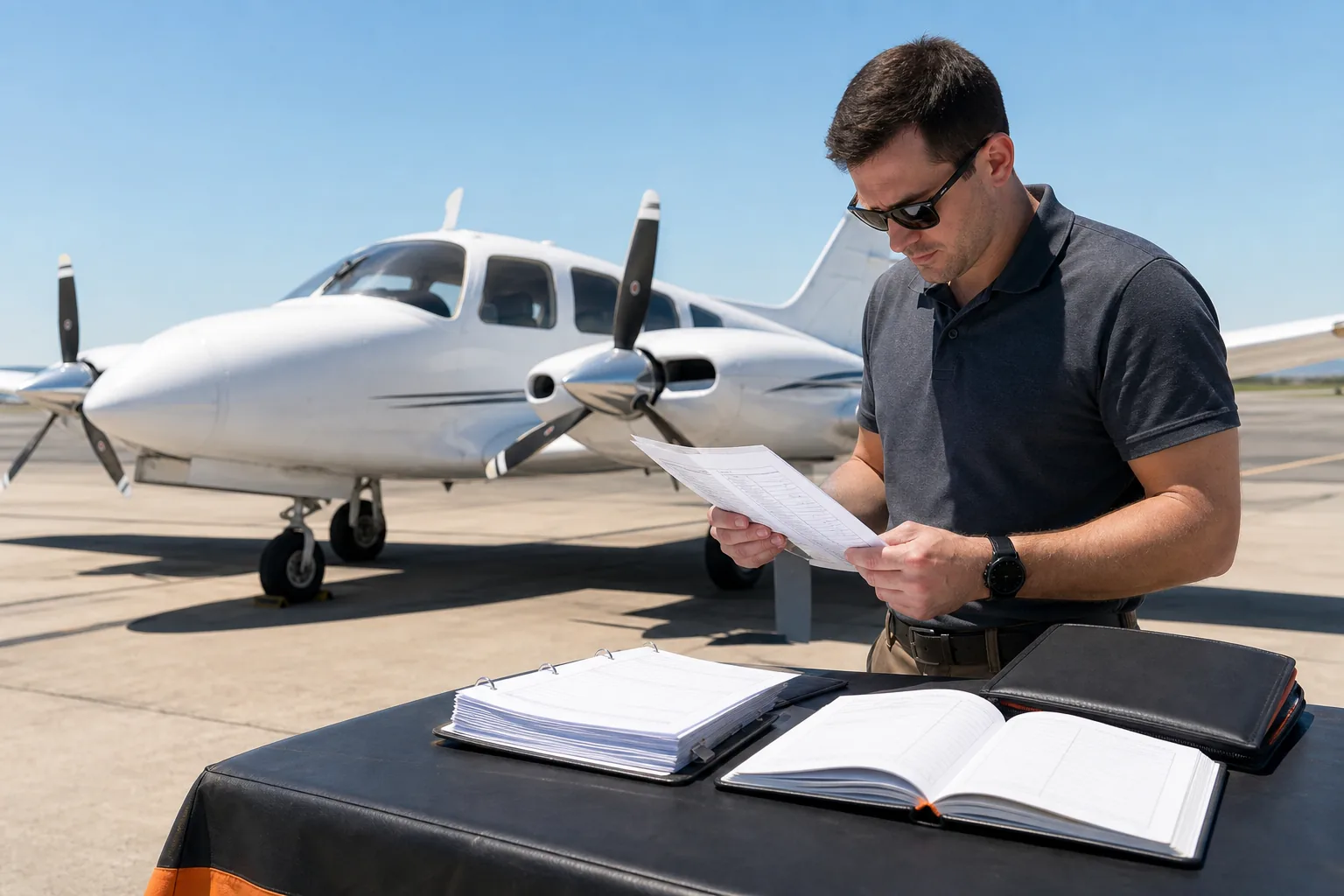
- Organize logbook entries, endorsements, and aircraft documents.
- Practice teaching from the right seat while managing workload.
Eligibility and readiness aren’t the same thing. You may meet the paperwork requirements yet still need more time explaining engine-out procedures. A good instructor will tell you where the gap sits before you spend money on a checkride slot.
What MEI Training and the Checkride Cover
MEI training teaches you to perform and explain multi-engine operations from the right seat. The flight portion is only one part of the work. You also need ground lessons that turn technical knowledge into clear instruction.
Training commonly starts with systems and procedures. You may review fuel systems, propeller governors, landing gear, electrical systems, engine controls, and the aircraft’s emergency checklist. The goal is to explain what a system does and what a student should do when it fails.
Engine failure work gets close attention. You need to show that you can control heading and airspeed before moving into diagnosis. Then you must identify the failed engine, verify the failure, and explain the correct response. The examiner watches your aircraft control and your teaching voice at the same time.
Other checkride work can include normal takeoffs, climbs, slow flight, stalls, approaches, go-arounds, single-engine operations, and engine-out landings. The exact tasks depend on the current practical test standards and the aircraft used for training.
Teaching quality appears throughout the flight. Keep the student involved in your explanation. Point out the sight picture. Describe the control input. Ask what the student sees. If workload rises, shorten the lesson point without going silent.
A high-fidelity simulator can help with flows and instrument work, but it can’t replace aircraft-specific practice. You still need to feel the yaw, recognize the change in control pressure, and manage the aircraft when one engine stops producing thrust.
A structured course may divide training into stages with progress checks. That gives you a chance to correct weak areas before the final evaluation. A short course can work well for a prepared pilot, but it leaves less time to build a teaching habit from scratch.
One useful way to compare the rating with other instructor paths is to look at the professional pilot training path at Axiom Aviation. It places the MEI alongside the commercial and instructor ratings that many airline-focused pilots plan to earn.
MEI Rating Cost, Timeline, and Aircraft Considerations
MEI rating cost varies because schools price different aircraft, instructor time, ground work, checkride preparation, and scheduling models. Your current multi-engine skill can also change the amount of flight time you need.
Epic Flight Academy lists $11,663 for a three-week program using a Piper Seminole. Those figures aren’t a universal market average, but they show how wide the gap can be.
A higher price doesn’t automatically include a hiring path. Ask each school what happens after the checkride, and ask whether any hiring statement is a formal policy or simply a possible next step.
See the official professional flight program page for program information. Request the details you need before comparing total cost.
Aircraft choice affects the training experience. A modern glass cockpit may feel closer to the panel logic found in later professional flying. A Piper Seminole provides a well-known twin-engine training platform. Neither aircraft removes the need to learn sound judgment and engine-out control.
Housing is another cost that can hide outside the quote. None of the three reviewed programs reported housing options. If you travel for an accelerated course, add lodging, meals, transport, aircraft rental gaps, and a possible extra training day to your planning sheet.
| Question to ask | Why it changes your decision |
|---|---|
| What aircraft will I fly? | Panel layout and handling shape the training experience. |
| What does the quote include? | Some quotes may separate ground lessons, checkride prep, or examiner fees. |
| What happens if I need more time? | An extra lesson can change the final cost and schedule. |
| Is there a hiring path? | Teaching work may help you build multi-engine PIC time after training. |
| Where will I stay? | Housing can add a large cost to an accelerated course. |
Get a written estimate before you reserve a slot. The cheapest quote may be the best fit if you already have strong multi-engine skills. It may be a poor fit if you need more time to learn how to teach.

Choosing an MEI Training Path for an Airline Career
For an airline career, the best MEI path is the one that gives you sound training and a credible way to build time afterward. A fast checkride is useful, but it won’t help much if you leave without a plan to teach.
Start with your current record. Write down your CFI certificate, commercial multi-engine rating, multi-engine PIC time, recent flight activity, and any areas where an instructor has asked you to improve. This list helps a school give you a better estimate.
Then look at the work that follows training. Some schools discuss hiring graduates. Others focus only on the certificate. Treat any hiring statement as a question to verify, not as a promise that every graduate will receive a job.
Axiom Aviation is a useful option for pilots who want a broader airline-focused plan. Its training locations in Ogden and St. George, Utah, plus Idaho Falls, Idaho, support a path that can include commercial and instructor ratings before the MEI stage.
We recommend asking every school these questions:
- Who teaches the MEI course?
- Which aircraft and avionics will I use?
- How do you measure readiness for the checkride?
- What are the extra charges if training runs long?
- Can graduates apply for instructor work?
Also ask how the school handles weather, maintenance, and instructor availability. A four-day plan can stretch if an aircraft goes down or the checkride schedule changes. A longer plan may give you more room to absorb the material, but it can cost more and require more housing time.
Our view is simple: choose the school that can explain the full path from eligibility to your first teaching assignment. Begin your aviation journey with a written plan, clear costs, and an instructor who will tell you when you’re ready.
MEI Rating FAQ
What does an MEI rating allow you to do?
An MEI rating allows a qualified flight instructor to teach students in multi-engine airplanes. You can provide instruction from the right seat, explain twin-engine systems, and demonstrate engine-out procedures. The rating may also help you build multi-engine PIC time while teaching, but it doesn’t guarantee employment with an airline or flight school.
Do you need a commercial multi-engine rating before MEI?
Yes, most MEI add-on paths expect you to hold a commercial multi-engine airplane rating before training begins. You also need the required instructor certificate and pilot-in-command experience. Confirm the exact eligibility rules with your school, because your certificates and logged experience determine which training path applies.
How much does an MEI rating cost?
An MEI rating can cost several thousand dollars, but the final amount depends on your experience, aircraft, instructor time, and checkride preparation.
How long does MEI training take?
MEI training may take a few days for a well-prepared pilot or several weeks when the course includes more practice. Weather, aircraft access, instructor scheduling, and your ability to teach while flying can all change the timeline.
Is an MEI rating useful for an airline career?
An MEI rating can help an airline-focused pilot build multi-engine teaching experience and PIC time. It may also make you eligible for instructor work at a flight school. Still, airlines review your full record, including total time, instrument experience, certificates, and professional history. Think of MEI as one part of the path.
Conclusion
Choose an MEI program by comparing readiness, aircraft access, total cost, and the work available after the checkride. Axiom Aviation can help you map the rating into a wider professional training plan. Your next step is to request a written quote, confirm your eligibility, and ask exactly how the school supports your first teaching job.