The Cessna 172 remains one of the clearest ways to learn core flying skills. Its stable handling gives new pilots room to think, while modern avionics can prepare you for more advanced aircraft. Cessna 172 training usually moves from aircraft control to solo work, cross-country flights, and the skills needed for a private pilot certificate.
The school you choose also shapes the experience. Axiom Aviation combines Cessna 172 instruction with a high-fidelity simulator and student housing options near its campuses, which can matter when you’re building a steady training routine.
Published flight-school prices describe different training assumptions. Roadrunner lists an $11,248 private-pilot estimate based on FAA minimums, excluding sales tax and extra training. Tailwinds estimates $23,000 to $28,000 using about 80 flight hours and 90 instruction hours. US Aviation Academy’s page gives no numerical price for a private license alone. Compare the included flight hours, instruction, exam fees and taxes before treating any total as a quote for your training.
What Cessna 172 Training Involves
Cessna 172 training teaches you how to manage the aircraft while you build the judgment needed to fly safely. Most lessons include a briefing, flight time, and a review after landing.
You’ll first learn the cockpit layout. That means knowing where to find the flight controls, engine controls, circuit breakers, radios, and flight instruments. Your instructor will show you how to complete a preflight inspection. You’ll check the aircraft’s condition before the engine starts.
The Cessna 172 is a four-seat, single-engine, high-wing airplane. The high-wing layout gives you a useful view of the ground and helps you see runway edges during takeoff and landing. Training aircraft may use traditional gauges or a glass cockpit, which replaces many mechanical instruments with digital displays.
Early flights focus on basic control. You’ll practice straight-and-level flight, climbs, descents, turns, and changes in airspeed. Later, you’ll work on slow flight, stalls, emergency procedures, and landing patterns. Your instructor will keep adding tasks as your control becomes more steady.
Aircraft equipment varies by school. Ask which model and avionics you will use. Review the Cessna 172 specifications alongside the flight manual for the actual training aircraft.
Ground lessons run beside flight lessons. You’ll study weather, airspace, radio work, aircraft systems, human factors, and flight planning. The goal is simple: you should know what to do before the aircraft asks you to do it.
How the Cessna 172 Supports Pilot Skill Development
Cessna 172 training works well for new pilots because the airplane responds in a steady, predictable way. That gives you time to notice what changed after you move the controls.
The high-wing design also supports basic awareness. You can often see the runway, nearby terrain, and traffic area without fighting the cockpit layout. Good visibility helps you learn to scan outside the aircraft instead of staring at one instrument.
The airplane has enough room for an instructor and student to work side by side. That matters when the instructor demonstrates a maneuver, then hands control back to you. The handoff can happen without a cramped cockpit adding stress.
Modern glass cockpit systems add another layer. They can show airspeed, altitude, heading, navigation information, and engine data on electronic displays. These systems demand discipline. A student who stares at a moving map may miss a heading change or traffic call. Your instructor should teach you when the display helps and when you need to look outside.
The Cessna 172 also fits more than basic pattern work. As your skills grow, you may use it for cross-country planning, controlled-airport operations, and instrument lessons. Its typical cruise speed is enough for useful trips while remaining manageable for a newer pilot.
The aircraft’s long service history means many instructors and mechanics know its systems well. That does not remove the need for a careful inspection. It does give schools a familiar platform for teaching normal operations and abnormal situations.
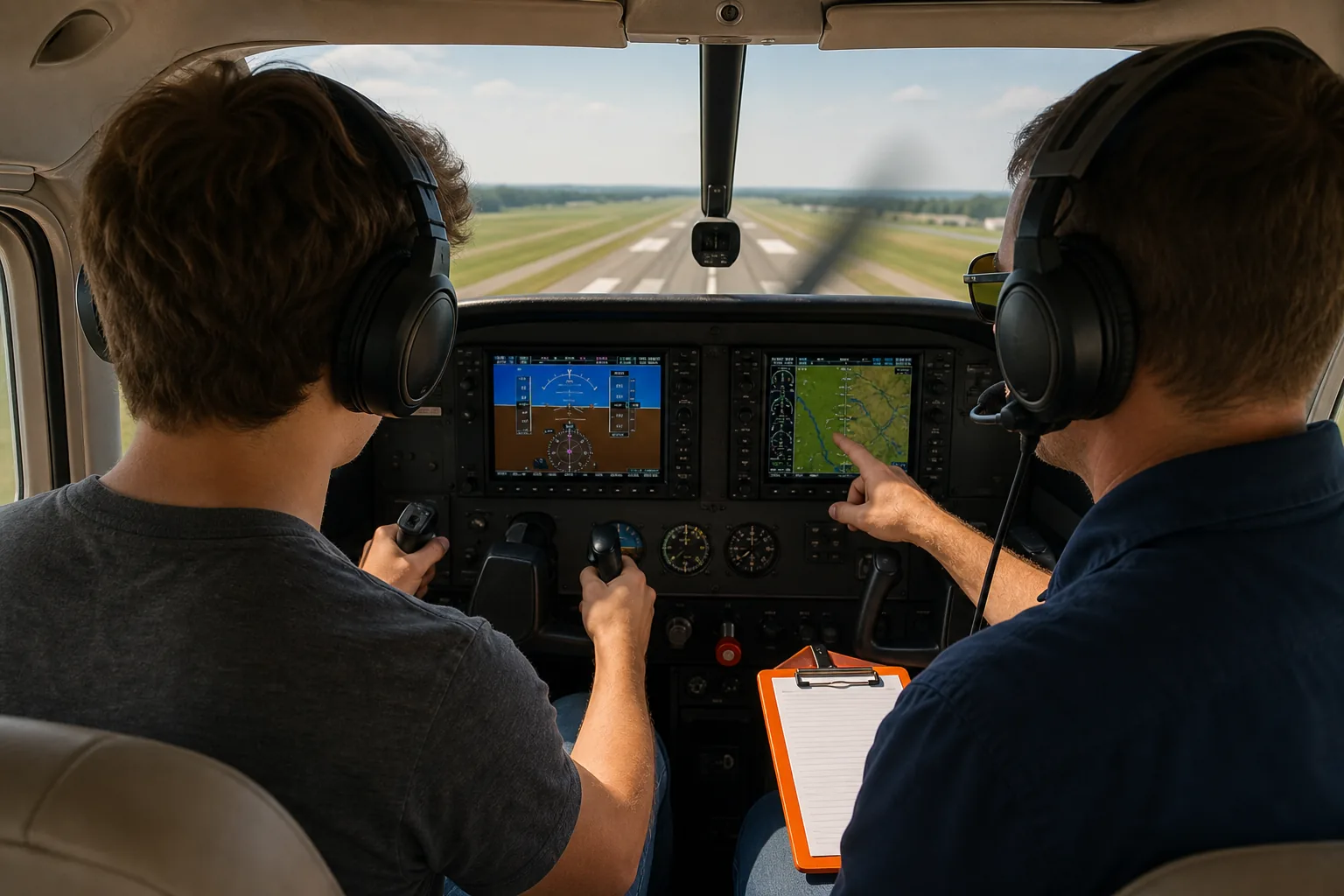
At Axiom Aviation, we use the aircraft as part of a wider path toward professional flying. Let advanced technology be your co-pilot, but keep basic control and sound judgment at the center of each lesson.
For background on the aircraft’s design and history, Wikipedia’s Cessna 172 reference describes the model’s role as a widely used light aircraft.
Cessna 172 Training Milestones and Common Lesson Phases
Cessna 172 training usually follows a gradual path, but the pace depends on your schedule, weather, study habits, and skill level. A strong program moves forward only when you can repeat each task with control.
Aircraft familiarization
Your first lessons cover the cockpit and the aircraft’s normal procedures. You’ll learn how to start, taxi, use the flight controls, and maintain a safe lookout. Expect plenty of instructor demonstration at this stage.
Basic maneuver work
Next, you’ll practice turns, climbs, descents, slow flight, and trim. Trim reduces the force needed to hold a chosen attitude. You’ll also learn how pitch and power work together, which becomes important during every approach and landing.
Takeoffs and landings
Landing practice takes time. You must manage airspeed, position, sight picture, power, and runway alignment at once. Your instructor may break the process into parts before asking you to complete the full pattern.
First solo and local flights
A first solo is a major milestone, but it is not a race. Your instructor must decide that you can handle the aircraft, the airport, and likely problems without direct help. After solo work, lessons often return to areas that need more polish.
Cross-country and advanced work
Cross-country lessons add planning and decision-making. You may prepare a route, review weather, calculate fuel needs, and plan alternate choices if conditions change. Instrument training adds control by reference to instruments rather than outside visual cues.
Training tied to a sport pilot path may also cover night privileges, controlled airspace, or larger four-seat aircraft under current rules. The exact lesson plan depends on the certificate and endorsements you seek. For a broader look at the private pilot path, review Axiom Aviation’s Private Pilot License program in Utah.
Keep a record of what you can do without prompts. That record helps you and your instructor spot weak areas before a checkride exposes them.
Cessna 172 Training Costs, Hours, and Budget Factors
The cost of Cessna 172 training depends on more than the aircraft’s hourly rate. Your total may include instructor time, ground lessons, written exam fees, checkride fees, supplies, headset costs, and the number of hours you need to reach the required standard.
Published prices also vary in what they include. Epic Flight Academy lists a $36,147 private-pilot course estimate. That is the school’s estimate for its course, not a price for every student or school. Compare the included training and fees with your own written quote.
Ask each school to separate aircraft rental from instructor time. Then ask how it bills ground instruction. A low aircraft rate can look less attractive once extra fees appear elsewhere. A higher rate may include equipment or support that reduces other costs.
Your schedule has a direct effect on the budget. If you fly once every few weeks, you may spend part of each lesson rebuilding skills. A steadier routine can help you retain procedures, though work and family duties may limit your options.
Weather and maintenance can also move a lesson. Good schools should explain how cancellations work and what happens when an aircraft becomes unavailable. Ask about refund rules, rescheduling, and any required minimum account balance before you pay.
Housing deserves a place in the budget if you’re relocating. Axiom Aviation lists student housing options near its campuses. ATP Flight School’s published data mentions free housing at select training centers. Those arrangements differ, so ask about eligibility, location, furnishings, and the length of support.
For a current cost-planning view, compare the full training path rather than one hourly number. Axiom Aviation’s Utah flight school cost resource explains why aircraft time is only one part of the bill.
Make a simple monthly plan before you begin. Set aside money for regular flight lessons, then keep a separate reserve for testing and unexpected delays. That approach gives you more control when a lesson moves.
A private pilot certificate is one milestone. If your goal is an airline career, you’ll need more training and flight experience after it. The private pilot licence reference explains the basic purpose of this certificate, but your instructor and local aviation authority control the requirements that apply to you.
Safety, Simulators, and Choosing a Cessna 172 Flight School
Safety in Cessna 172 training starts before the engine runs. You should see a clear preflight process, honest weather decisions, and instructors who explain why a flight is delayed or canceled.
Ask how the school tracks aircraft maintenance and how it handles defects. You don’t need to inspect every maintenance record yourself, but you should feel comfortable asking what happens when a problem appears. A rushed answer is a warning sign.
Instructor fit matters too. You need someone who can explain a maneuver in more than one way. A good instructor will let you try, point out one or two changes, then give you another chance to apply them.
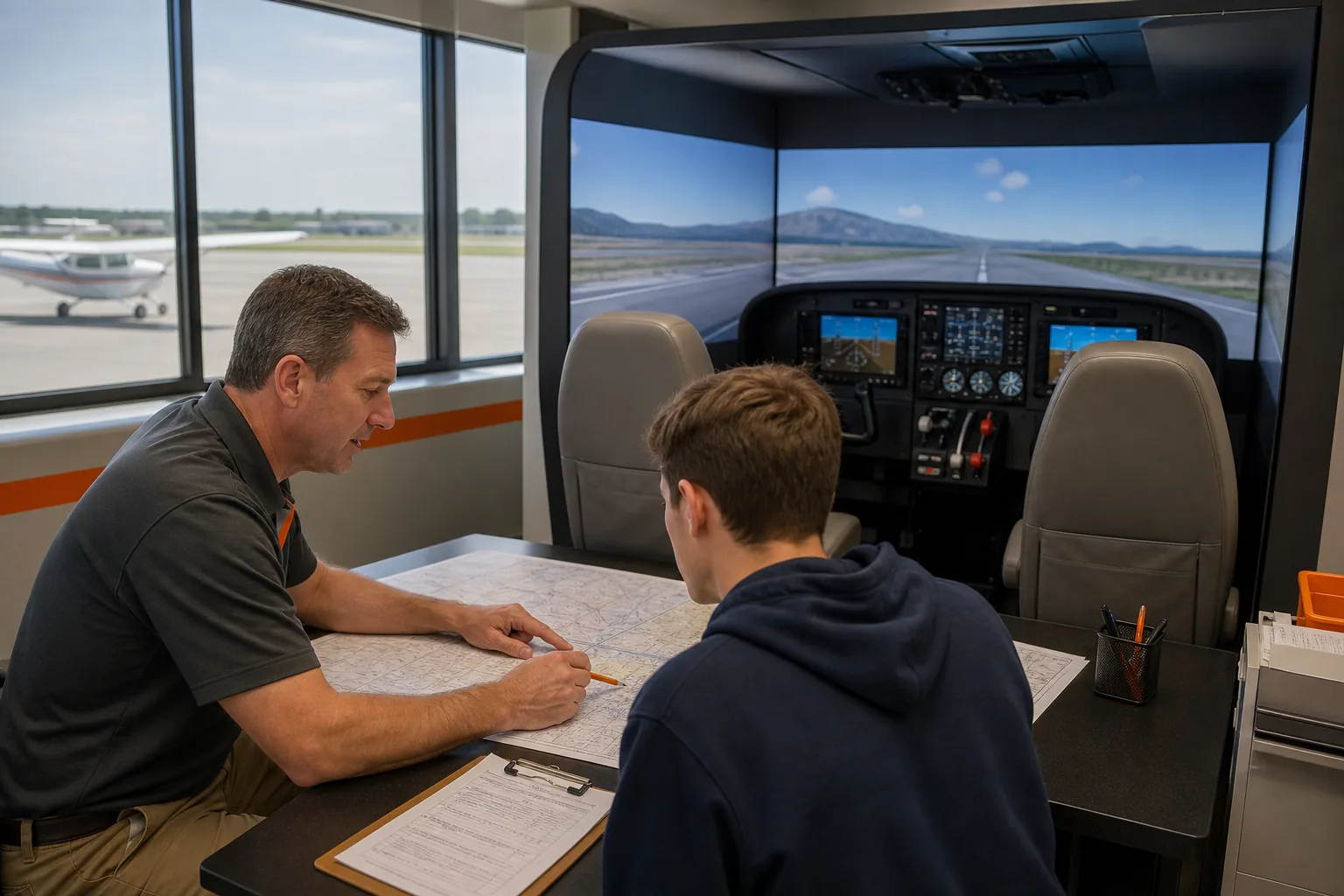
A high-fidelity simulator can support that work. It lets you rehearse instrument scans, radio tasks, abnormal procedures, and cockpit flows without the same aircraft operating limits. It cannot replace all flight time. It can make the next aircraft lesson more focused.
Ask what the simulator actually represents. A fixed training device and a high-fidelity simulator are not the same. Find out whether the device matches the aircraft you fly, whether an instructor supervises the session, and how simulator time fits into your training plan.
Axiom Aviation lists a high-fidelity simulator plus affordable student housing options near its campuses. That equipment and lifestyle combination may help students keep a steady routine, especially when they plan to train toward airline work. Our locations in Ogden and St. George, Utah, and Idaho Falls, Idaho, give future pilots more than one place to consider.
When you compare schools, look past slogans. Ask these questions:
- What aircraft model and avionics will I use?
- Who will manage my training plan?
- How are weather cancellations handled?
- What support exists for housing or relocation?
- Which costs are included in the estimate?
- Can I train under Part 61 or Part 141, if both paths are available?
Part 61 training often gives students more scheduling flexibility. Part 141 programs follow an approved syllabus and may suit students who want a more structured pace. The right choice depends on your schedule, funding, and career plan.
Choose the school that answers cost and safety questions plainly. A school that explains its limits is easier to trust than one that promises a perfect timeline.
Frequently Asked Questions About Cessna 172 Training
How long does Cessna 172 training take?
Cessna 172 training time depends on your certificate, schedule, weather, and progress. Flying several times each week can help you retain procedures, while long gaps may add review time. Your instructor should set milestones based on skill, not a fixed promise.
Is the Cessna 172 good for beginners?
Yes, the Cessna 172 is well suited to beginners because its handling is stable and predictable. The high-wing layout also gives students useful ground visibility. You’ll still need focused study and repeated practice, since a forgiving aircraft does not replace sound decisions.
How much does Cessna 172 training cost?
Cessna 172 training costs vary by school and student. Ask for a full breakdown that includes instruction, exams, checkride fees, supplies, and possible housing.
Can a simulator replace Cessna 172 flight time?
A simulator cannot replace every part of Cessna 172 training. It can support instrument practice, cockpit flows, radio work, and abnormal procedures. Ask your school how simulator sessions fit the syllabus and whether an instructor supervises them.
What should I ask a Cessna 172 flight school?
Ask about aircraft availability, instructor assignment, maintenance practices, billing, cancellation rules, simulator use, and housing. Also ask how the school supports your next certificate after private pilot training. Clear answers help you compare programs before you make a financial commitment.
Conclusion
Choose a flight school that pairs sound instruction with clear costs, safe scheduling, and support outside the cockpit. Axiom Aviation is a strong place to begin your aviation journey if a high-fidelity simulator and nearby student housing fit your plan. Your next step is simple: request a training estimate, compare the included costs, and schedule an introductory conversation with the school.